 · 8 min read
What to write next to your photos: journaling in your scrapbook
A name, a date, one sentence or a whole story. Here's how to decide what to write next to your photos, and how to make room for it on the page.
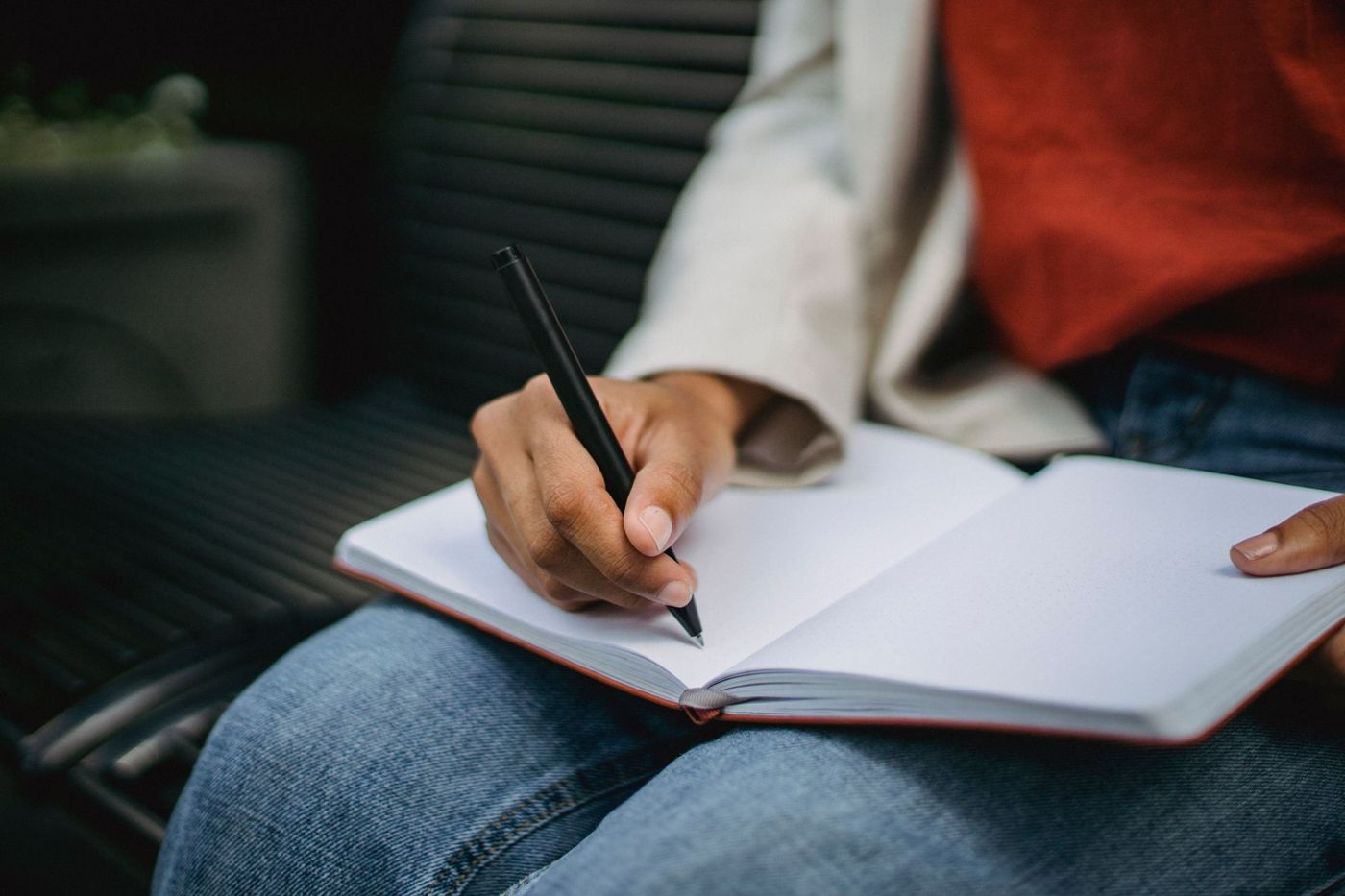
A photo shows what things looked like. What you write next to it tells who was there, what happened and why you wanted to keep this moment. Scrappers call that journaling, and for many people it's the hardest part of the page. With a few set questions and some handy tricks, you'll almost always get something down on paper.
What journaling is and why it matters
Journaling is everything you add to a page in words: a name, a date, a one-line caption, a list or a whole story. It can look like a diary, but it doesn't have to. Together with the photos, the title, the embellishments (the decorations) and the background, it's one of the standard parts of a page.
When someone opens an album, they look at the photos first and then search for the words. Without text, the viewer is left guessing, and after a few years that goes for you too. Many scrappers know the feeling: a page they only made years later, with two children who looked so alike that nobody is quite sure who's in the photo any more. What feels obvious now slips away faster than you think.
Start with five questions
Not sure where to begin? Ask yourself the five questions scrappers all over the world use. In English they're called the five Ws.
- Who is in it? Write down the names, even if they're completely obvious to you.
- What happened? Without an explanation, a carnival costume can easily look like a very different story.
- Where was it? Not every place is recognisable. Note the village, the house or the campsite.
- When was it? An exact date is lovely, but a year or a season is fine too. If you don't know, write something like 'summer, sometime in the early nineties'. Maybe someone else will fill it in later.
- Why did you take this photo? Often that answer is the story in itself.
If you've forgotten the details, look in your diary or at the messages you sent back then, or check the date and location of the photo on your phone. That's why some scrappers keep a short daily list of what they did, so they have something to fall back on later.
Old family photos work differently. Ask uncles, aunts and grandparents what they remember, look through old letters and cuttings, and write down that little detail someone mentioned at a birthday party too. Write the name and date lightly in soft pencil on the back of printed photos, near the edge, so that information isn't lost. If pencil won't take on a glossy back, write it on a card kept with the photo.
When you don't know what to say
An empty space waiting for text can be paralysing. It helps not to think of it as an essay. Pick a format, and the words often follow on their own.
- One word to start. Write 'today' or 'right now' and finish the sentence. Stamps and stickers with a word or a question work the same way: all you have to do is answer.
- A list. With dashes, numbered or as an alphabet, with something about the person or the day for each letter. That way you capture a lot in very little space.
- A timeline. That can be a single day, from breakfast to bedtime, or a run of years, like all the first days at school in a row.
- A conversation. Write down exactly what was said. Young children's comments in particular are easily forgotten otherwise.
- A quote or song lyric. Let it stand on its own or use it as a stepping stone to your own sentences.
- Humour. When you don't have to feel solemn, writing comes more easily.
- Pass the pen. Let your child, your partner or your gran write something. That puts a different voice on the page, and that handwriting often becomes one of the most treasured things in the book later on.
Still stuck? Then first jot down everything that comes to mind, in no particular order, on a scrap of paper. Afterwards, choose the two or three sentences that capture the moment best.
How much do you write, and from whose point of view?
There's no rule for how much you write. For a photo of a bunch of tulips, a title with a date may be enough. A moment that moved you deserves a paragraph. Not every page needs lots of text, and in an album about a single trip you don't have to explain where you were on every page.
What you write matters more than how long it is. 'Us on the beach' tells nothing the photo doesn't already show. Write instead about what stayed out of frame: what happened just before the photo, what you did afterwards, how it smelt or sounded. Concrete details say more than big words. 'He lugged a 1.5-litre bottle of water around all afternoon' sticks better than 'he was so cute'.
Then there's point of view. Each one has its own feel:
- I: you tell how you experienced it. It's personal, and it means you're in the book for once too.
- You: you write to the person in the photo, like a short letter. That works beautifully in an album for a child or as a gift.
- He or she: you tell it like a report. It's calmer and more neutral, and handy in a family album with old photos.
Choose one point of view per page and stick to it. Switching within one piece of text makes it read unevenly.
Making room for text
Most scrappers design first and write last. That's perfectly fine, but sometimes there turns out to be too little space. If you already know there's a story to go with it, write a rough draft first. Then you'll see how much room you need and can plan it into your page layout straight away.
These spots almost always work:
- A journaling card next to or below the photo, made from cardstock (sturdy, plain paper) or a leftover piece of patterned paper.
- A strip below the photo. Make the mat, the paper border behind your photo, about 7 to 10 mm wider at the bottom than at the sides, so a short caption fits.
- A calm, empty part of the page. White space is a good place for words too.
- Narrow strips with a few words, if you don't need a whole story.
Ideally, write on a separate card and only stick it down once it's finished. If something goes wrong, you make a new card instead of a new page. For straight lines, draw thin guidelines with a pencil and ruler and rub them out once the ink is dry. If your text has to fit in a fixed space, practise on scrap paper first so you know how much will fit.
Prefer to type? Choose a clear font that isn't too small, around 11 to 12 point for example, and use no more than two fonts per page. Many scrappers combine the two: the facts typed and one sentence by hand. Even if you don't like your own handwriting, that's exactly what makes the page personal. Use a pen with waterproof ink and test it first on a leftover piece of the same paper.
When you want to say more than will fit
- Shorten your text. Cut what the photo already shows and keep the sentences you really want to hold on to.
- Adjust the design. One photo fewer or a smaller photo gives the story room.
- Hide the text. A long piece fits in a little envelope (C7 or C8 is a handy size), behind a flap or on a card you pull out of a pocket. Do put the names and the date visibly on the page itself.
- Add a page. Put the photos on the left and the story on the right, so together they form a spread: two pages that belong together.
- Tell the overall story once. An opening page at the front of the album, with where and when, saves repeating it on every page after that.
Questions that always work
Keep this list by your workspace or stick it in the front of your book. Pick one, answer it honestly, and your journaling is on paper.
- Why did I reach for my camera at that moment?
- What happened just before or just after this photo?
- What did someone say, and how did it sound?
- What can't you see in the photo, but I still remember?
- What do I want someone to know about this when I can no longer tell them myself?
- What did an ordinary day look like during this time?
- What did the others think of it, in their own words?
- What made us laugh?
- What's completely ordinary now but will seem special later? Think of the songs on the radio, that week's news or what was on the table.
- What did I learn from this, or what have I come to appreciate more?
- What would I love to read back in ten years' time?
Ordinary days deserve words just as much as the big events. A Tuesday morning at the breakfast table is often exactly the story you'll be looking for in twenty years. Start today with one page and the five questions, and see what else comes to the surface.
Questions about this topic
What is journaling in a scrapbook?
Journaling is everything you add to a page in words: a name, a date, a one-line caption, a list or a whole story.
What should I write next to photos in an album?
Start with the five questions: who, what, where, when and why. Rather than describing what you can already see, write about what stayed out of frame, such as what happened just before the photo or what someone said.
What can I do if I don't know what to write in my scrapbook?
Pick a format: one word to start, a list, a timeline, a conversation or a quote. Still stuck? Write everything down on a scrap of paper first, then choose two or three sentences.
What if my journaling doesn't fit on the scrapbook page?
Shorten the text, make a photo smaller, or hide the text in a little envelope or behind a flap. Do put the names and date visibly on the page. You can also add an extra page.