 · 7 min read
Why photos turn yellow and how to prevent it
Light, acid, heat and damp slowly turn photos yellow and make them fade. Here's how that works, how to slow it down and how to save what has already discoloured.
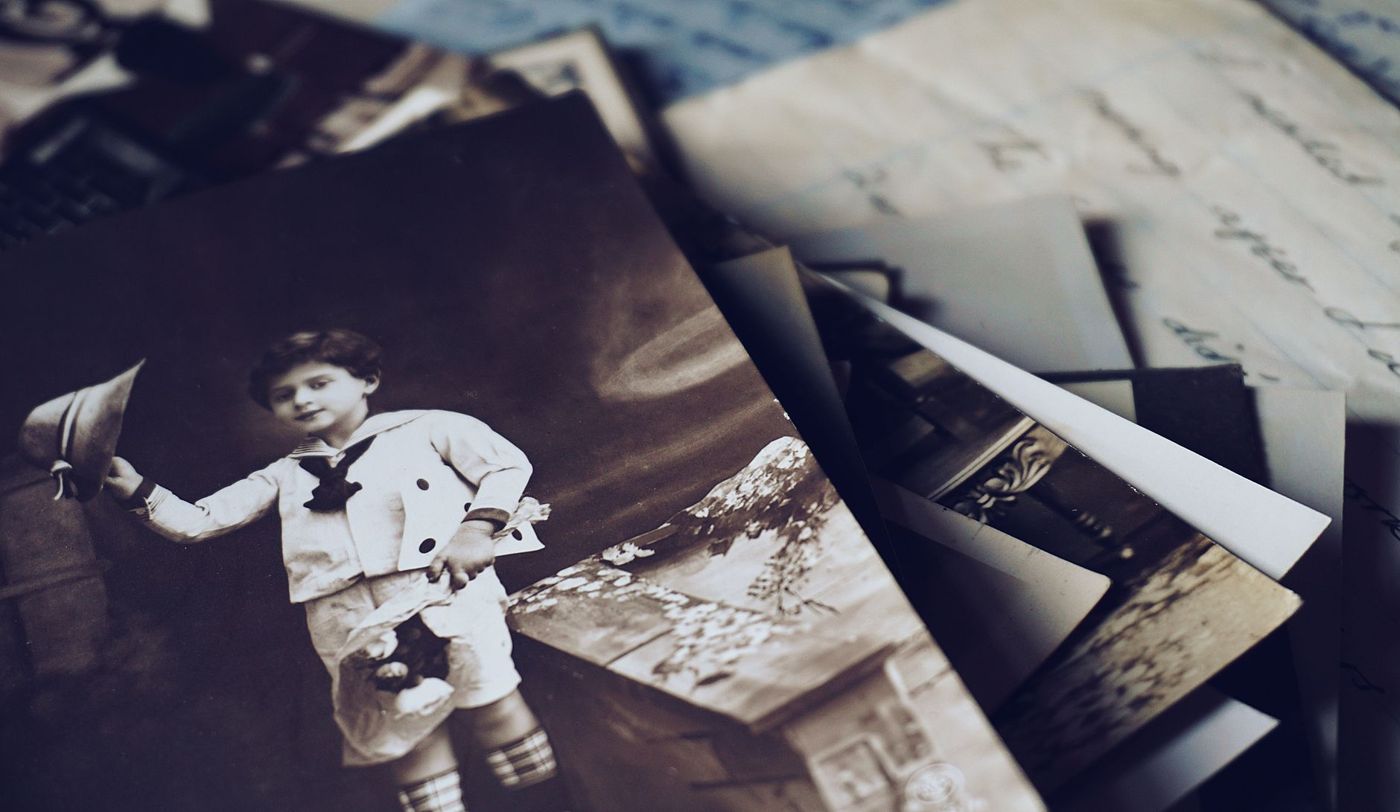
You open an old shoebox and see it straight away. The white borders have turned yellow, the sky is orange and your grandmother's dress has a strange pink glow. That isn't bad luck, and usually it isn't a bad photo either. It's chemistry, and you can slow a lot of it down.
What happens when a photo discolours
A photo is more than paper with a picture on it. On the paper sits a thin layer of gelatine, the emulsion, and the image lives in that layer. What goes wrong depends on what's in it.
In a colour print from a photo lab, the image is made of three dyes: cyan, magenta and yellow. They break down slowly, but not at the same rate. If one disappears faster than the other two, the whole photo takes on a colour cast. That's why so many prints from the sixties and seventies have turned red or orange: the blue-green dye has faded the most. On top of that, leftover substances in the emulsion can turn yellow themselves, which you mostly see in the whites and the borders.
In black-and-white photos, the image is made of silver. Silver reacts with acids and fumes from card, glue and the air, just as a silver spoon goes dull. The image then turns yellowish-brown and paler, and sometimes you see a metallic sheen around the edges. Very old prints from the nineteenth century, such as albumen prints, often yellow on their own as well, partly because the egg white in the layer discolours.
Then there's the paper and card around the photo. Paper made from wood pulp that still contains lignin becomes acidic, turns yellow and goes brittle. It passes that acid on to everything touching it. Archivists call this a slow fire: you can't see it burning, but it keeps going.
The four main culprits
Almost all of that decay is driven by four things. You can't stop it completely, because discolouring is a chemical reaction that always carries on a little. But you can slow it down a lot.
- Light. UV rays from daylight and fluorescent tubes break down dyes, but ordinary visible light plays a part too. The brighter and the longer, the faster it goes. The photo on the windowsill is usually the first to fade.
- Acid. It comes from acidic paper and card, some glues, sticky tape and cheap PVC plastic sleeves. The sticky pages of old-fashioned magnetic albums are notorious: together, the card, glue and plastic give off fumes that attack colours and leave stains on the back.
- Heat. Every chemical reaction speeds up when it's warmer. So a loft that gets hot in summer speeds up the decay year after year.
- Damp. Humid air speeds up the breakdown of dye and silver, makes gelatine stick to glass and plastic and gives mould a chance. Too dry isn't good either, because then photos curl and paper goes brittle. Rapid changes do the most harm.
A useful guideline for photos is a relative humidity of roughly 30 to 50 per cent and a temperature of no more than about 21 degrees. A cupboard in an ordinary heated living room often comes close enough. A loft, shed, garage or damp cellar doesn't. You'll find more about the best place for your books and boxes in our article on storing scrapbooks.
Why one print yellows faster than another
Two photos from the same year can look completely different thirty years later. That usually comes down to one of these causes:
- The type of print. Colour photos are more fragile than properly processed black-and-white photos. Instant photos such as Polaroids are often extra sensitive to light and heat.
- The printer ink. Home prints made with dye ink fade faster than prints made with pigment ink, especially when they're left exposed to the air.
- The processing. If a photo wasn't rinsed properly at the lab, chemicals stay behind that later turn yellow or brown.
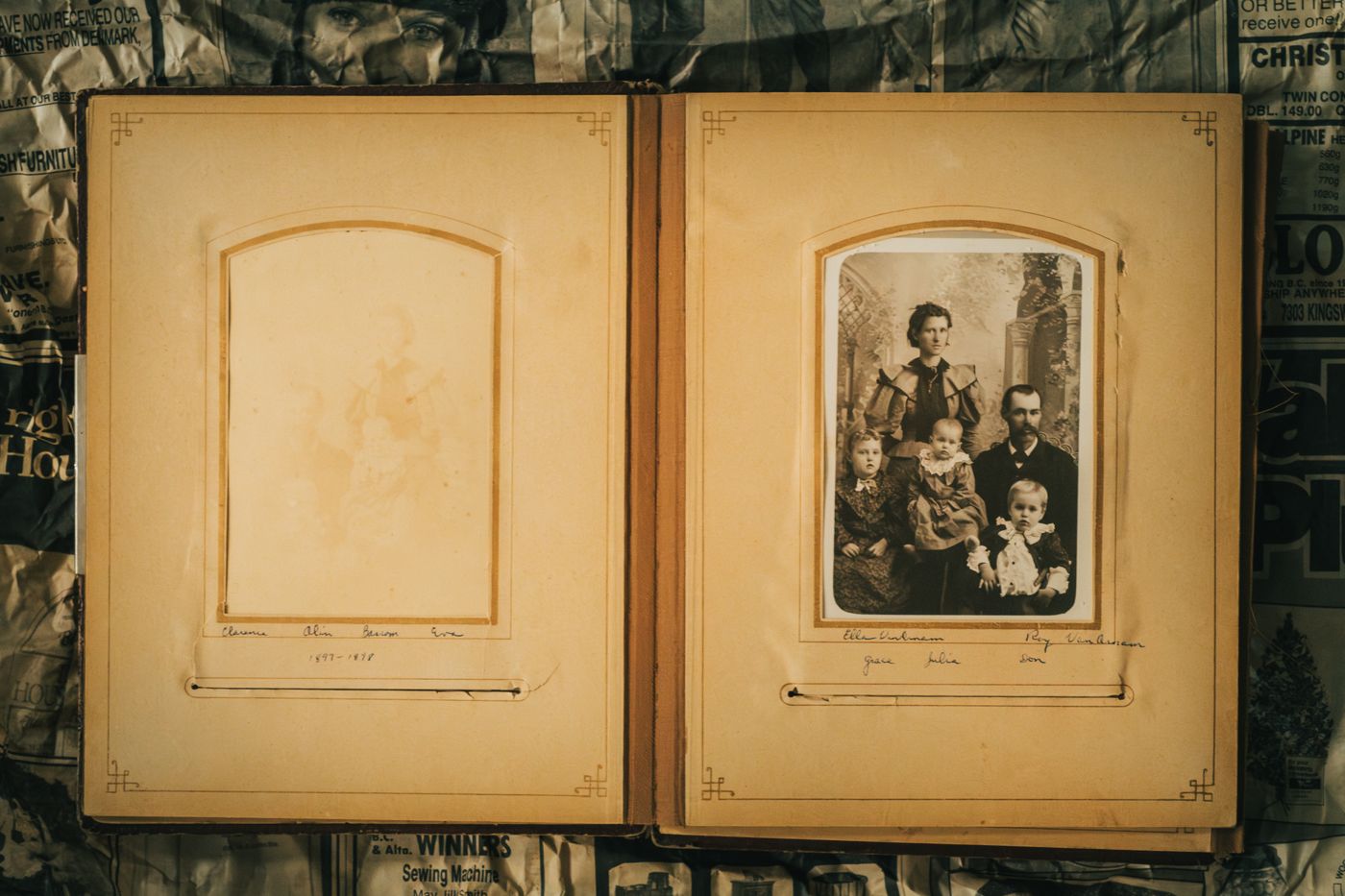
- Where it was kept or hung. A photo that lay in a dark box lasts much longer than one that stood in the sun for years. You can often see the difference within a single photo: the strip under the frame is still fresh, the rest has faded.
- What it was touching. A newspaper cutting next to it, an acidic card album page or sticky tape on the back all leave marks. Sometimes you see a stain in exactly the shape of the cutting.
- How it was handled. Fingers leave grease and acid on the image side, and that shows after a few years. Hold photos by the edges, with clean, dry hands.
What you can still do for discoloured photos
At home, you can't bring a yellowed or faded print back to how it was. Dye that has gone doesn't come back. What you can do is make sure it stops here.
- Take the photo away from anything that's damaging it: acidic album pages, sticky tape, rubber bands, paper clips and PVC sleeves. If it's stuck down, don't pull. Our article on safely removing stuck photos covers that.
- Keep it dark, cool and dry, in a polypropylene, polyester or polyethylene sleeve, in an acid-free box.
- Don't treat it yourself with water, bleach or cleaning products, and don't laminate it. Sticky tape on a tear only makes the damage worse over time.
- Don't throw negatives away. They've often been kept in the dark and so have survived better than the print. You can have a negative reprinted or scanned.
- If a photo is very precious, or it's stuck to glass or plastic, ask a photo conservator for advice first.
Framing photos safely
A photo on the wall gets light every day. That's why museums often hang a copy and keep the original in the dark. You can do the same: have a good new print made of your favourite old photo and frame that.
If you'd still rather frame the original, keep these things in mind:
- Use a mount made of acid-free board, ideally cotton rag board. That way the photo doesn't touch the glass and the gelatine can't stick to it.
- Attach the photo to the board with photo corners or acid-free linen tape, never with glue or sticky tape on the photo itself.
- Replace the thin cardboard backing of a cheap frame with acid-free board. Backings like that are often made of acidic wood-pulp card.
- Choose UV-filtering glass. It blocks some of the harmful light, but it doesn't make a photo invulnerable.
- Don't hang it in the sun, above a radiator or heater, in the bathroom or kitchen, and preferably not on a cold outside wall.
- Rotate. A photo that hangs for a few months and then spends a while in the dark lasts longer.
Digital restoration as a last resort
If a photo has really faded, digital restoration is often the only way to see the original colours again. As long as there's still some of each dye left, there's usually more information in the print than you can see with the naked eye.
- Scan the photo before you do anything else, at a high resolution, often 600 dpi for a standard print. Scan small photos higher.
- Keep that first scan unedited, in a lossless file format such as TIFF. That's your digital original.
- Always work on a copy. Many scanning programs have an option to restore faded colours, and in a photo editing program you can adjust the colour channels separately. With a photo that has turned red, that's how you remove the red cast and bring back the blue-green.
- Have a new print made of the restored version for your album or the wall. The original stays safe in the box.
A scan like that is also a backup of the image as it is now, and that's exactly what your shelf in Scrappd is for.
You don't have to sort everything out in one afternoon. Start with the photos that mean the most to you, get them out of the sun and away from acidic card, and scan them. Then the most important part is already kept safe.
Questions about this topic
Why do photos turn yellow over time?
It's a chemical process: the dyes in colour photos break down, the silver in black-and-white photos reacts with acids and fumes, and acidic paper or card passes acid on to the photo. Light, heat and damp speed this up.
How should I store old photos so they don't yellow further?
Keep them dark, cool and dry, in a polypropylene, polyester or polyethylene sleeve in an acid-free box. A guideline is a relative humidity of 30 to 50 per cent and no more than about 21 degrees.
Can you restore a yellowed photo at home?
You can't bring a faded or yellowed print back to how it was at home, because dye that has gone doesn't come back. But you can stop the decay and scan the photo to restore it digitally.
How do you frame an old photo safely?
Ideally, frame a copy and keep the original in the dark. If you still want to hang the original, use an acid-free mount, UV glass and photo corners, and don't hang the photo in the sun.