· 7 min read
Scrapbooking styles: how to spot them and find your own
Clean and simple, vintage, shabby chic, mixed media: how to recognise the well-known scrapbooking styles and slowly find your own way of working.
You leaf through other people's pages and notice that some move you straight away while others leave you cold. That already says a lot about your taste. Scrappers have come up with names for the best-known ways of working, mostly in English. Once you can recognise them, it gets easier to put into words what you like, to buy materials with more purpose and to make your own pages calmer.
A style isn't a rule. It's a set of choices that often go together: which colours, how much decoration, how much white space and which materials. Below are the styles you'll come across most often.
Clean and simple
Clean and simple, often shortened to CAS or C&S, is the calmest style. The photo comes first, and everything else supports it. What to look for:
- a plain or lightly patterned background, often white or a soft colour
- plenty of white space around the photo
- little decoration: a few stickers, a stamp, a die cut
- patterned paper in neat blocks or strips, in colours that go together
- a clear title and some journaling (the writing on your page)
It looks easy, but it's harder than you'd think. If you're used to layering a lot, knowing when to stop is tricky. And precisely because there's so little on the page, everyone can see where something's off: a wonky strip, a border that's just a bit too narrow. Measuring with a ruler and pencil before you stick things down helps.
Even so, it's a lovely style to start with. You don't need much material, and you learn what happens when you leave space. A popular trick is to pair one bold colour with an almost-white background and a little black or dark grey. That one colour gets to shine, and the page still stays calm.
Minimalist scrapbooking
Minimalist scrapbooking goes one step further. Sometimes there's just a photo, a few lines of text and one small accent on a white page. The difference from clean and simple is mainly one of degree: with clean and simple you can still have a paper collection and a sticker title, while with minimalist work you take things away until almost nothing is left.
What makes it work is placement. Don't automatically put the photo in the middle; try a corner, for example, or a third of the way across the page. Let a repeated element, a line or a few small dots run into the white space, so the whole thing holds together. Then the empty space isn't a gap, it's breathing room.
Vintage and shabby chic: the difference
These two often get mixed up, because both have a touch of the past. Still, they feel different.
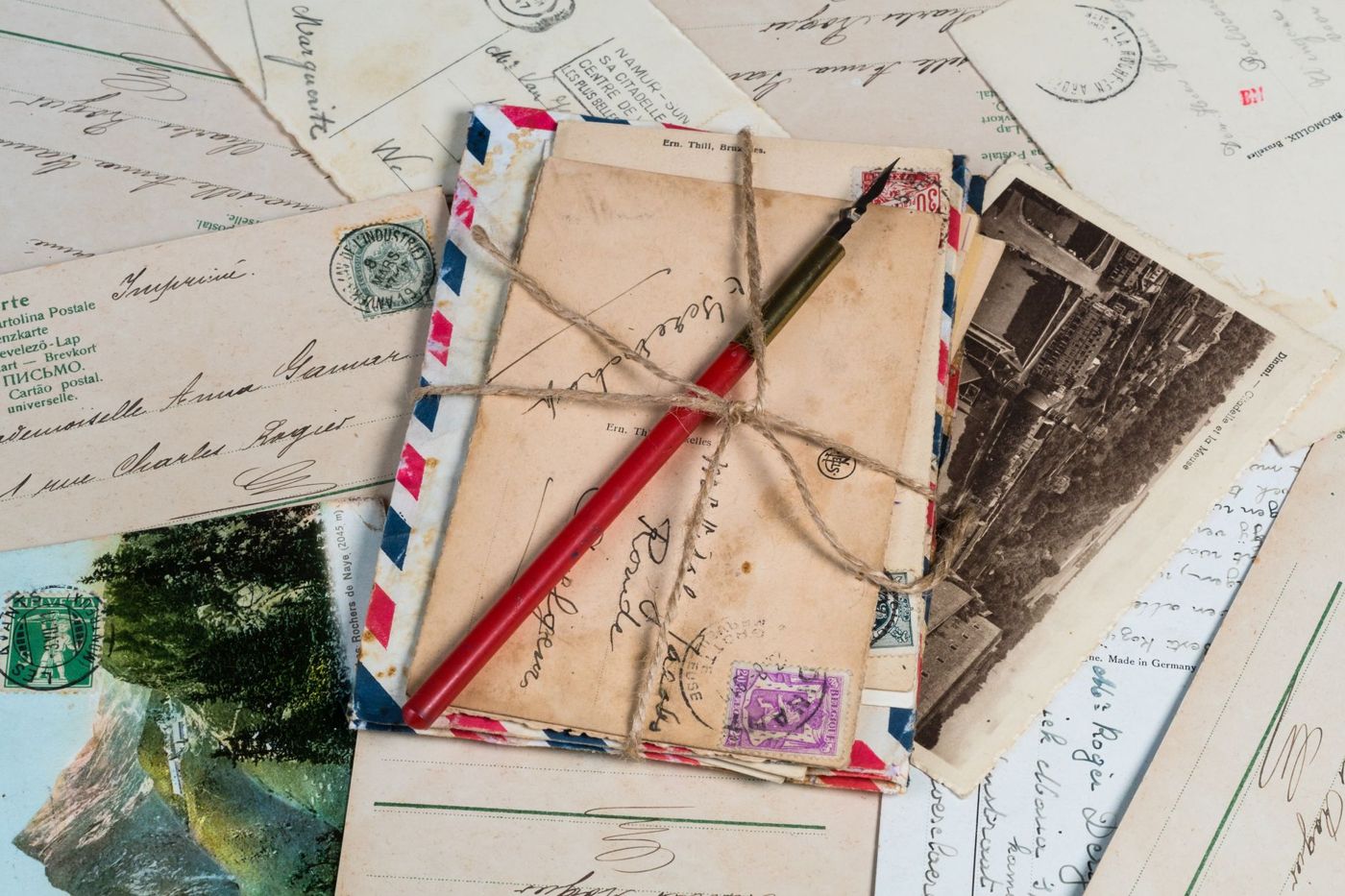
Vintage wants to look old. The colours are brown, beige, cream and yellowed. Edges are torn, distressed or darkened with ink, and photos are often black and white or sepia. You'll see paper with old newsprint lettering, kraft paper, lace, little metal keys, corners and frames, buttons. It feels like a trunk in the attic full of your grandmother's things.
Shabby chic is romantic and sweet. The colours are pastel: soft pink, light blue, cream. You'll see lots of flowers, lace, ribbons, pearls and sparkly gems, sometimes a few splashes of paint. It looks a little used and weathered too, but in a sweet, fresh way.
A quick rule of thumb: if your colours are earthy and brown, you're in vintage territory. If they're pastel and floral, it's shabby chic. Heritage is related to vintage, but it's all about real old family photos, often alongside belongings of those ancestors.
The American style
The American style is often seen as the classic foundation the others grew out of. One or more photos take centre stage, and the decoration matches the subject and the colours in the photo. A beach photo gets sand, shells and blue. Pages are usually neatly built up, with straight blocks of paper, a clear title and stickers or die cuts from a single collection.
Some scrappers contrast this with a European style: looser and more organic, with more layers, paint and shapes that don't fit into a grid. It's a rough distinction and not everyone uses it, but you will come across it.
Artsy and mixed media
Artsy and mixed media are close cousins. Mixed media literally means mixing different materials: paint, gesso (a white primer), texture paste, ink, stencils, fabric, wood, sequins. The background becomes a piece of work in its own right, with splatters, stains and layers that show through.
The colours are often bold and high-contrast. The photo usually stays the focal point, but it sits within a lively, layered setting. You'll need sturdy paper that can handle wet media, and some experience of how paint and paste behave.
Artsy is used a little more loosely, for pages that look more like a piece of art than a photo album: lots of handwork, drawn lines, doodles, collage. Free style belongs on this list too. There you don't follow a set approach, and you combine techniques and styles however suits you. A lot of scrappers actually sit there.
A few more names you'll come across
- Clustering: all the decoration gathered in one part of the page, like a bunch of layers, with the rest left empty.
- Natural: dried flowers, twigs, leaves, kraft paper and raffia.
- Cute: cheerful, pastel, with sweet little characters.
- Ephemera style: a collage-like background with lots of stacked scraps of paper, cards and tags.
Digital scrapbooking isn't a separate style. It's a way of working, and you can use it to create any style.
How to find your own style
Start with what you already love. Collect twenty or thirty pages by other people that move you, on a mood board or simply in a folder of images. Then put them side by side and see what keeps coming back. Are the backgrounds light or dark? Lots of layers or few? Clean blocks or messy edges? You often turn out to know more than you thought.
Look at your own stash as well. What you buy gives your taste away. Is it mostly pastels and lace, or kraft paper and metal corners? And what keeps sitting there unused, even though you thought it was gorgeous in the shop?
Then recreate a few pages you love, using your own photos and materials. You'll soon notice what feels natural and what's a struggle. If you make lots of pages, your own style will emerge by itself. It happens slowly, and that's fine. First pages are often disappointing, and they're the ones you learn the most from.
It helps to stick with one style for a while and get to know it well. Your eye gets sharper, you learn which colours go together and you buy fewer things that never get used. After that you can borrow bits from other styles. It's exactly that kind of mix that, over time, becomes your own signature.
Ask yourself, too, what you want from your book. If you mainly want to record stories and work quickly, a calm style suits you. If you mainly want to get creative with paint and layers, mixed media is the more obvious choice.
Can your style change from page to page
Yes. There's no rule at all that says an album has to be in one style. Lots of scrappers choose by subject: a vintage page for grandad's old photos, something fresh and clean for the holiday, a playful page for the children's birthday.
If you'd still like an album to feel like a whole, keep a few things the same. Think of the same font or handwriting in your titles, a recurring colour, or the same way of journaling. Then the rest can change from page to page without it getting messy.
It works the other way round too: one album per style. A clean yearbook, a mixed media book for experiments, a small vintage album for family history. In the end, the best style is the one you keep enjoying making things in.
Questions about this topic
What is clean and simple scrapbooking?
Clean and simple, often shortened to CAS, is the calmest style. The photo comes first, with plenty of white space, little decoration and a clear title.
What is the difference between vintage and shabby chic?
Vintage uses earthy colours such as brown, beige and cream, and feels like an attic trunk full of old things. Shabby chic is pastel, floral and romantic, with lace, ribbons and pearls.
What is mixed media scrapbooking?
With mixed media you combine different materials, such as paint, gesso, texture paste, ink and fabric. The background becomes a piece of work in its own right, and you need sturdy paper that can handle wet media.
How do I find my own scrapbooking style?
Collect pages by other people that move you and see what keeps coming back, for example in colour and amount of decoration. Then make lots of pages yourself: your style slowly emerges by itself.