· 6 min read
How to choose a notebook that ink won't bleed through
Fountain pen, markers or a little watercolour: how to choose paper that holds up, test it before you start and rescue a page that bleeds through anyway.
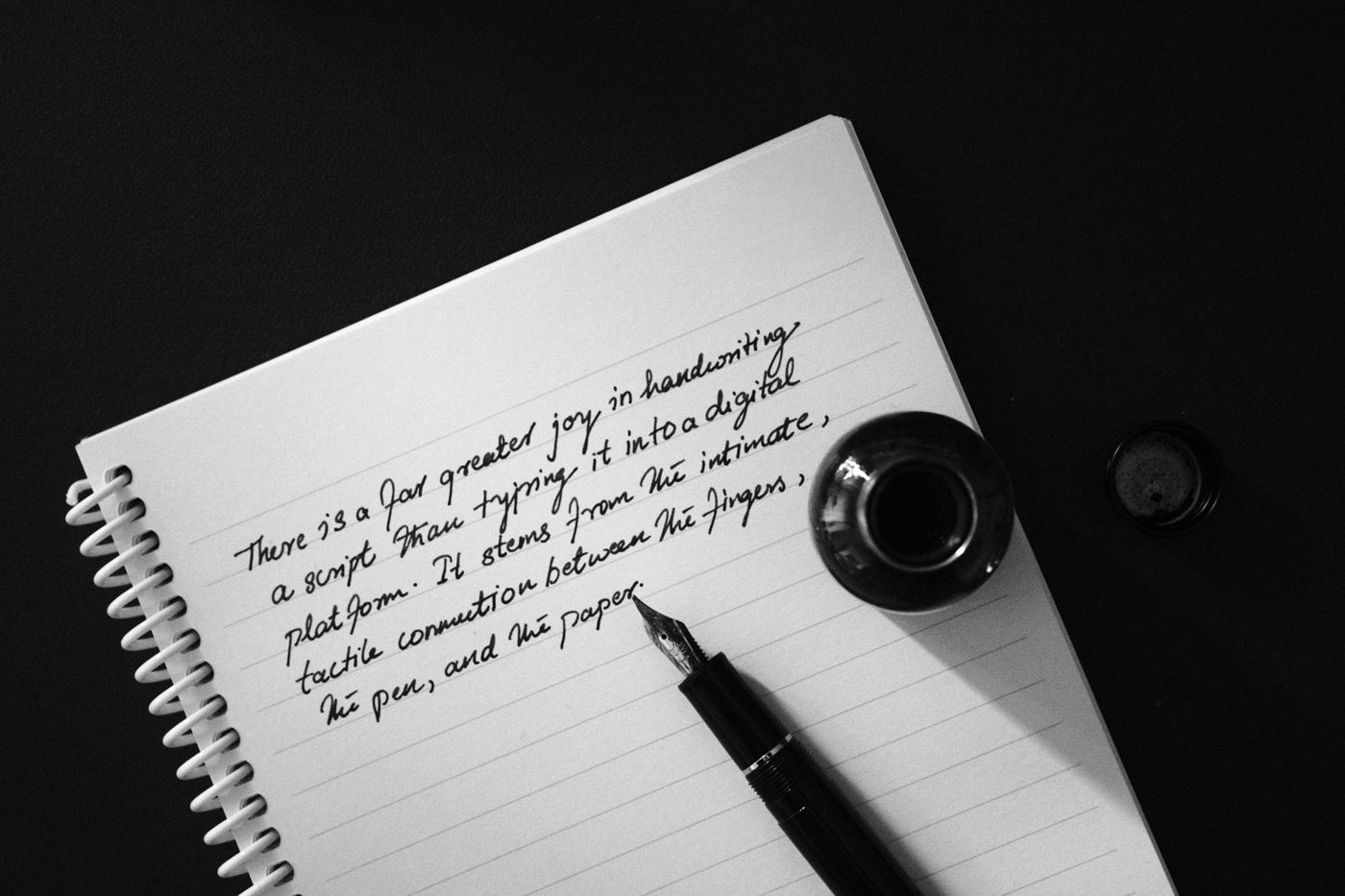
You write the first page of your new journal with your nicest pen. You turn the page, and there it all is again, in mirror writing. If you work with a fountain pen, markers or a bit of paint, you'll know the feeling. The good news: you can mostly prevent it by knowing what to look for, and by testing before you start.
Three problems that look alike
Scrappers and journalers often lump them together, but they are three different things. It helps to tell them apart, because the fix is different for each.
- Ghosting (also called show-through): you can see the writing from the other side as a shadow through the paper. The ink hasn't gone through the sheet; the paper is just a bit thin or slightly see-through. You can often write over it without any trouble.
- Bleed-through: the ink has really soaked through the paper and shows up as spots or lines on the back. Sometimes even on the page underneath. That back page is then not really usable any more.
- Feathering: the ink creeps along the fibres of the paper, so your lines turn fuzzy instead of crisp. This happens on the front, even when nothing bleeds through.
And then there's literal pressing through: with a hard pen and a firm hand, you emboss the next sheets. The quickest fix for that is a piece of card or a loose sheet of paper under your page.
What to look for in the paper
The first thing everyone looks at is paper weight, also called grammage: the weight in grams per square metre. Many well-known notebooks are around 70 to 80 gsm, and some go up to 90 or 100 gsm. Thicker paper ghosts less. A common rule of thumb against ghosting is 90 gsm or more, but it's still only a guideline.
But grammage isn't everything. Experienced journalers keep finding that thin paper sometimes performs better than thick. The difference lies in the sizing and the finish. Paper that is well sized or lightly coated lets ink sit on top instead of soaking it up. That gives sharp lines and little bleed-through, even at a low weight. Thin Japanese planner and notebook paper is often mentioned as an example: wafer-thin, and yet it copes well with many fountain pens. That does vary by paper type and edition, though, so test it.
Look at the colour too. Cream or off-white paper makes shadows less noticeable than bright white. And if you scan everything, ghosting often looks stronger in a scan than in real life.
Paper for fountain pens, markers and watercolour
What works depends on what you do with it. There's no notebook that can handle everything.
For a fountain pen, you want smooth, well-sized paper. Wet inks and broad nibs are the hardest; with a fine nib and a drier-writing ink, you'll get by on more types of paper. Dark ink ghosts the most. Gel pens and ballpoints usually cause little bleed-through, though pressing hard can leave an impression.
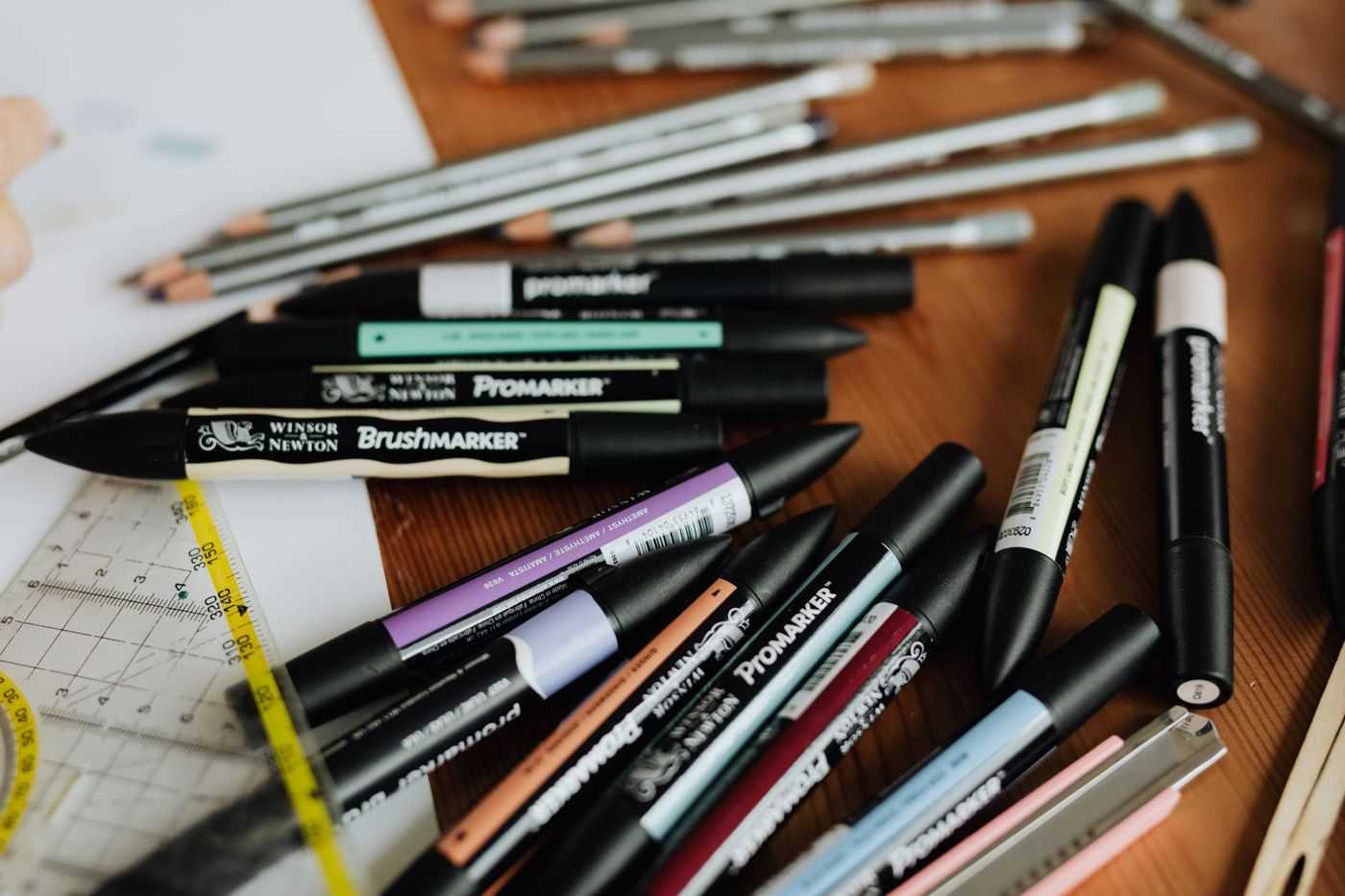
Markers are a different story. Water-based highlighters and brush pens soon go through thin planner paper. Alcohol markers bleed through almost any ordinary notebook paper. Always put a sheet underneath and expect to lose the back of the page, or choose dedicated marker paper or sturdy cardstock (thick, stiff paper).
Stamp ink belongs here too. Thin water-based inks, the dye inks, soak through easily. Pigment ink sits more on top and usually causes fewer problems on thin paper.
Watercolour is the trickiest. Ordinary notebook paper buckles and lets paint run through. For a small accent now and then, you can paint one side and leave the back blank. If you really want to paint in your journal, choose a sketchbook with mixed media or watercolour paper. That is much heavier; proper watercolour paper is usually 200 to 300 gsm.
Does it lie flat? Binding and size
A notebook that keeps closing on you isn't nice to write in. Especially around the middle of a spread, where a few days of a weekly layout disappear into the spine.
These are the common bindings:
- Sewn (signatures stitched with thread): often lies nicely flat after a while of use, and is sturdy.
- Glued: cheaper, but often springs shut and can come loose with a lot of opening and closing.
- Spiral or ring-bound: lies completely flat and can be folded back on itself. The rings do get in the way when you write on the left-hand page.
- Loose-leaf system or traveler's notebook: you choose the paper yourself and swap it out if you don't like it. Handy if you work with different pens and techniques.
Try it out in the shop. Open the book in the middle and let go. Does it stay open, and can you write right into the fold without any effort? Open and close the cover a few times as well and feel whether the spine feels solid.
On size: A5 is a nice middle ground for many journalers, big enough to work on and small enough to carry around. The more you stick into it, the thicker the book gets. A loose-leaf system gives you more room then, because you can take pages out.
How to test paper before you start
Always test before you begin your first real page. Here's how:
- Take the back page or the last sheet of your notebook.
- With every pen, marker and stamp you want to use, make a line, a word and a small filled-in patch. Write the name next to it.
- Press the way you normally would, and also write with a wet, full line, not just a dry stroke.
- Let everything dry properly.
- Turn the sheet over and look at the back and at the page underneath. Hold it up to the light, too.
If you can't test in the shop, look for photos of the backs of pages other people have made. And don't buy a whole stack straight away if you haven't tried one book yet.
What to do if it bleeds through anyway
It's happened, and you don't want to throw the book away. You don't have to.
- Stick something over it. A piece of patterned paper, a photo, a journaling card or a little envelope covers a bled-through back page completely. Many journalers actually use that as the start of a new page.
- Glue two pages together. Work only on the front and glue the next sheet to it. Your page gets sturdier and the stain is gone.
- Work on loose paper. Draw or paint on a separate sheet and stick it in afterwards. Then the paper in your notebook no longer matters.
- Put a protective sheet under your page when you work with markers or paint, so the page underneath stays clean.
- Choose a finer pen, a drier ink or a darker colour for the pages that follow.
- Let your ink dry in its own time, or blot it with a tissue if the paper is slow to absorb.
And sometimes it's best to just let it be. A little shadow from the day before is part of a book that really gets used. Paper that ghosts isn't broken. It's just thin paper.
Questions about this topic
What's the difference between ghosting, bleed-through and feathering?
With ghosting, you see the writing from the other side as a shadow. With bleed-through, the ink has really soaked through the paper, and with feathering, the ink creeps along the fibres so lines turn fuzzy.
What paper weight do you need for a fountain pen?
A common rule of thumb against ghosting is 90 gsm or more, but the sizing and finish of the paper often tell you more than the weight. So always test your own pen.
How do you test if a notebook can handle your pen?
On the back page, make a line, a word and a small filled-in patch with every pen, marker and stamp. Let everything dry and look at the back and the page underneath.
What can you do when ink bleeds through the paper?
Stick a piece of patterned paper, a photo or a card over it, or glue two pages together. You can also work on loose paper and stick it in afterwards.