 · 7 min read
Who is in that old photo, and when was it taken?
A box of photos with no names or dates: with questions, small clues and a few archives, you can often get further than you think.
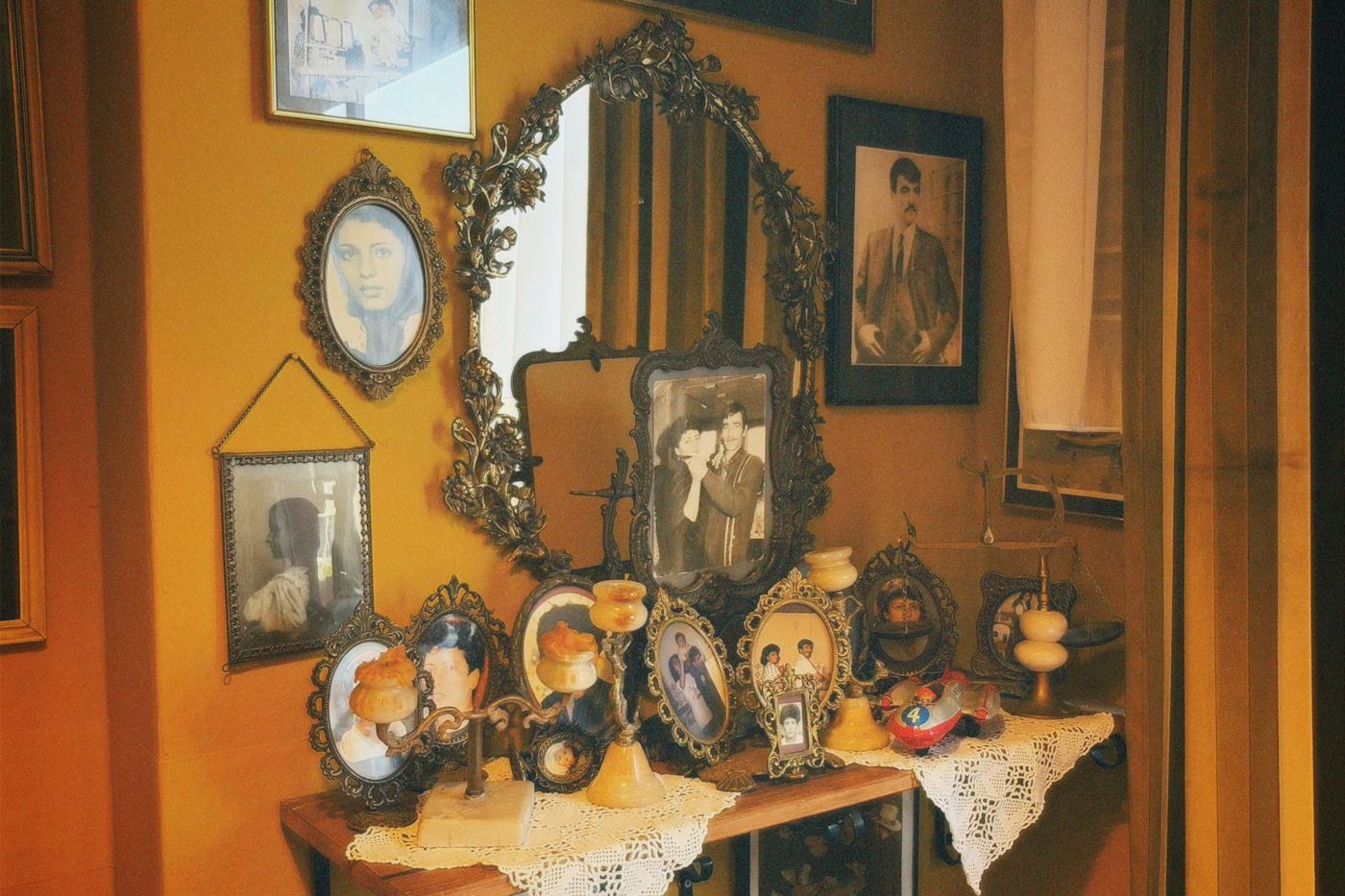
Everyone knows that box. Photos of people in their Sunday best, a wedding outside a church, a little boy on a tricycle. Nobody ever wrote anything on the back, because back then everyone still knew. Who is in them and when they were taken can often still be found out. It takes some detective work, a magnifying glass and, above all, the people who still remember.
Start with the family, and start now
The best source isn't in an archive but at the kitchen table. Uncles, aunts, an old neighbour: they recognise faces, houses and occasions that mean nothing to you. That knowledge disappears with them, and that happens sooner than you think.
A few things make that kind of conversation easier:
- Bring a small pile, ten or twenty photos, not the whole box.
- Show the photos on paper or on a tablet you can zoom in on. Older people often only recognise someone once the face is shown large.
- Ask open questions. Not just who is this, but also: where was this, what was being celebrated, who might have taken this photo?
- Write everything down straight away, even what's uncertain. "Probably Aunt Riek, maybe her sister" is better than nothing.
- Record the conversation if everyone is happy with that. The stories that come up along the way are often the most valuable later on.
Ask different family members separately, too. One knows the names, another knows where the house was. If they contradict each other, write down both versions.
Working with birth years
If you know who is in a photo, you often already have a time frame. An engagement photo of someone born in 1925 will probably date from roughly the 1940s. A child who looks about six gives you a fairly precise estimate if you know the year of birth.
It works the other way round too. If you have a group photo in which you recognise one person, estimate how old they look. That gives you a direction for everyone else in the photo: whose age in the family fits at that moment?
The type of photo tells you a lot
Turn the photo over and look at it as an object. Size, card and finish changed over time, and that helps with dating.
- Small portraits on sturdy card, roughly the size of a business card, mostly belong to the second half of the nineteenth century. Larger portraits on card, known as cabinet cards, came a little later and lasted into the early twentieth century.
- Postcard photos, with an address panel on the back, were popular in the first decades of the twentieth century.
- Prints with a scalloped (deckle) edge are mostly from around the 1950s and 1960s.
- Square colour photos with a white border and colours that have shifted towards red or orange often point to the 1960s and 1970s.
- On photos from the second half of the twentieth century, the back or the border sometimes shows a month and year, printed by the lab that developed the photo. Look closely, as that text is often very small.
Features like these give you a time frame, not an exact date. People also kept photos for a long time and sometimes had old portraits reprinted. Use them as a clue, together with everything else.
The photographer as a lead
Old studio portraits often have the photographer's name on the front or back of the card, with the town and sometimes an address. That's worth its weight in gold. Photographers moved, went bankrupt or handed over their business, and their addresses changed. If you know when a photographer was at a particular address, you also know roughly when the photo was taken.
You can find those details in old directories, newspaper adverts and sometimes in lists of photographers kept by archives or museums. The studio's location also tells you where the family lived or was visiting at the time.
Clothes, hairstyles and the background
Fashion is a well-known clue, but be careful with it. In the countryside and among older people, fashion often lagged years behind, and Sunday best was worn for a long time. Clothing gives you a decade rather than a year.
Look especially at things that changed quickly: skirt lengths, sleeve shapes, hats, hairstyles, glasses. A magnifying glass helps. Look at the background too. Cars, bicycles, shopfronts, street lamps and advertising signs are often easy to date. You can compare a recognisable building or street with old photos of that place in an image database.
With photos of school classes, clubs or sports teams, it pays to look at every face with a magnifying glass. There's often a sign or banner somewhere with a name or year.
Archives and newspapers
Once you know roughly who you're looking for, you can search further in public records. In the Netherlands, many registers of births, marriages and deaths have been digitised and can be searched on sites such as WieWasWie and Open Archieven. That's how you find years of birth, the names of brothers and sisters, and who married whom. More recent records aren't public yet: birth records become public after 100 years, marriage records after 75 years and death records after 50 years.
Digitised newspapers, such as those in Delpher, contain family announcements, engagements, anniversaries and reports from clubs and societies. A notice about a silver wedding anniversary might explain exactly the photo you've been looking at for years. Don't just search by name: text recognition in old newspapers makes mistakes, so try variations of a name too, or search by place and date.
Don't forget the regional archives and local history societies in the place where your family lived. They have image databases with old photos of streets and buildings, and sometimes whole collections from residents' scrapbooks and albums. Not everything is online; an email or a visit often turns up more than you expect.
What can AI do?
Many photo programs and apps group faces automatically. That works on scans of old photos too and can be handy: suddenly you see that the same man appears in twelve photos, at different ages. Then you only have to find out once who he is.
There are also services that compare faces in old photos with other users' photos, or that estimate an age or time period. Treat that as a suggestion, not an answer. Facial recognition gets it wrong with relatives who look alike, and even more often with old, blurry photos.
AI can also colourise a photo or make it sharper. That looks lovely, but the program fills in what it can't see. So a colourised coat doesn't show the real colour, and a touched-up face can look slightly different from how the person really was. Always keep the original scan, and use the edited version only for looking at.
Think about what you share, too. Facial recognition works with facial data, and that's sensitive. Family photos you put into an online service are no longer just yours. Especially with people who are still alive, ask first whether it's OK.
In the end, a name always comes from someone's memory or from paper. AI helps you search; the family and the archives give you the answer.
Record it for those who come after you
What you discover is only worth something if it's kept. Write it down in a way that will still make sense in fifty years.
- Write on the back of loose photos with a soft pencil and light pressure, along the edge. Don't use a ballpoint or marker, as they press through or smudge.
- Note who is in the photo from left to right, with full names, the place, the year or period, and how you know: "according to Uncle Henk" or "estimated from clothing".
- For larger collections, keep a simple list with a number for each photo, who is in it, the date, the photographer and where your information came from.
- Keep the collection in the order you received it in, or write that order down. The order itself can mean something too.
If you scan the photos, scan the backs as well and put the names in the file name or the file description. If you want to keep them and share them with family, an app like Scrappd can keep the scans together with their stories on one shelf.
Finally, in an album or scrapbook, simply write the names under the photos in your own handwriting. That's exactly what was missing from the photos in that box.
Questions about this topic
How do I find out who is in an old photo?
Start with older relatives: show them the photos and write down what they say straight away. After that, you can search further in records, newspapers and image databases.
How can I date an old photograph?
Look at the size, card, border and the photographer's name, then at clothing, hairstyles and the background. Together, those clues usually give a period of about ten years, not an exact date.
Where can I find records in the Netherlands about people in old photos?
Many registers of births, marriages and deaths can be searched on WieWasWie and Open Archieven. Old newspapers are in Delpher, and regional archives often have image databases.
How do I write names on old photos without damaging them?
Use a soft pencil with light pressure along the edge of the back, never a ballpoint or marker. Also note how you know, for example 'according to Uncle Henk'.