 · 7 min read
Storing scrapbooks: where, what temperature and how much humidity
Your album is finished. So where do you put it so that it still looks just as lovely in thirty years? About the right spot, damp, boxes, pests and what to do if things go wrong.
You make a scrapbook to keep it. Yet the finished album often ends up somewhere we would never choose for an old photo: in the loft, in a cupboard against an outside wall or lying flat under a pile of magazines. Paper, glue and photos are sensitive to heat, damp and light, and an album is extra vulnerable because it contains so many different materials. A few simple choices will give your books a much longer life.
The best place in your home
The rule of thumb is simple: keep your albums in a room where you feel comfortable yourself. A living room, bedroom or study usually has a fairly even temperature and humidity. That is exactly what paper needs.
The worst places are the very places where we like to put things away:
- The loft gets hot in summer and cold in winter. Heat makes paper and glue brittle.
- The cellar and the garage are often damp. Damp attracts mould and insects.
- A cupboard against an outside wall can turn cold and clammy on the inside.
- A shelf above the radiator or next to the stove dries everything out and makes it warp.
Watch out for light too. Sunlight fades the spine and cover of an album, and ordinary daylight and some lamps contain UV rays as well. Place your bookcase where the sun doesn't fall on it, or keep a curtain closed during the sunny hours.
What temperature and humidity?
Archives and libraries often keep a temperature of around 18 to 21 degrees and a relative humidity of about 45 per cent. At home you don't need to hit that to the exact degree. What matters more is that it stays stable. Paper expands when it absorbs moisture and shrinks when it dries out; that constant back and forth does more harm than a few degrees too warm.
As a guide for home:
- A humidity between 30 and 55 per cent is fine.
- Above 60 per cent you risk wavy pages and mould.
- Below 30 per cent paper gets dry and can also pull and warp.
- Cooler is better than warmer, as long as it doesn't get damp.
A simple hygrometer, a small device that measures humidity, will show you within a few days what conditions are like in your room. Measure in winter too, when the heating is on, and on a muggy summer's day.
Upright or flat?
That depends on the size and weight. Small and medium-sized albums can simply stand upright on the shelf, like books. Do place them between books or albums of roughly the same height, so they don't slump to one side. An album that leans at an angle against the edge of the shelf will warp over time.
Large, heavy albums, such as a full 30.5 x 30.5 cm (12 x 12 inch) album, are better lying flat. That way the spine doesn't have to carry the full weight of the pages, and loose bits can't slide out. Never let them stick out over the edge of the shelf, and don't stack too many on top of each other: two or three is enough, with the heaviest album at the bottom.
Which box?
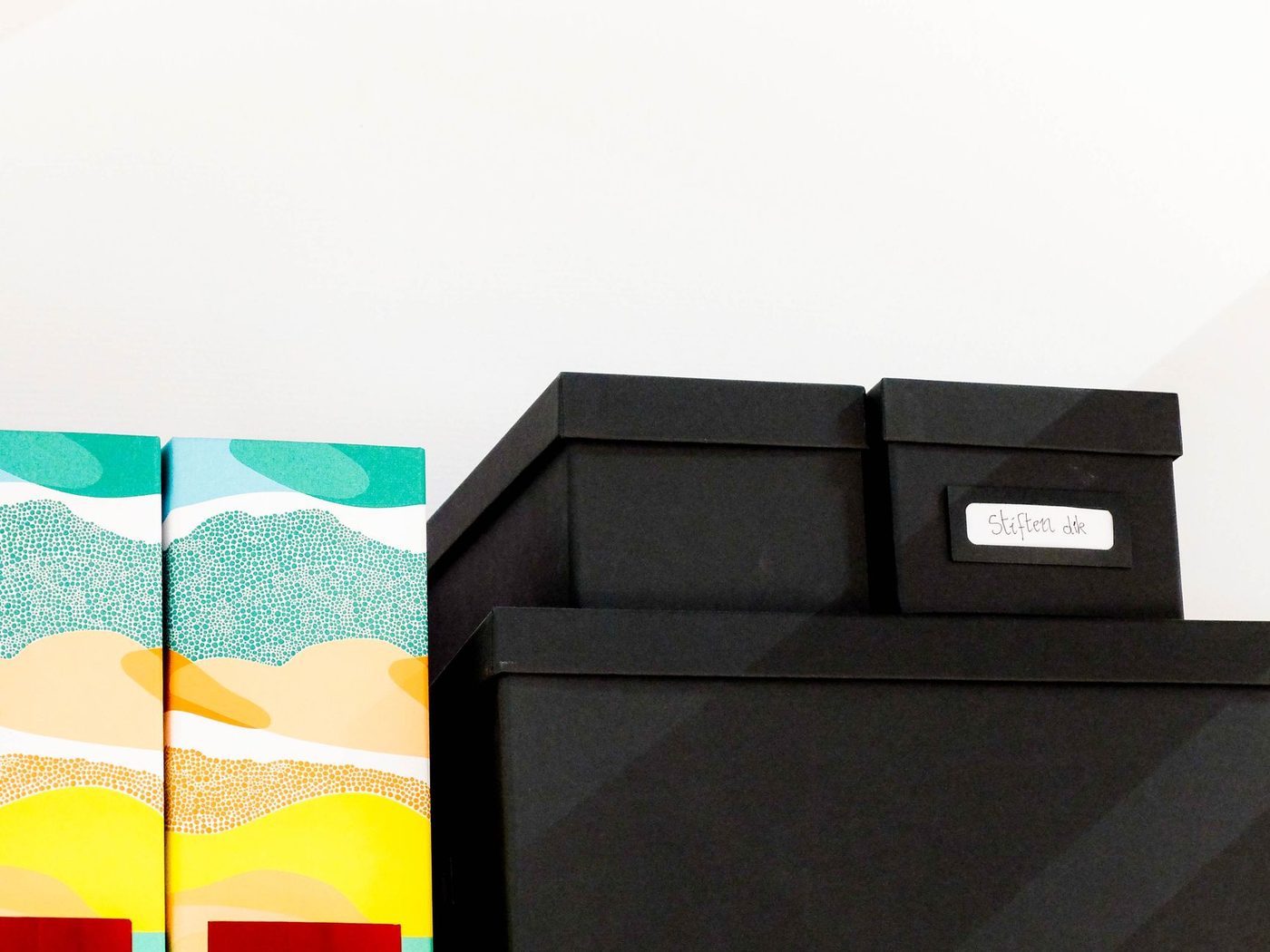
A box protects against light and dust, and holds an album with a loose spine together. Choose a box that is roughly the same size as the album, so it doesn't slide around inside. Archival boxes made of acid-free and lignin-free board are designed for this. The word archival isn't a protected term, so check what it says on the packaging: acid-free and lignin-free.
A few things to avoid:
- An ordinary moving box or shoebox made of brown cardboard, which turns acidic over time.
- A sealed plastic tub in a space that gets warm and cold. Condensation can form inside.
- A tight-fitting slipcase around the album. It rubs against the cover every time you use it.
Preventing mould, spots and silverfish
Almost every problem starts with damp. Mould, dust mites and insects thrive in a clammy, still environment. Keep the humidity below 55 per cent, make sure the air in the room is refreshed now and then, and don't put albums right up against the wall but leave a few centimetres of space behind them.
Silverfish (also called paper fish) love to eat glue, starch and paper, and like damp, dark corners. If you see them, it's usually a sign that it's too damp. A dry room and regular dusting help more than any product.
What you put in your album counts too. Real flowers, sweets and other perishable materials can discolour pages, make them stick together and attract insects or mould, which then spread to the rest. A photo of the bouquet is safer than the bouquet itself. Sticky tape discolours and over time comes loose or leaves stains; photo corners are a better choice.
If you do find a patch of mould, take that album away from your other books straight away. Let it dry in a dry, airy room, and for a valuable album ask a conservator for advice. Brown speckles on old paper, known as foxing, aren't necessarily mould, but it's wise to keep a sheet like that separate.
Albums that get too thick
An album that bulges wears out faster. The spine can't take the weight, the pages pull at the rings or screws, and chunky embellishments, decorations such as buttons and chipboard, press marks into the page next to them. It's one of the most common problems with scrapbooks, including old albums in archives.
What helps:
- With a post-bound album or ring binder, regularly leave out a few empty pages, or use extension posts so the pages keep some room.
- With an album that has a fixed spine, it's better to start a second volume than to keep cramming the first one full.
- Don't place chunky elements in exactly the same spot on two facing pages.
- Large newspapers, posters or maps that you have to fold several times don't really belong in the album. Every fold will tear in time. Keep them flat in a folder or box alongside it.
- Real objects, such as a shell or a pebble, are better kept in a separate little box.
What to do about water damage
If water has got to your albums, don't wait. Wet paper and wet photos start to go mouldy within a few days, and the longer you wait, the more firmly everything sticks together.
- Take the album out of the box or plastic bag. Trapped moisture only makes it worse.
- Stand the album open and make sure the pages don't touch each other. A few clothes pegs or sheets of kitchen roll between the pages help.
- Take photos out while they're still wet. Once dry, they stick to each other or to the page. If they won't come out without force, leave them where they are.
- Lay loose photos face up on a clean towel, or hang them from a peg. Not in full sun and not with a hairdryer.
- Let everything dry in a cool room with a window slightly open or a fan that doesn't blow directly onto the paper.
If you can't get it dry within a day or two, for example because there are a lot of albums, you can wrap up a wet album and put it in the freezer as an emergency measure. That stops the mould until you have time to dry it properly. For heirlooms, it's wise to ask a conservator for advice first.
Don't repair it yourself with tape
A loose spine or a torn page tempts you to grab a bit of sticky tape. Don't do it with an album you want to pass on. In the long run, tape and glue do more harm than the tear itself. Put loose pieces back in their place without sticking them down, store the album in a box and handle it gently. Wash your hands before you leaf through it, ideally without hand cream, and keep coffee and food well away.
A copy as a safety net
However careful you are, an album is unique and fragile. A scan or photo of every page is a calm safety net: if there's a fire, water damage or simply wear from lots of leafing through, you still have the pages. Photograph or scan the album open, page facing up, and never press it flat on the glass of a scanner. If you scan the book with Scrappd, the pages sit privately on your shelf and the original can stay safely put away.
Questions about this topic
Where is the best place to store a scrapbook?
In a room where you feel comfortable yourself, such as the living room or bedroom, out of the sun and not against an outside wall. The loft, cellar and garage are usually too hot, cold or damp.
What humidity is best for albums and photos?
A humidity between 30 and 55 per cent is fine, with around 45 per cent as the target. Above 60 per cent you risk wavy pages and mould. Keeping it stable is what matters most.
Should scrapbooks be stored upright or flat?
Small and medium-sized albums can stand upright, like books. Large, heavy albums, such as a full 30.5 x 30.5 cm album, are better lying flat.
What should I do if my scrapbook gets wet?
Take the album out of the box or plastic bag, stand it open so the pages don't touch each other and take out wet photos. Let everything dry slowly in a cool room, without a hairdryer or full sun.