 · 7 min read
How to store printed photos for decades to come
The right box, safe plastic and a quiet spot at home: this is how to keep prints, old photos and negatives looking good for years.
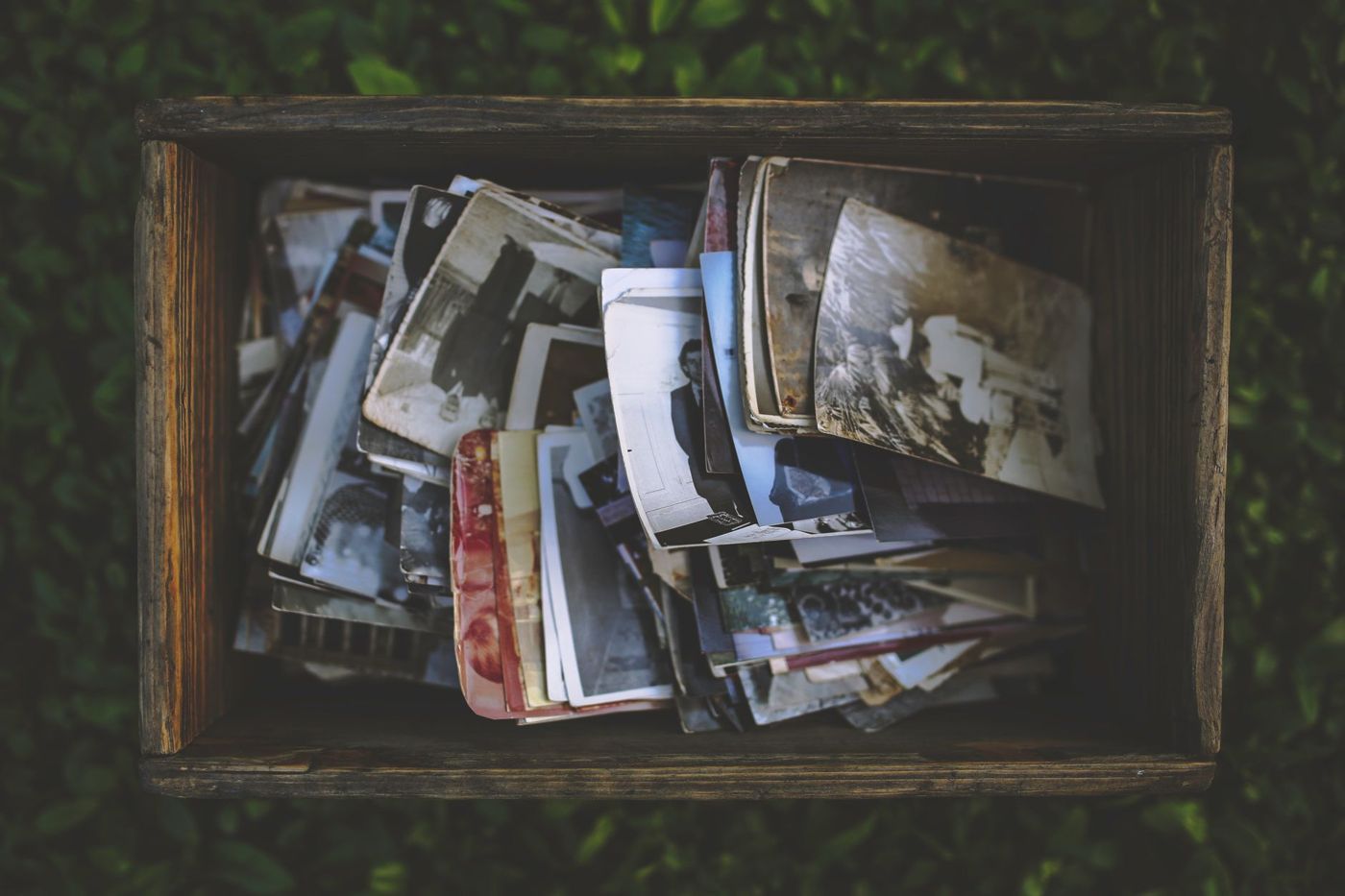
Photos at home are rarely lost all at once. Usually it happens slowly, year after year, in a shoebox in the loft, with an elastic band round it or in a brown envelope. With a few good choices of materials and place, you can keep prints looking good for decades. You don't need a museum store for that, just a good box, the right sleeves and a quiet spot at home.
What makes photos deteriorate
Heat, damp and light all take their toll, but the material your photos are kept in matters too. Ordinary cardboard, brown envelopes and newspaper contain acids and lignin, a substance from wood that eventually turns paper yellow and brittle. These substances slowly migrate into the photos.
Plastic can be just as harmful. Soft PVC sleeves contain plasticisers that are released over time, which can make prints discolour or turn sticky. Glue, sticky tape and self-adhesive album pages also give off substances that damage photos.
Look beyond the word acid-free
Packaging uses words like acid-free, photo-safe and archival quality. None of these are protected terms. What's more, acid-free is not the same as lignin-free: paper can be one without the other. So check that both are mentioned.
If you want more certainty, look for the PAT, the Photographic Activity Test. This international test (ISO 18916) checks whether a material reacts chemically with photos. A product that passes the test can be considered photo-safe. For paper and boxes you'll sometimes also come across standards: ISO 9706 for permanent paper and ISO 16245 for boxes and folders for paper documents. Those are about paper; for photos, the PAT is the most important addition.
Boxes and envelopes that do the job
An ordinary family archive only needs a few good basics.
- A sturdy archive box made of acid-free and lignin-free board. Choose a closed box, without handles, holes or ventilation slots, so dust and light stay out. They come in sizes including A4 and A3.
- Photo boxes in print size, for example for 10 x 15 cm, which you can divide up with card dividers or index cards. Write the year, the month and the subject on each divider, so you can find everything again later.
- Envelopes or folders made of acid-free paper for loose and precious photos.
Go for a cardboard box rather than a plastic storage tub. And make sure sleeves and folders fit the box exactly, so nothing can slide around.
Which plastic is safe
Three types of plastic are suitable for storing photos long term: polypropylene (PP), polyester (also known as Mylar) and polyethylene (PE). Leave PVC, also called vinyl, on the shelf. If it doesn't say what a sleeve is made of, don't buy it.
Plastic has one weak point: at high humidity, above around 60 per cent, photos can stick to it. If your photos are kept somewhere that sometimes gets damp, paper envelopes are the better choice. Photos you've printed yourself on an inkjet printer should dry for a full 24 hours before they go into a sleeve.
There's more about sleeves and photo pockets in albums in a separate article.
The best place at home
Photos like it cool, dry, dark and above all stable. Archives aim for a relative humidity of roughly 30 to 50 per cent and a temperature of no more than about 21 degrees; cooler is better, as long as it doesn't get damp. More important than the exact figure is that it doesn't keep going up and down. A simple hygrometer shows you how humid a spot is.
Where it's better not to keep photos:
- in the loft, where it's hot in summer and cold in winter
- in the cellar or crawl space, with a risk of damp, mould and leaks
- in the garage, the shed or a storage unit, because of the fluctuations and pests
- on the windowsill or anywhere else in the sun, where colours fade
- above or next to the radiator, and preferably not against a cold outside wall either
- in a freshly painted room or a brand-new cupboard, because of fumes from paint, glue and building materials
A cupboard in a heated living room or bedroom usually works best. Don't put the boxes on the floor, so they stay dry if water ever ends up on the floor.
Flat or upright
Both are fine, as long as the photos are well supported. Upright works well in a box that's just full enough, with sturdy dividers in between, so nothing slumps or warps. In a half-empty box, photos slide over and bend. In that case, lay them flat instead.
Large prints, photos on old, brittle card and anything that's already a bit fragile should always be stored flat. Large, heavy albums and scrapbooks are also better off lying flat, in their own box or on a shelf.
What to put in between
Ideally, precious photos each get their own sleeve or envelope. If you keep prints in a stack, put a neutral interleaving sheet between them, such as acid-free tissue paper. That prevents rubbing and scratches, especially with matt prints that have a delicate surface.
With old photos there's one extra thing to watch. A lot of acid-free paper is buffered with calcium carbonate to neutralise acids. That's fine for most modern prints, but early photos, old colour prints and cyanotypes can actually be harmed by it. For those photos, choose unbuffered paper with a neutral pH, or a polyester or polypropylene sleeve.
What doesn't belong in between: newspaper, ordinary printer paper, notes attached with sticky tape, elastic bands, paper clips and staples.
Old loose photos
The safest storage for old loose photos is an individual polypropylene or polyester sleeve, or an envelope of unbuffered paper, inside a closed archive box. Keep them in the order you found them in. It may look random, but it often meant something to the person who kept them.
Only handle old photos when you need to, with clean, dry hands and by the edges. Fingers leave grease and acids on the image surface, so don't touch the front. Support the whole photo and don't lift it by one corner. Never force a rolled or folded photo flat.
If photos are stuck into an old album, leave them there for now. Two other articles on this blog cover that. If you want to hang up an old photo, frame a copy and keep the original in the box.
Negatives after scanning
Don't throw negatives away, even once everything has been scanned. A negative often holds more detail than a first scan captures, and with a better scanner or a new print you can get even more out of it later.
Keep them in negative pages or sleeves made of polypropylene, polyethylene or polyester, with each strip in its own pocket. The old envelope from the photo shop usually wasn't made for this. Write on the page which film, which year and which subject it is, and give it the same number as the matching scans and prints. Negatives belong in the same kind of place as photos: cool, dry and dark.
Writing safely on the back
A name and a year on the back make a photo far more valuable for the next generation. Use a soft pencil, such as a B or 2B, and press lightly. Write along the edge or in a corner, not in the middle of the back, because that's where it easily shows through to the front. Lay the photo face down on a clean, smooth surface.
Don't use a ballpoint pen, because of the pressure, and no felt-tip or permanent marker on the photo itself. Ink can bleed through or transfer onto the photo underneath. If your print has a smooth, slightly plasticky back that pencil doesn't take to well, write on the sleeve, the envelope or a card alongside it. If you still want to write on the photo itself, use a pen that's specifically made for photos and let the ink dry properly. Only use a permanent marker on the outside of sleeves and folders.
What often goes wrong
- Mending a tear with sticky tape or laminating a photo. Both discolour the photo and can damage the image layer.
- Hanging the only original in a frame in the sun.
- Leaving wet photos stacked on top of each other. Lay them face up in a cool, airy room as soon as possible and don't put anything on the wet surface.
- Putting everything in a box in the loft "just for now", where it then stays for years.
You don't have to sort everything out in one weekend. Start with the photos that mean the most to you, give them a good sleeve and a good box, and put that in a quiet spot. The rest will follow.
Questions about this topic
What is the best way to store old photos?
Keep them cool, dry and dark, in photo-safe sleeves or envelopes inside a closed archive box. A cupboard in a heated living room usually works better than the loft, cellar or garage.
What plastic is safe for storing photos?
Polypropylene (PP), polyester (PET, also called Mylar) and polyethylene (PE). Avoid PVC, because its plasticisers can damage photos.
Is acid-free paper enough for photos?
No. Acid-free is not the same as lignin-free, and the word isn't a protected term. Ideally, look for a product that passes the Photographic Activity Test (PAT, ISO 18916).
How do you write on the back of a photo safely?
Use a soft pencil (B or 2B), press lightly and write along the edge. If pencil won't take on a smooth back, write on the sleeve or a card alongside it. Don't use a ballpoint pen or permanent marker on the photo itself.