· 7 min read
From commonplace books to autograph albums: the roots of scrapbooks
Long before scrapbook paper existed, people collected quotes, signatures and pictures in blank books. A tour of the books the scrapbook grew out of.
The scrapbook as we know it today, with 12 x 12 inch paper and a box full of embellishments, is young. The idea behind it is centuries old: a blank book you fill with what you want to remember. Leaf back through history and you'll meet a whole family of collecting books. Some are still kept in archives, and one is probably in your mum's attic.
The commonplace book: a book full of things you've read
A commonplace book is a personal notebook where you collect things you come across and want to keep. Quotes from books, sayings, poems, recipes, letters, notes, sometimes a table or a sum. The name comes from classical rhetoric, where 'commonplaces' were the set topics under which you arranged your arguments and examples.
The difference from a diary matters. A diary runs by date and is about you. A commonplace book is arranged by topic and is about what you bring in from outside: love, faith, politics, health, or whatever headings you come up with yourself. It's a tool for remembering and finding things again.
The habit is centuries old and became especially popular from the Renaissance onwards. In England and elsewhere, students, scholars and readers who wanted to keep a lot kept a book like this. Some people kept one their whole lives. The philosopher John Locke even described his own method for arranging and indexing such a book, so you could still find a quote years later.
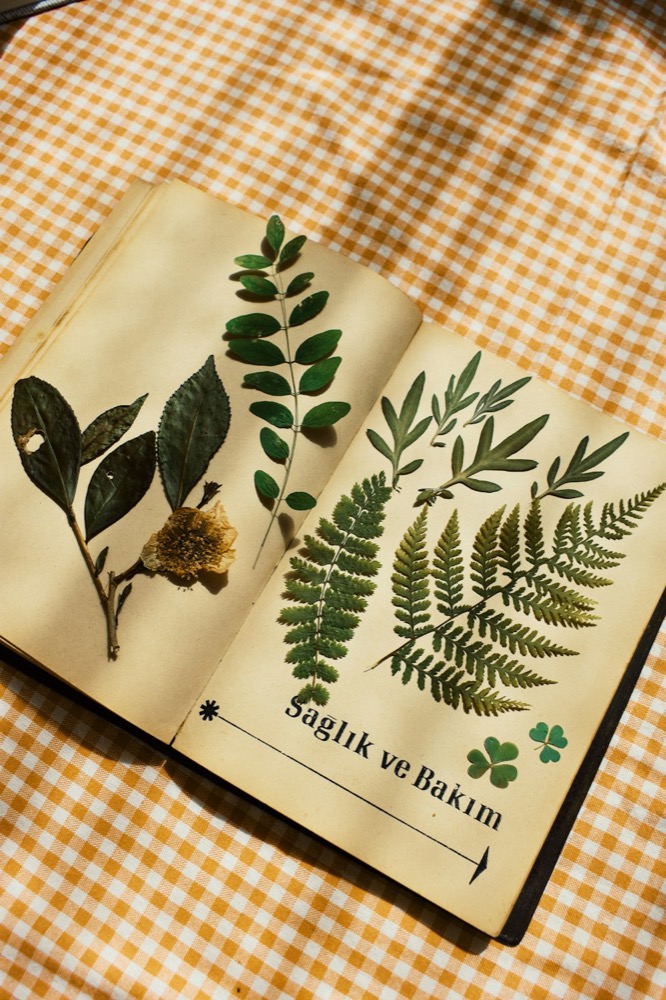
Later, cuttings, drawings and dried flowers went in too. That's where the line to the scrapbook starts to show. If you keep a journal today with lovely lines from books, you're really doing exactly the same thing.
The album amicorum: friendship on paper
The second milestone is the album amicorum, Latin for 'book of friends'. In German it's called a Stammbuch, and in old Dutch also vriendenboek or vrundboeck.
The custom began around the middle of the sixteenth century, most likely at the university of Wittenberg, Luther's town. Students asked their teachers and fellow students for a signature, a quote or a motto in their book. At first this happened in the blank pages of a Bible or a printed book. Publishers saw the demand and began printing books with extra blank pages, and then small books with nothing but blank leaves.
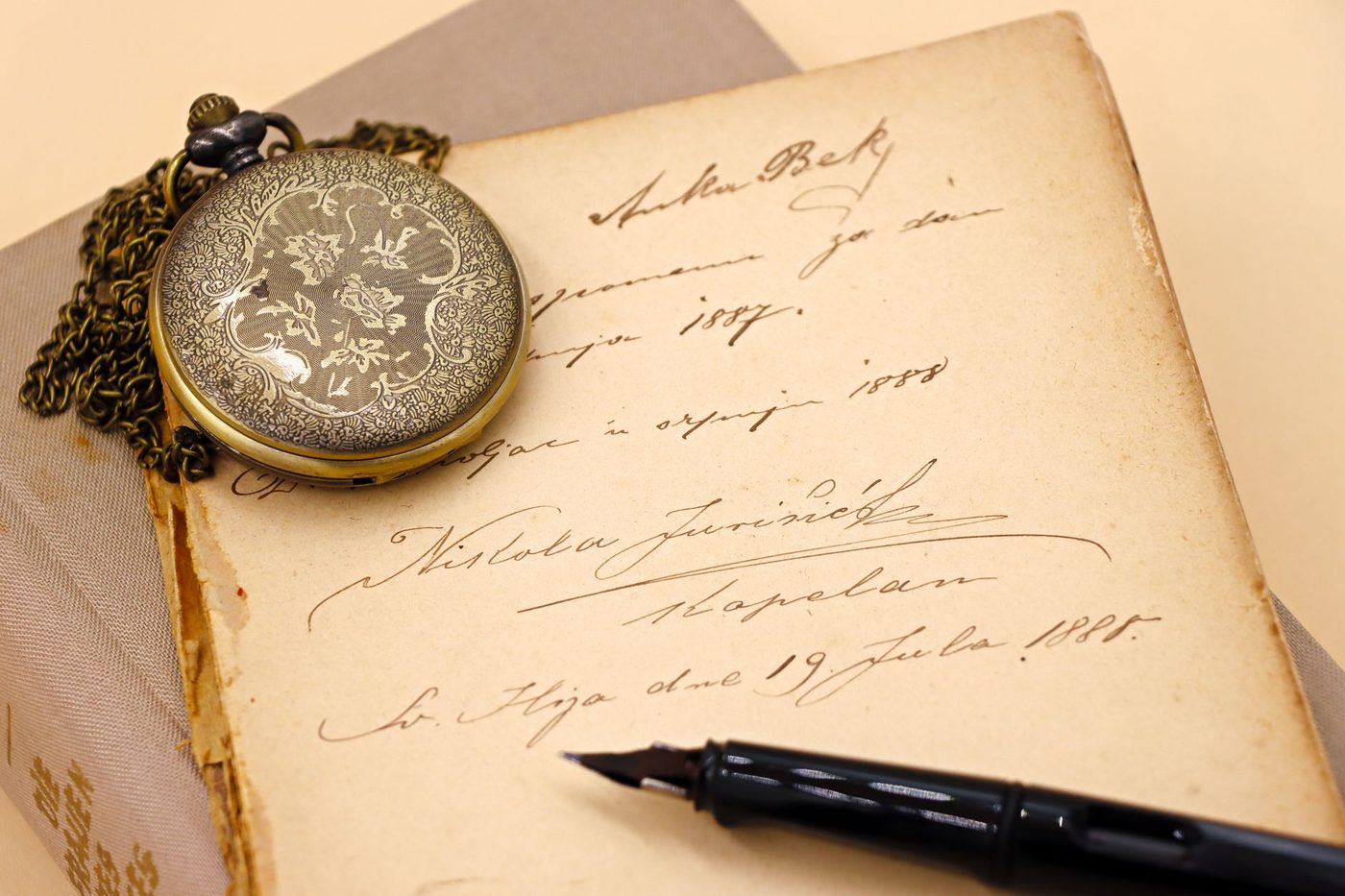
An entry had set parts. A greeting, a poem or quote, place and date, a personal motto and the writer's name, often with his faculty and birthplace. Many entries ended with a formula that meant roughly: I wrote this so you'll think of me.
Something that often stands out: the text was usually on the right, with room for a picture on the left. A painted coat of arms, a pen drawing, a bit of papercutting, and later pasted-in pictures too. If you couldn't draw, in the eighteenth century you could buy pre-printed leaves with an engraving of a university town or a scene from student life. Later albums also included embroidered borders, locks of hair and pressed flowers.
Students travelled from university to university and took their album with them. So it became more than a keepsake. A signature from a well-known professor worked as a recommendation at the next university, a kind of list of references before its time.
The custom was strongest in the German-speaking lands, the Low Countries and Scandinavia. Alba amicorum from the sixteenth century have survived in the Netherlands too, with entries in Dutch, French and Latin. The Koninklijke Bibliotheek in The Hague holds a large collection of them.
From book of friends to poesiealbum
The custom faded at the end of the seventeenth century but came back in the eighteenth and nineteenth centuries, now among the middle classes and women as well. Loose leaves in a case became popular, so several friends could write at the same time. In the nineteenth century the book of friends increasingly belonged to young women, and later to girls.
That's where the Dutch poesiealbum, a kind of autograph album, comes from. The name, so the story often goes, is a cheerful misunderstanding. The first little books came from Germany and had the word Poesie on the cover, German for poetry. In the Netherlands people pronounced it with the 'oe' of poes, the Dutch word for cat, and the name stuck.
The pattern may be familiar to you. A child, usually a school-age girl, lends her album to family, friends and her teacher. On the right goes a little rhyme, often copied from another album, signed with something like 'to remember your friend'. On the left goes a scrap picture, and the letters get decorated.
The poesiealbum tells you about its time, too. In the nineteenth century you mostly read exhortations to live a virtuous, God-fearing life. Politics could creep in as well, as in German albums from the 1930s and 1940s. Later the tone became looser and more playful.
Glossy scraps and Victorian scrapbooks
The scrap picture has its own history. In the nineteenth century, colour lithography made it possible to print brightly coloured pictures cheaply. Angels, flowers, children, animals, birds, butterflies. They were printed on sheets and embossed and die-cut, so you could easily take them out. In the Netherlands they're called glansplaatjes or poesieplaatjes, in Germany Glanzbilder or Oblaten, in Denmark glansbilleder.
Victorian ladies and children collected them in scrapbooks, along with trade cards, greetings cards, cuttings from newspapers and magazines, poems and recipes. A scrapbook like that is close to what we now call scrapbooking: not just writing, but cutting, arranging and pasting. With the arrival of photography, photos appeared in them too, first in books of friends and later in albums of their own.
Back then, pasting was a faff with a glue pot and brush. So Mark Twain, a keen clipper, patented a scrapbook with glue already on the page that you only had to moisten. It was a commercial success.
Grangerizing: a book that bursts at the seams
A somewhat forgotten offshoot is grangerizing, also called extra-illustrating. It's named after James Granger, an English clergyman who published a biographical history of England in the eighteenth century. Readers went looking for portraits of the people it discussed and inserted them into the book.
Collectors turned it into a sport. They bought prints, portraits and engravings, sometimes cut them out of other books, and had the book rebound with all that extra material inside. A single-volume book could grow into a set of thick volumes. That gave it a bad name among book lovers: other books were sometimes broken up for a single extra-illustrated one.
Every scrapper will recognise the principle. You take something that already exists and make it yours by adding pictures and paper. An altered book, an existing book you collage and paint into your own journal, is a modern cousin.
Why these books are so valuable now
What was once a personal keepsake is now a source for historians. An album amicorum shows who knew whom, where and when. You can use it to follow a student's journey across Europe and see which professors he visited.
The books show handwriting from all sorts of periods, and how people wrote their names when it wasn't an official document. They show which poets and sayings were in fashion, what people thought mattered and how they thought about friendship. Of banned student societies, traces sometimes survive mainly in albums like these, sometimes in code.
The same goes for poesiealbums and scrapbooks on a smaller scale. They show which rhymes children gave each other, which pictures were on sale and what was considered normal at a particular time. That's why museums and archives collect them, and prefer to keep them whole, because the order and the make-up tell you something too.
What to take away for your own book
The lovely thing about these forerunners is how little has really changed. People have always wanted to hold on to what moved them, and share it with the people they loved.
- Write down who, where and when. What's obvious to you is the first thing someone will want to know in a hundred years.
- Let other people write in your book. A guestbook page at a birthday is an album amicorum in miniature.
- Collect words too. A page of lines from books that moved you is a commonplace book.
- Look after your own old autograph album: keep it dry, dark and out of sealed plastic bags or PVC sleeves.
If you ever wrote a rhyme in someone else's autograph album, you're part of a long line. It began with a student in Wittenberg asking his professor for a motto.
Questions about this topic
What is a commonplace book?
A commonplace book is a personal notebook where you collect quotes, sayings, recipes and notes, arranged by topic. It's different from a diary, which runs by date and is about you.
What is an album amicorum?
An album amicorum, or book of friends, is a book in which friends, teachers and fellow students wrote a greeting, motto or drawing. It began around the middle of the sixteenth century, probably in Wittenberg.
Where does the name poesiealbum come from?
The first albums came from Germany and had the word Poesie, poetry, on the cover. In the Netherlands people pronounced it with the 'oe' of poes, the Dutch word for cat, and the name stuck.
What is grangerizing?
Grangerizing, or extra-illustrating, is adding portraits and prints to a printed book. It's named after the English clergyman James Granger, whose history book readers filled out with their own pictures.