· 8 min read
Scrapbooking terms explained, from brads to vellum
LO, chipboard, fussy cutting, quick page: anyone who starts scrapping soon trips over the jargon. Here are the most important terms, in plain English.
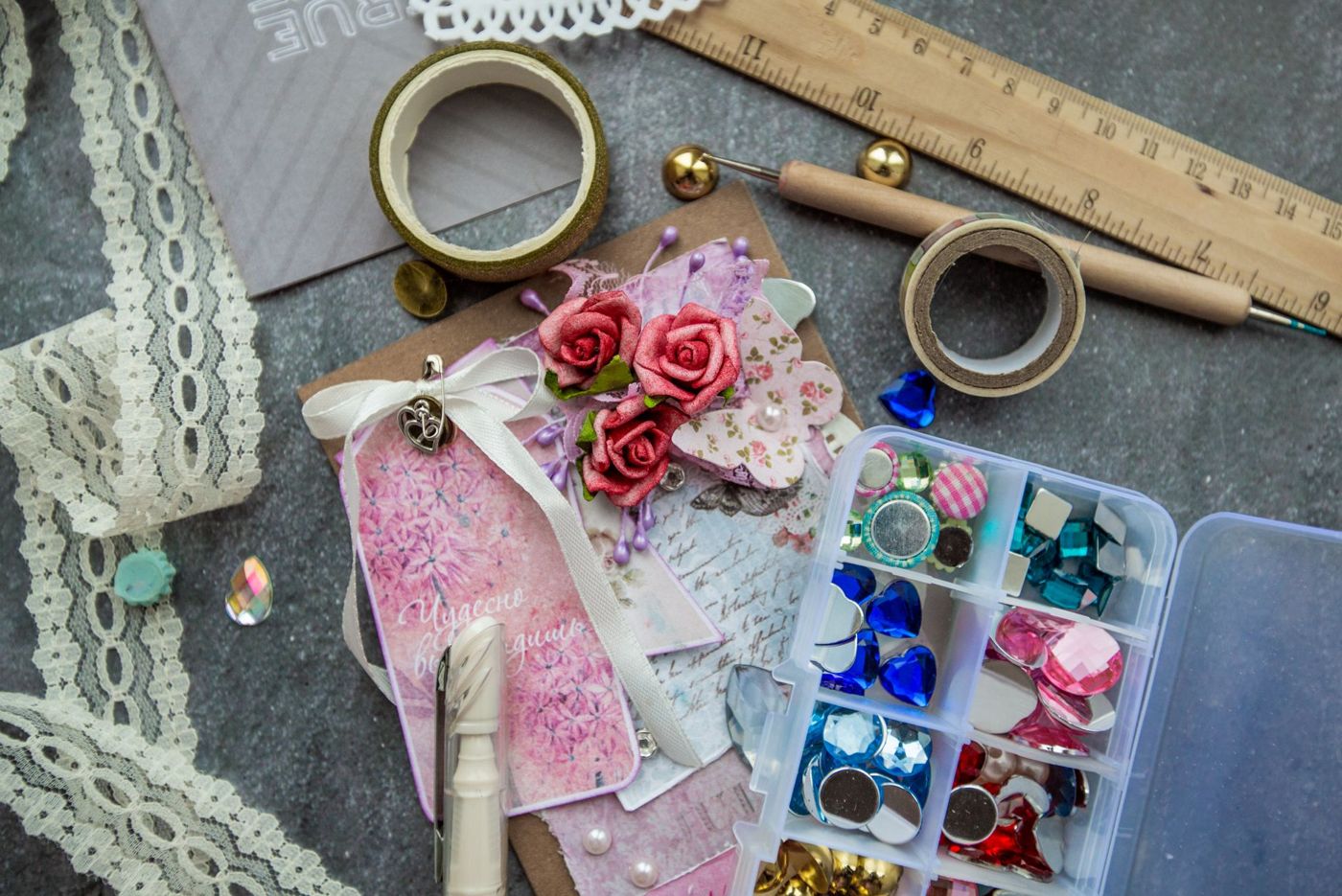
You watch a video, read a blog or flick through a magazine, and suddenly it's all about an LO with vellum, fussy cut flowers and a few enamel dots. Scrapbooking took off in America, and its jargon has stayed English wherever it went, including the Netherlands. That's fine, as long as you know what it means. Below are the words you'll come across most often, grouped by type.
Pages: layout, LO and spread
A layout is one finished scrapbook page: background paper, photos, decorations and text all together. Scrappers often shorten it to LO. So if someone writes that she made "three LOs" this week, that means three pages.
A spread is a double page: the left and right pages that lie side by side when you open the book, designed as a single whole. You'll also hear two-page layout or double layout. You can simply call it a double page.
The difference matters when you plan. With a single page, the right-hand page doesn't need to have anything to do with the left. With a spread, you let colours, a title or a strip of paper run across the fold, so the eye is carried from left to right.
Two words you'll often see alongside these:
- Journaling: all the text you put on a page, from a date to a whole story.
- Sketch: a simple drawing of a page plan with boxes for photos, title and text, which you use as a starting point.
Paper and card: cardstock, vellum, chipboard and ephemera
Cardstock is sturdy, plain paper, thicker than printer paper. It's the base of many pages: as a background, as a little frame behind a photo or for cutting shapes from. You can buy it in all sorts of colours and weights. Alongside cardstock there's patterned paper (also called designer paper): paper with a print, sometimes different on each side.
The standard size in the scrapbooking world is 12x12 inches (30.5 x 30.5 cm). Smaller pads of 6x6 inches (15 x 15 cm) are common too.
Vellum is translucent paper, similar to tracing paper. You can faintly see what's underneath, which makes it look soft and airy. It comes plain, coloured and printed. Scrappers use it for little clouds, envelopes, a layer behind a photo or text that sits over a pattern. Be careful with wet glue: it shows through. Small pieces of double-sided tape under a decoration, or a brad, give a neater result.
Chipboard is thick, pressed board. In shops it usually means pre-cut shapes, letters or frames made from that board, often printed or with a glossy coating. They add dimension without turning into a lumpy mountain. If you make your own albums, you can also use grey chipboard as a sturdy cover.
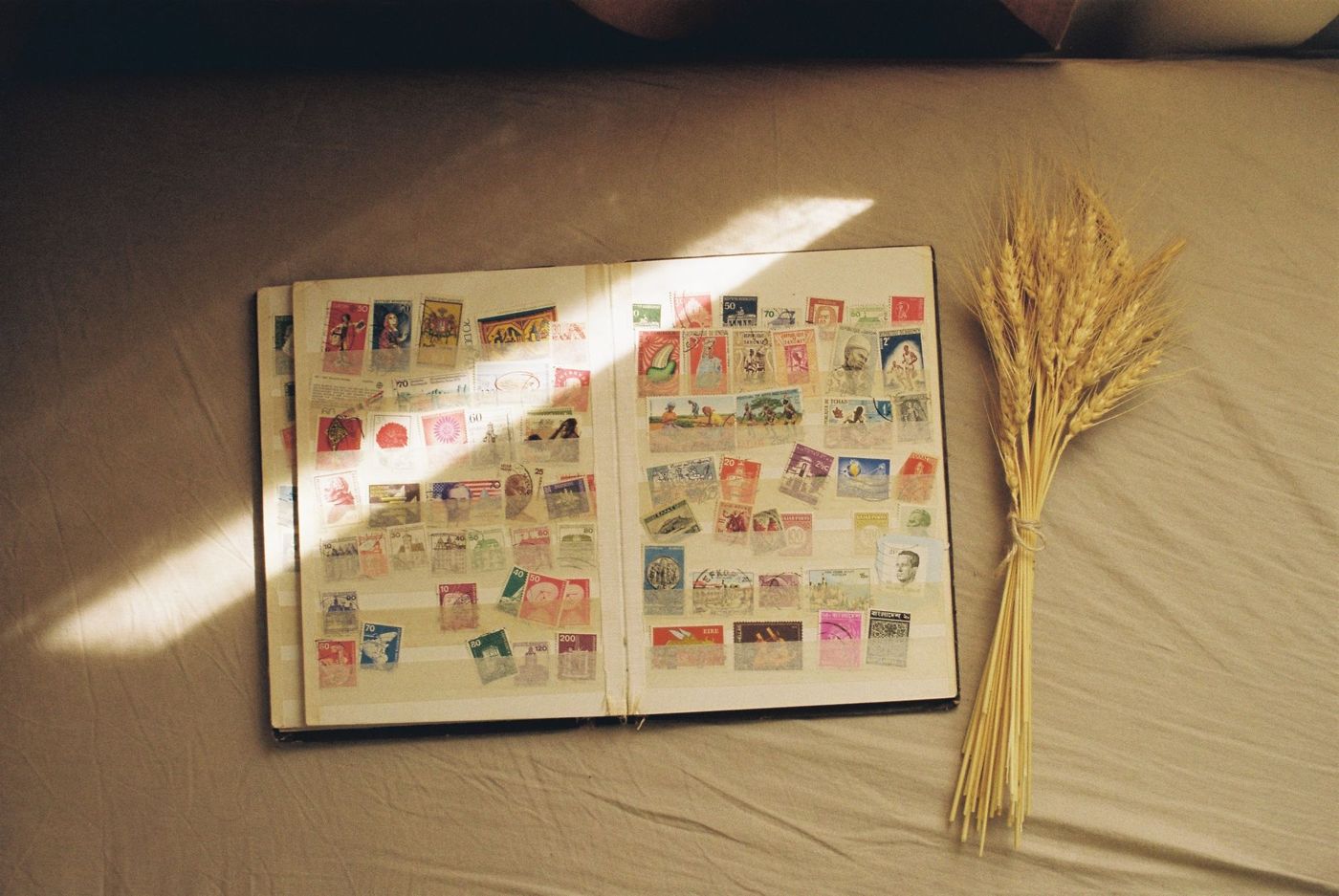
Ephemera originally means anything that was meant to be thrown away: tickets, receipts, labels, stamps, a map. On your page, these things help tell the story. In shops and in junk journaling, ephemera is also the name for loose, pre-cut paper pieces printed with tickets, labels and old text, which belong to a collection.
Small decorations: brads, eyelets and enamel dots
Anything you add to a page to decorate it is called an embellishment. Three small kinds have a name of their own.
Brads are split pins: a little head with two prongs underneath. You pierce a hole, push the prongs through and bend them flat at the back. That way you attach paper without glue, or add a decorative dot. By using a brad as a hinge, you can also make something turn, like a little wheel or a flap.
Eyelets are small metal rings, like the holes in a shoe. You set them with an eyelet setter and a hammer, or with a special tool that punches the hole and clamps the eyelet in place. They reinforce the hole in a tag, so the string doesn't tear through. You can also thread ribbon or twine through them, or fill a whole border with them in different colours and sizes. Eyelets were very popular for a while and then less so, so many scrappers still have a box of them lying around.
Enamel dots are flat, glossy sticky dots in all sorts of colours, with adhesive on the back. You place them as a little accent around a photo or title, often in groups of three. They're handy for repeating a colour from your paper somewhere else on the page.
Cutting and framing: die cuts, fussy cutting and matting
A die cut is a pre-cut shape. That can be a ready-made paper piece from a pack, but the word is also used for what you cut yourself with a metal template (a die) in a die-cutting machine, or with a cutting machine. Flowers, frames, letters and tags are the best known.
Fussy cutting means cutting out a printed motif by hand, usually with small, sharp scissors. You might cut a flower, a little bird or a word from patterned paper and place it on its own on your page. It takes some patience, but it lets you get more out of a sheet you love. You'll sometimes see it spelt fuzzy cutting too. Small scissors with a fine point make it much easier, and a cutting machine with a scan function can take over for very small shapes.
Matting means sticking a photo or piece of text onto a slightly larger piece of cardstock or paper, so a border appears around it. That border works like a frame and makes the photo stand out from a busy background. A border of a few millimetres up to a centimetre is usually enough. The related word mounting simply means fixing something onto paper.
Together and shopping: crop, kit and design team
A crop is a get-together where scrappers work on their own pages side by side, at home, in a shop or in a hall. You bring your own supplies. A crop lasting a day or a weekend is also called a crop day. You could simply call it a scrapping afternoon.
Confusingly, cropping also means something else: trimming a photo so the background that doesn't matter falls away. The sentence usually makes clear which meaning is intended. Be careful with cropping old or one-of-a-kind photos: once you've trimmed a print, you can't make it whole again.
A kit is a pack of materials that go together: paper, stickers, die cuts and other bits from one theme or collection. There are one-off kits and kits that arrive by post every month. For a beginner, a kit is an easy way to start, because the colours already match.
A design team is a group of scrappers who make pages and cards with new products for a brand or shop, so others can see what you can do with them. A lot of online inspiration comes from there. You'll also regularly see challenges: a prompt with a theme or sketch that scrappers respond to with their own page.
A word that often comes up there is scraplift: recreating someone else's page in your own way. It's customary to mention where you got the idea.
Digital terms: quick page, template and overlay
With digital scrapbooking, you make your page on a computer or tablet, with digital paper and digital embellishments. A few words keep coming back.
A quick page is a ready-made page where all the paper and decorations have already been merged. There are only open spaces for your photos. You place your photos underneath or in them, add some text if you like, and you're done. Ideal when you're short on time, but you can't move much around.
A template is a file with separate layers in fixed shapes: a rectangle for a photo, a strip for paper, a box for text. You drop your own photos and paper into those shapes, so the layout works but the content is entirely yours. It's the digital counterpart of a sketch, only already cut to size.
An overlay is a layer you place over your page, often with a transparent background. Think of a stamp-like pattern, splatters, a frame, a word or a fabric or paper texture. You can adjust the colour and transparency so it blends in with the rest.
Other words you'll come across: a kit (digitally, too, a set of matching pieces), a freebie (something you can download for free) and a printable (a file to print yourself and use on paper). Mixing digital and paper is called hybrid scrapping.
A few words that often trip people up
- Acid-free means free of acid. It tells you how long paper and glue will stay in good condition, and whether your photos will discolour.
- Washi tape is thin, tearable paper tape with a print, for decorating and holding light things in place.
- Distressing means deliberately making paper look old and worn, with ink, sandpaper or by roughing up the edges.
- A shaker is a little window with a clear layer behind which loose sequins or beads can move.
You don't need to learn this list by heart. Keep it next to you when you follow a tutorial, and after a few pages you'll notice you're talking about your LO and your little stack of cardstock too.
Questions about this topic
What is a layout or LO in scrapbooking?
A layout, often shortened to LO, is one finished scrapbook page with background paper, photos, decorations and text. A spread is a double page designed as a single whole.
What's the difference between cardstock, vellum and chipboard?
Cardstock is sturdy, plain paper that often serves as a background. Vellum is translucent paper, similar to tracing paper, and chipboard is thick, pressed board that shapes and letters are often made from.
What is a crop in scrapbooking?
A crop is a get-together where scrappers work on their own pages side by side, at home, in a shop or in a hall. Cropping can also mean trimming a photo.
What is a quick page in digital scrapbooking?
A quick page is a ready-made page where the paper and decorations have already been merged, with open spaces for your photos. You can't move much around, but it's quick.