· 7 min read
The history of the scrapbook, from Victorian scraps to journals
From Victorian scrapbooks full of glossy scraps, via Mark Twain's self-pasting album, to the hobby we know today: this is how the scrapbook came to be.
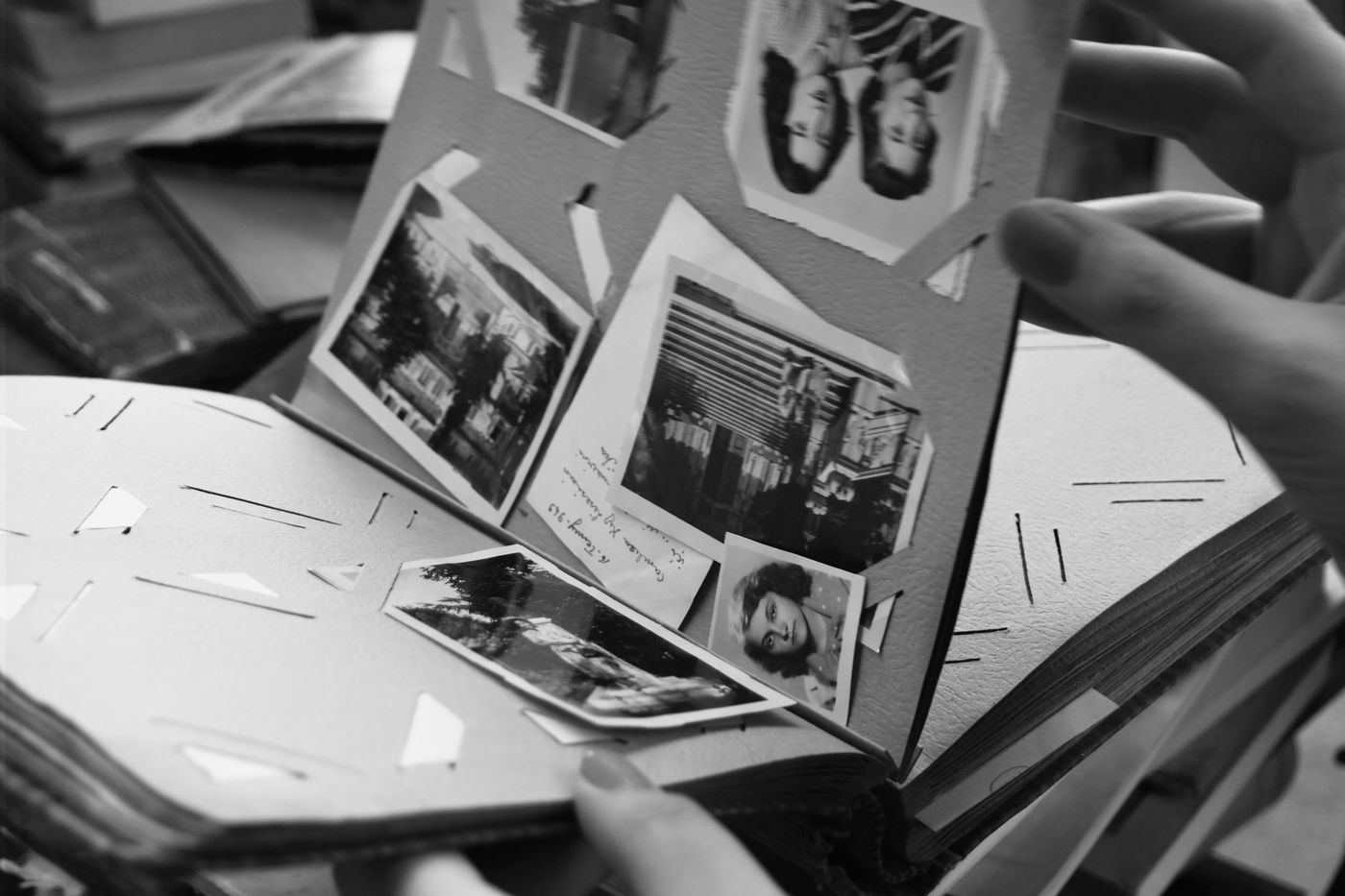
If you fill a page today with photos, a ticket and a few lines of writing, you're doing something people have done for centuries. Only the materials have changed. The scrapbook has a long, messy history full of cuttings, pictures, pots of glue and a famous writer who hated pasting.
Where the word comes from
A scrap is a small piece, a leftover, something that remains. So a scrapbook is literally a book of scraps: cuttings from newspapers, poems, letters, pictures. In Dutch, people simply called it a plakboek, a pasting book.
In the nineteenth century the word scraps took on a second meaning. It was the name for the die-cut, glossy printed pictures you could buy loose: little angels, flowers, children's faces, animals. In the Netherlands we know them as glansplaatjes or poëzieplaatjes. Back then, a scrapbook was often a book full of these pictures.
In England the word was already so common in the first decades of the nineteenth century that books and magazines appeared with scrapbook in the title, with tips on collecting and arranging your scraps.
The forerunners
The idea is older than the word. After the invention of the printing press, literate people suddenly came across far more printed material. To keep track of it all, they copied beautiful passages, recipes and quotations into a commonplace book, a kind of personal reference book. Students in northern Europe had friends and teachers write and draw in a friendship album, the distant ancestor of the autograph album. Families recorded births and marriages on the blank pages of the family Bible.
In the second half of the eighteenth century, James Granger published a history book in England with blank pages, so readers could paste in prints themselves. Books filled out in this way came to be called grangerised books. That too was a small step towards the scrapbook: a printed book you finish yourself.
Victorian scrapbooks and glossy scraps
The great heyday came in the nineteenth century, in the time of Queen Victoria. Two things made it possible: paper became cheaper, and a new printing technique arrived, chromolithography. For the first time, colourful pictures could be printed on a large scale. Greetings cards, trade cards, cigar bands and labels suddenly became beautiful, and people found them too lovely to throw away.
These colourful pictures ended up in scrapbooks, alongside newspaper cuttings, poems, pressed flowers, scraps of fabric and handwritten notes. They were made mostly by women and children. Around 1880, pasting glossy scraps was a real craze among children. Girls even built complete paper houses in their books: rooms furnished with furniture and people cut out of magazines and adverts.
Well-known writers kept scrapbooks too. Lucy Maud Montgomery, the author of Anne of Green Gables, pasted in cuttings, postcards, scraps of fabric and pressed flowers. A book like that wasn't a diary full of secrets, but a collection of what someone found beautiful or important. It was meant to be shown.
Mark Twain and his self-pasting scrapbook
One of the best-known scrapbookers was Mark Twain, the author of Tom Sawyer. He pasted cuttings into books all his life, but he hated the fuss with glue. The glue was never there when you needed it, or it had dried up, or it made the ink on your newspaper cutting run.
So he came up with something better. In 1873 he was granted a patent for a scrapbook whose pages were already coated with a layer of gum, often in narrow strips, just wide enough for a newspaper column. You moistened the gum a little, laid your cutting on it and that was it. He joked that his album saved people a great deal of swearing.
The album was a big success and stayed on sale for years. Of all the inventions Twain tinkered with, this was, according to his biographers, the only one that really made him money. It shows that pasting was already a mass hobby back then.
Why the scrapbook then disappeared
At the end of the nineteenth century, the handy portable camera came on the market. For the first time, an ordinary family could take its own photos. The photo album became popular, and that changed the scrapbook. Photos took over the pages, while letters, cards and cuttings disappeared into boxes.
Over the course of the twentieth century, the richly decorated scrapbook went more and more out of fashion. What remained was mostly the simple photo album. Some people even thought their old scrapbooks were worthless and threw them away. People still pasted, but at home, quietly, without shops or magazines around it.
The comeback around 1980
The turning point came in the late 1970s in the United States, with a growing interest in genealogy. People wanted to record their family history, with photos and stories to go with it. Around 1980 a woman from Utah drew attention with dozens of handmade family albums in which she combined photos with writing and decoration. She opened a shop especially for albums like these, and the idea caught on.
In the 1980s came companies that sold albums and supplies through home demonstrations, where you also learned how to put a page together. An important realisation was that cheap paper and glue damage photos. Acid-free paper, safe adhesives and fade-resistant pens became the new standard, as did the square 30.5 x 30.5 cm (12 x 12 inch) format.
An industry in the 1990s
In the 1990s scrapbooking became one of the fastest-growing hobbies in America. There were magazines, specialist shops, fairs and endless new products: patterned paper, stickers, stamps, embellishments (small decorations such as buttons and brads). Scrapbookers got together at crops: evenings or weekends when you sat pasting together at a table full of supplies.
Through those shops, magazines and later the internet, the hobby spread to Europe, including the Netherlands and Belgium. That's why Dutch scrapbookers still use so many English words. After the big boom things quietened down in the shops and quite a few specialist stores closed again, but the hobby itself stayed.
From digital to journaling
The digital camera brought the digital scrapbook: pages you make on the computer with digital paper and embellishments, and then have printed. At the same time, online forums and blogs sprang up where scrapbookers showed their work and challenged each other with sketches and themes.
With social media such as Pinterest and Instagram, things changed again. New forms appeared that are close to the old scrapbook: the junk journal, made from leftover paper, the art journal and the bullet journal. Many people discovered pasting through a decorated planner rather than a photo album. In a way, the hobby has come back to where it began: a book full of scraps, pictures and your own words.
Why historians overlooked scrapbooks for so long
For a long time, scrapbooks weren't taken seriously. They were seen as a pastime for women and children, made from throwaway print: cards, adverts, cuttings. Archives didn't quite know what to do with them either. A scrapbook is hard to preserve, with fragile paper, a mix of different materials, glue that comes loose or discolours, and spines that bulge. And they don't fit into any category: not a letter, not a book, not a photo collection.
That view has changed. Historians, librarians and conservators now see that scrapbooks show something official sources miss: how ordinary people lived, what they found beautiful, which shows they went to and whom they loved. Names and dates on the backs of photos help with family history research, and a photo of a street shows what it looked like before it was paved. The order and make-up of a book also say something, which is why museums prefer to keep them whole.
What this means for your book
The book you're making now will itself be a piece of history in a hundred years. A few things help:
- Don't just paste in photos, but real things too: a ticket, a birth announcement, an invitation.
- Write down who, what, where and when. A photo without names is a puzzle for the next generation.
- Write by hand. Later on, your grandchildren will recognise your handwriting on other papers.
- Choose materials that last, so your pages don't decay the way many old scrapbooks have.
If you want to be sure your book won't be lost, scan it as well. That way it's kept safe, even if the paper gives out one day.
Questions about this topic
Where does the word scrapbook come from?
A scrap is a small piece or leftover, so a scrapbook is literally a book of scraps. In the nineteenth century, scraps also came to mean die-cut, glossy printed pictures; in Dutch these are called glansplaatjes.
Who invented the scrapbook?
No one in particular: the idea is older than the word, with forerunners such as the commonplace book and the friendship album. The great heyday came in the Victorian era, when cheap paper and colour printing made scrapbooks popular.
What was Mark Twain's scrapbook?
In 1873 Twain patented a scrapbook with pages that already had a layer of gum. You moistened the gum a little and laid your cutting on it, without separate glue.
When did scrapbooking become the hobby it is today?
Around 1980 in the United States, with the interest in genealogy and the first specialist shops. In the 1990s it grew into a big hobby and spread to Europe.