· 6 min read
Scraplifts and CASE: is it OK to copy someone's page?
You see a page and think: I want mine like that. What scraplifts and CASE mean, where the line is, and how to still make it your own.
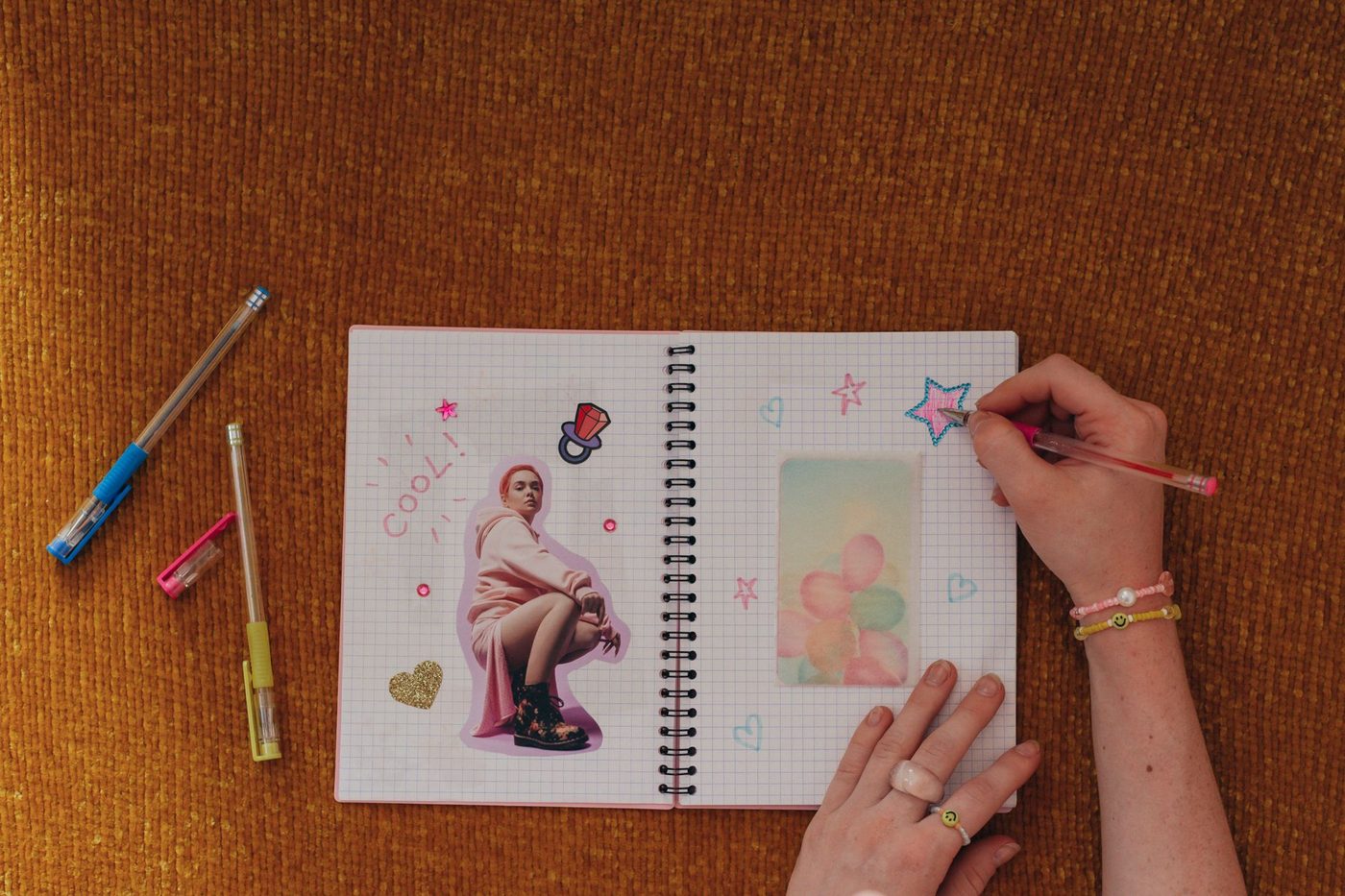
You see another scrapper's page and you know straight away: that's exactly how I want my holiday photos to look. Is that allowed? Usually, yes, as long as you borrow the structure and not the work itself. Scrappers have been doing it for years, and they even have their own words for it. You just need to know what you're taking, and how to do it properly.
What do scraplift and CASE mean
A scraplift is a page you make based on someone else's layout. Layout is the word for how a page is put together. The word comes from scrapbooking and lift, in the sense of 'borrowing' or 'taking'. You use someone else's layout as your starting point, but you fill it with your own photos, your own story and your own supplies.
CASE is an abbreviation from the card-making world that describes the same idea. You'll hear two versions: Copy And Selectively Edit, where you copy and adapt it yourself, and Copy And Share Everything, where you copy and then share the result. Both come down to the same thing: you take a design you like and make your own version of it.
Lots of online scrapbooking groups run regular challenges for this. Everyone uses the same page as their example and then shows what they made. There's even a chain version, where you always lift the page of the person before you. The fun part is seeing how differently twenty people fill in the same layout.
Where is the line between inspiration and copying
A scraplift isn't a photocopy. You borrow the structure: where the photos go, how the title runs, where the embellishments sit. What you don't borrow is someone else's actual work.
This is usually fine:
- using the same arrangement of photos, title and journaling (the text you write to go with your photos)
- borrowing a colour scheme or a technique
- working out an idea for a title or an embellishment with your own supplies
This is better avoided:
- using someone else's photos, drawings or written text
- showing a lifted page as if you came up with it yourself
- entering a lifted page in a competition or a design team call where original work is asked for
- recreating someone's design to sell it
In fact, it's almost impossible to truly copy someone else's page. You'll never have exactly the same paper, the same stickers and the same photos. As soon as you start, your own hands and supplies are already taking it somewhere else.
A quick note on copyright: an idea or a layout usually isn't protected, but the actual work is, such as a photo, drawing, text or a very specific design. This is a general explanation, not legal advice. If you're unsure, ask the maker for permission or talk to a lawyer.
Analysing a page: what do you take
A good scraplift starts with looking. Why does this page appeal to you? Often it's just one or two things. Put the page in front of you, or open it on your screen, and go through these points:
- Photos. How many are there, how big are they, and are they in a row, a block or scattered? Which photo stands out most?
- Shape and arrangement. Does the page use blocks, strips, a circle, a grid? Where is space left empty?
- Colour. How many colours can you see, and which is the main one? Is the background plain or patterned?
- Title. Where is it, how big is it, is it straight or at an angle, in stickers or handwritten?
- Journaling. How much text is there, and where?
- Embellishments. Are they spread out, or grouped together? Those groups are called clusters.
Then choose what you'll take. Some scrappers stick to a rule of thumb: take three elements, for example the position of the photo, the shape of the title and the cluster in the bottom left. You fill in the rest yourself. That way it's still a recognisable lift, but it becomes your page.
A handy trick: make a quick sketch of the layout using only rectangles and lines. That way you see the structure without the colours and patterns. You can use that sketch again and again later.
How do you credit the source
If you share your page, online or in a group, say where your inspiration came from. In the scrapbooking world, that's simply good manners. It doesn't have to be complicated.
- Mention that it's a scraplift, or inspired by, and give the maker's name.
- Where you can, add a link to the original page.
- In challenge groups, you often show the example next to your own page. Follow that group's rules.
- You could let the maker know you've lifted their page. Almost everyone loves hearing that.
If you're only keeping the page for yourself in your own album, you don't need to add anything. But a little note on the back or in your notebook, saying where the idea came from, is handy if you want to find it again later.
Putting your own spin on it
The more you change, the more the page becomes yours. You don't have to turn everything upside down. Pick one or two changes:
- Flip or rotate the layout. What was on the left goes on the right. A landscape layout becomes portrait.
- Change the number of photos. Does the example have three photos and you have one good one? Make it big and fill the rest with journaling.
- Take your colours from your photos, not from the example. A different colour makes a layout surprisingly different.
- Use a different technique for the same effect. Where the example has die-cut flowers, you could cut them by hand, stamp them or take them from patterned paper.
- Start with your story. What do you want to say about these photos? Let the layout help you, but let the memory decide what matters.
Try it blind too: ask someone to describe a page's layout in words, without you seeing the example. Then compare. You'll see exactly what your own taste adds.
Lots of scrappers start out doing almost nothing but scraplifts. After a while you notice that you naturally understand why a layout works. Then they lift less literally and more and more often make something from scratch. So a lift isn't a shortcut, but a way to learn.
Can you remake one of your own old pages
Yes, always. Reusing one of your own pages is also called a self-lift, and it's one of the handiest tricks there is. A layout that worked well for last year's holiday often works for a birthday or an ordinary Sunday too.
Leaf through your own albums and look for the pages you still love. What do they have in common? That's where your own style is. Use one of those pages as a starting point and fill it with new photos and different paper.
It's also a lovely way to see how you've grown. Put your first pages next to a page from now, with the same layout. The difference often says more than any course could.
Questions about this topic
What is a scraplift?
A scraplift is a page you make based on someone else's layout. You borrow the structure, but fill it with your own photos, story and supplies.
What does CASE mean in scrapbooking and card making?
CASE usually stands for Copy And Selectively Edit: copying and adapting it yourself. You'll also hear Copy And Share Everything: copying and sharing the result.
Is it OK to copy someone else's scrapbook page?
Usually, yes, if you only borrow the layout, such as where the photos and the title go. You don't use someone else's photos, drawings or text, and you credit the maker when you share your page.
How do you put your own spin on a scraplift?
Flip the layout, change the number of photos, take colours from your own photos or use a different technique for the same effect. Start with your story and let the layout help you along.