· 8 min read
Choosing paper: cardstock, patterned paper and paper weight
Cardstock or patterned paper, 160 or 250 gsm, a pad or loose sheets: here's how to know which paper you need and what to look for when you buy it.
In a craft shop all paper looks much the same, until you get home and find your background rippling under the glue or your card going limp. Paper is the basis of every page, and with a few terms you can choose it far more deliberately. Here you'll read the difference between cardstock and patterned paper, what the grams on the label mean and when cheap paper is good enough.
Cardstock and patterned paper
Cardstock is sturdy paper, thicker than printer paper and thinner than cardboard. It's usually a plain colour, sometimes with a texture such as linen or a fine ribbing. You use it as the base of a page, as a mat behind a photo (a border of paper that makes the photo stand out), for tags, labels and anything that needs to stay firm.
Patterned paper, also called designer paper or scrapbook paper, is the printed paper: flowers, checks, dots, text, city maps. It's thinner than cardstock and meant to set the mood. You use it as a background, as a layer, for strips and cut-out shapes.
The two complement each other. A common layout is a cardstock base, a sheet or strip of patterned paper on top, and the photo on a mat of plain cardstock. The plain paper gives calm, the printed paper tells the story.
Note: the name on the packaging doesn't always tell you how thick it is. Some patterned paper is really light cardstock, other paper is barely thicker than ordinary paper. So check the weight printed on it.
What paper weight means
The weight of paper is given in grams per square metre, g/m² (often written gsm). A sheet of 80 g/m² would weigh 80 grams if it were exactly one square metre in size. Ordinary printer paper is usually around that, cardstock is well over twice as heavy.
The higher the number, the thicker and stiffer the paper usually is. But it's a weight, not a thickness. Two papers of the same weight can feel different: kraft paper, for example, can feel stiffer than satin-smooth paper of the same weight, because it's made differently. That's why some manufacturers also give the thickness of a single sheet, in microns or in mils.
As a guide:
- 80 to 100 g/m²: printer paper, for drafts, templates and journaling you stick on.
- 120 to 170 g/m²: patterned paper and thin layers, strips, cut-out shapes and folding.
- 200 to 250 g/m²: standard cardstock, for page bases, mats, cards and die cuts.
- 270 to 300 g/m² and up: extra sturdy, for covers, boxes, cards with lots of layers and mini albums.
The more layers, glue and embellishments (decorations such as buttons, stickers and little flowers) go on a page, the sturdier the base needs to be. With a thin sheet, everything sags as soon as you lift it.
At the same time, you don't want to make everything thick. An album with only heavy paper won't close properly and becomes bulky. So in a mini album you combine sturdy pages with thinner decorative paper, so the folds and the spine hold.
If you work with a cutting machine or die-cutting machine, check what your machine can handle. Very thick paper doesn't always cut cleanly. Equally, very thin paper can tear with fine shapes.
Thin paper without ripples
Thinner paper warps more quickly with wet glue. Use as little as possible and spread it well, or choose double-sided tape on a roller. Put a freshly glued sheet under a pile of books for a few hours and it will dry flat.
If you're going to work with paint, ink and water, ordinary patterned paper isn't enough. For that, use watercolour paper or mixed-media paper of around 250 to 300 g/m².
Single-sided, double-sided and core-dyed
Patterned paper is printed on one side or both. Single-sided is often a little cheaper and easy: you know straight away which side is the back, where the glue goes. Double-sided paper has a different, matching design on each side. That's handy when both sides are visible, on flaps, little envelopes, bunting and folded cards. And you're really getting two sheets in one.
With cardstock, check whether it's core-dyed. That means the paper is coloured all the way through. Ordinary coloured cardstock sometimes has a white core, which shows as soon as you tear or sand an edge or use an embossing folder. With core-dyed paper the colour stays the same at the edge too. If you actually want that contrast, paper with a white core is lovely for torn and distressed edges.
Paper collections or loose sheets
A collection is a range of papers from one design line, with the same colours and style. They go together, so you don't have to work it out yourself. You buy them as a pad, with the sheets glued together along one edge, or as a set of loose sheets in a sleeve.
A pad like that is ideal when you're starting out or want to make a big album with one mood. The risk: there are often a few sheets in it you'll never use. That's why people who've been scrapping for a while often prefer to buy loose sheets that match the photos of the moment exactly. They cost more per sheet, but you have less left over.
A middle way that works well: pick your colours from your photos, get a small stack in three or four colours, with a few sheets of each, and top up with plain cardstock in white, black and kraft. White always runs out faster than you think.
About sizes: the classic size is 30.5 × 30.5 cm (12 × 12 inches). Pads of 15 × 15 cm (6 × 6 inches) are nice for cards, mats and mini albums, because the designs are printed smaller. Which album size suits you is covered in a separate article.
Kraft, vellum and other special papers
Kraft paper is the brown, slightly rough paper you know from wrapping paper and paper bags. As cardstock it's a forgiving base: almost any colour and any design looks good on it. Bear in mind that the back is sometimes a different shade from the front, and check the label to see whether it's acid-free, because not all brown paper is.
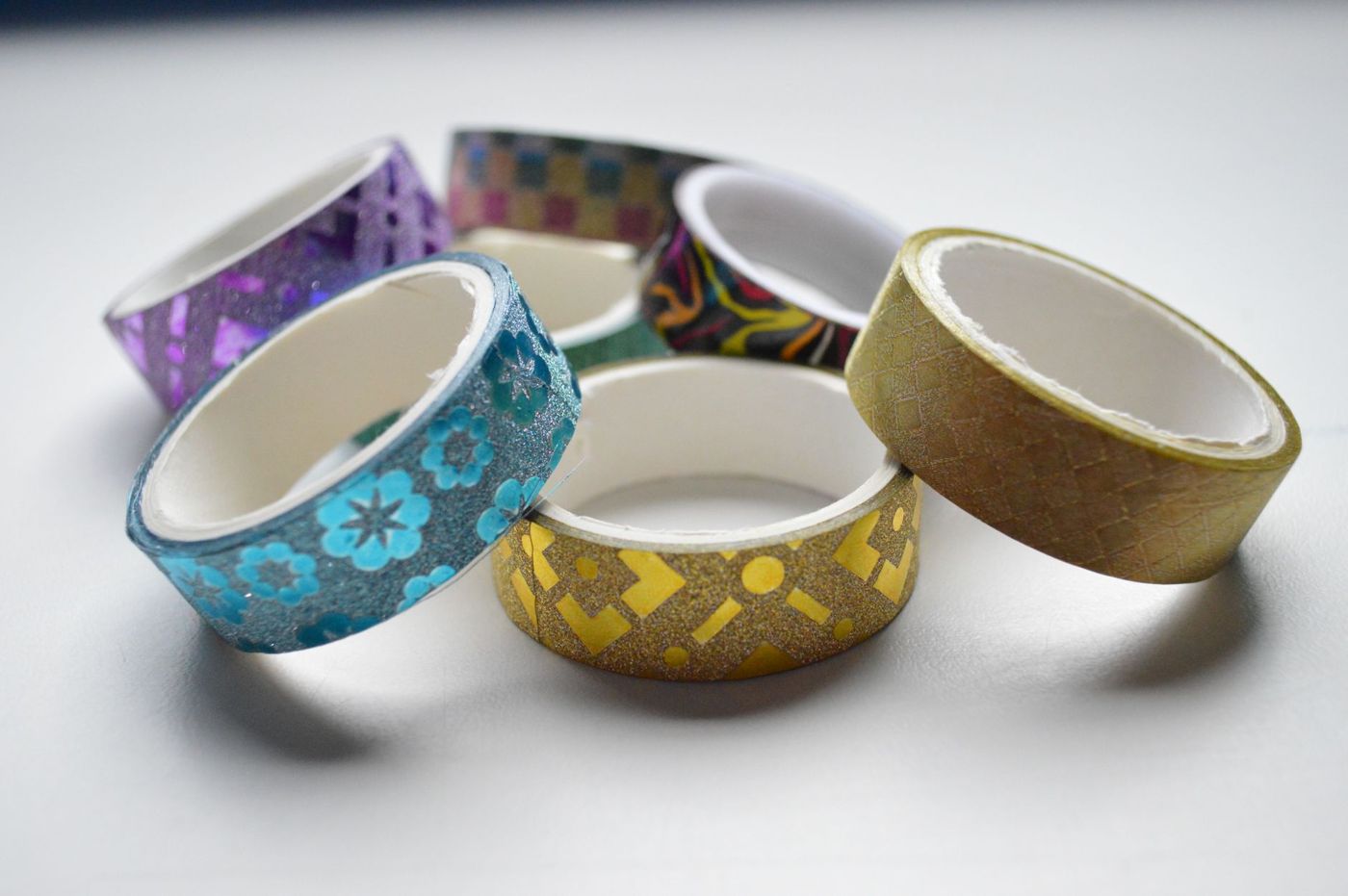
Vellum is translucent paper, a bit like tracing paper. It gives a soft, hazy layer over a photo or design, and is lovely for titles and little envelopes. The tricky part is the glue: it shows through. So stick vellum where something opaque will go on top, or fix it with brads (split pins), staples, stitching or a strip of washi tape.
You'll also find:
- Glitter and metallic paper, for small accents such as a title or a circle behind a date. Large areas quickly get too busy.
- Embossed or textured paper, such as linen texture or tiny dots. Lovely for natural or vintage pages, less suitable for fine stamping.
- Smooth cardstock, best for stamps with fine lines and for writing on.
- Watercolour paper, for anything with lots of water.
Craft paper like children use at school is cheap, but the colours fade quickly. For an album that needs to last, it's not a good choice.
Is cheap paper good enough?
Sometimes, yes. For practising, templates, a first card or a journal you use heavily, budget paper is fine. You dare to try more with it, and that's worth a lot at the start.
For an album you want to keep or a gift, it's a different story. The familiar drawbacks of very cheap sets:
- The paper is thin and ripples under glue.
- The print is blurry or the colours are dull.
- A pad has only one or two sheets you really like.
- It doesn't say whether it's acid-free, so you don't know how it will look in years to come.
Feel the sheet, hold it up to the light and check the weight on the packaging. A sturdy, crisply printed sheet from a budget set can be just fine, a wafer-thin sheet from an expensive pad isn't. Better a few good sheets than a pile you never use.
If you want paper that won't harm your photos, look for acid-free and lignin-free on the label. What that means exactly and when it matters is covered in a separate article.
Printing your own
You can also buy digital paper and print it yourself. Check what your printer can handle: many home printers have a weight limit, and with a laser printer the toner sometimes comes off very thick paper. Test on one sheet first, and choose smooth paper for the sharpest print. Read the licence too, because you can't use every design for everything.
How to start
If you don't have anything yet, you can manage with very little: a stack of white cardstock of around 200 to 250 g/m², some black and kraft, and one pad of patterned paper whose colours you like with your photos. With that you'll make your first pages and naturally find out which paper feels good in your hands. In the end, that feeling is the best guide.
Questions about this topic
What's the difference between cardstock and patterned paper?
Cardstock is sturdy, usually plain paper for page bases, mats and labels. Patterned paper is thinner and printed, and sets the mood as a background, layer or strip.
What weight of cardstock do I need for scrapbooking?
For a page base choose around 200 to 250 g/m². For layers and details 120 to 170 g/m² is enough, and for covers and mini albums you can use 270 to 300 g/m² or more.
What is core-dyed cardstock?
It's cardstock that is coloured all the way through. When you tear, sand or emboss the edge, the colour stays the same and no white core shows.
Is cheap scrapbook paper good enough?
Yes, for practising, a first card or a journal you use heavily. For an album you want to keep, check the thickness, the print quality and whether it says acid-free.