· 7 min read
What is scrapbooking, and which style suits you?
From a 12 x 12 album to a junk journal full of old envelopes: what scrapbooking is, where the word comes from and which style suits you.
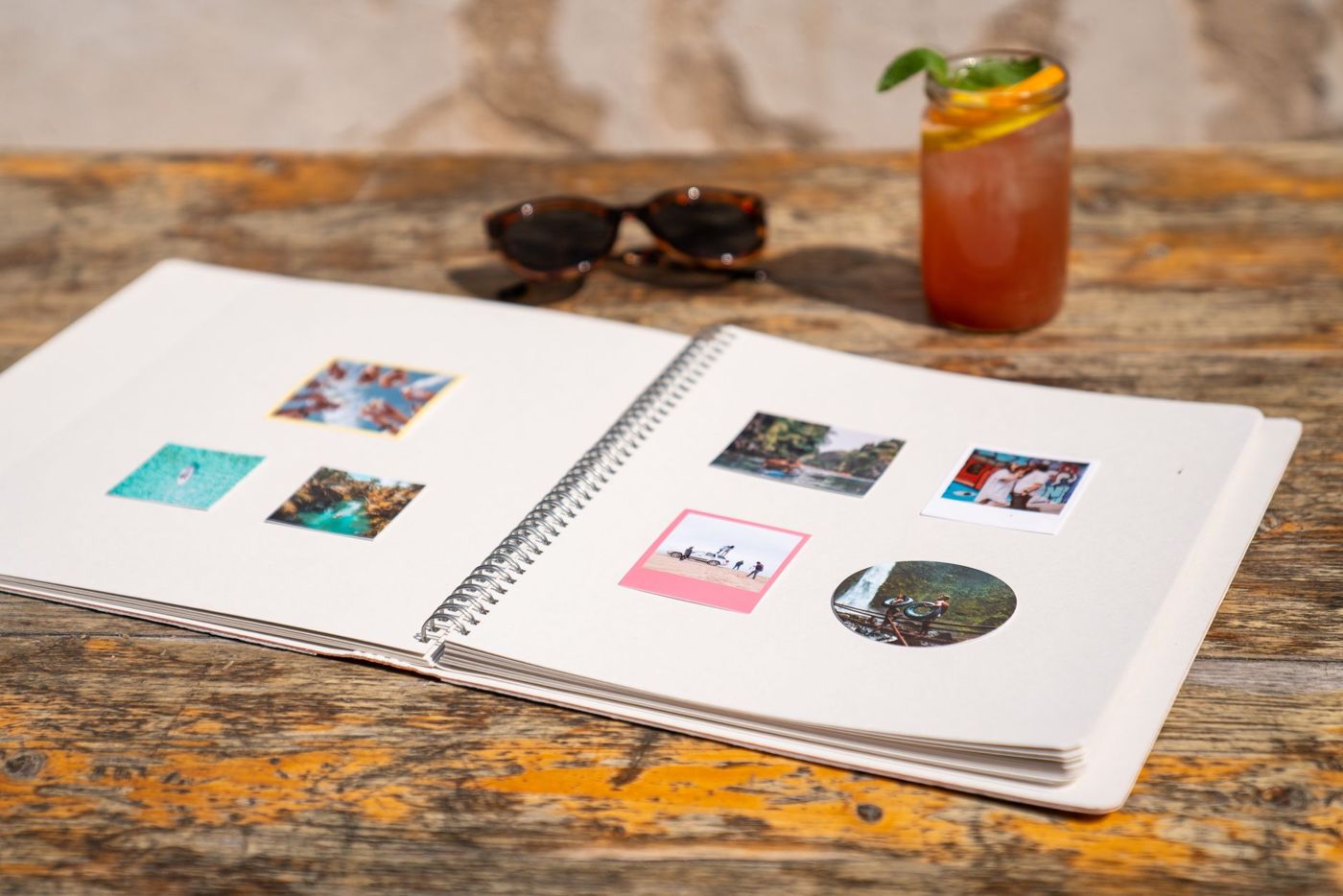
A scrapbook is a book where you keep photos and small mementoes, with a few words alongside and a little decoration around them. That sounds simple, and it is. Even so, there are now so many styles that it can be hard to tell what's what. Here you'll read what scrapbooking is, how the different styles work and which one suits you.
What scrapbooking is
Scrapbooking is making a book where memories come together. Photos are usually at the heart of it, along with things you've kept and a few sentences about what happened. Each page is a small whole: you choose photos, paper and decoration so that together they tell one moment.
There are no fixed rules. One book is clean and calm, with lots of white space and one big photo. Another is full of layers of paper, stamps and stickers. Both are scrapbooking.
Where the word comes from
A scrap is a small piece, a leftover or a cutting. So a scrapbook is literally a book of cuttings. In Dutch, people long simply called it a plakboek.
Books like these have existed for centuries. People pasted in newspaper cuttings, letters, poems, recipes and admission tickets, often to keep information. When photos came within reach of ordinary families towards the end of the nineteenth century, the books slowly shifted towards personal memories.
Scrapbooking as we know it today, with special paper, stickers and albums, took off in the United States in the 1980s. There it grew into a big hobby in the 1990s. That's also why so many of the craft terms come from American English. When people talk about scrapbooking now, they usually mean that decorated book full of photos, not a folder of newspaper articles.
What you put in it
Photos are often the starting point, but not everything has to be a photo. Think of:
- tickets from a concert, museum or train journey
- postcards, greetings cards and notes
- a menu, a scrap of a map or a label
- children's drawings, and things they said word for word
- a dried flower or leaf
- your own words, the journaling: what you write alongside the photos
Around all that you use paper and embellishments, the umbrella term for everything you decorate a page with, such as stickers, stamps, washi tape, buttons and ribbon. The paper is usually cardstock (sturdy, plain paper) and patterned paper with a print.
Always write down the date, place and names. What you know without thinking now, you'll have forgotten in ten years. A simple page with those details is worth more later than a beautiful page without them. And it's best not to stick in old newspaper cuttings yourself, because newsprint yellows and turns brittle. A copy on acid-free paper works just as well.
Who you make it for
Most scrappers make their books for themselves and their family. A year with the kids, a renovation, the first months with a dog. It's a way to hold on to your own story, also for whoever reads it later.
A scrapbook also makes a lovely gift, for a wedding, a leaving do or a birthday, for example. Some people make a family book with old photos of their grandparents, so the stories aren't lost.
And let's be honest: lots of scrappers do it mainly for the making itself. An evening at the table with paper and scissors, the memory coming back while you work. That pleasure counts just as much as the book you end up with.
How it differs from a photo album
In an ordinary photo album you slot photos in one after another, with a date at most. The album keeps pictures.
A scrapbook tells the story behind those pictures. You don't choose all forty photos from a birthday, but three that say it all, with the invitation next to them and a few sentences about who was there and what happened. You think about how the page looks. So when you leaf back through, you see not just what happened, but also how it felt.
A printed photo book sits somewhere in between: chosen and arranged, but without the feel of paper and little things you've kept.
The classic album
This is what most people picture. Pages of 30.5 x 30.5 cm (12 x 12 inches) are the standard, and most paper is sold in that size. Smaller square albums of about 20 x 20 cm (8 x 8 inches) are common too, as is A4.
You work layout by layout: the design of a single page. Two pages side by side are called a spread. The pages often go into plastic sleeves, in a ring binder or a post-bound album. A ring binder leaves a wide gap down the middle of your spread; in a post-bound album the pages lie almost against each other.
The mini album
A mini album is small, often around 15 x 15 cm (6 x 6 inches) or even smaller, and is usually about one subject: a weekend away, a summer, a friendship. It often has flaps, little envelopes and tags you can pull out.
The upside is that you actually finish it. That makes it a good first step, and a lovely gift.
Pocket scrapbooking
Here you work with plastic sleeves divided into pockets. In each pocket you slide a photo or a card with writing, often in sizes of about 10 x 15 cm and 7.5 x 10 cm. There's little cutting and gluing, so it's quick. The best-known system is called Project Life.
This style is popular with people who want to capture everyday life, week by week or month by month, without designing every page from scratch.
Junk journal
You usually make a junk journal yourself, from paper that would otherwise end up in the bin: old envelopes, pages from discarded books, packaging, till receipts, tea bags. The book is full of layers, pockets, tags and tucked-in cards, often with a slightly worn, vintage look.
Photos are welcome, but not required. A junk journal is just as much about collecting, binding and the joy of paper with a past.
Art journal
An art journal is a kind of visual diary. You work with paint, gesso (a primer), collage, stencils, stamps and words. It's less about keeping memories and more about expressing what you think or feel. The making matters more than the result.
Because wet media are involved, you need sturdy paper that won't buckle. Art journaling flows naturally into mixed media, where you combine all kinds of materials.
Digital and hybrid
With digital scrapbooking you make pages on a computer or tablet. Paper, stickers and other decorations are image files you can move, cut and resize endlessly. There's no mess on the table and no shelf space needed, and you can have pages printed later or turned into a photo book.
Hybrid scrapbooking combines the two. You might design a title or a card on the computer, print it and stick it onto a paper page.
Is scrapbooking still popular?
Around the turn of the century, scrapbooking was a craze in the United States, with its own shops, fairs and magazines. When photos went digital and stayed on our phones, things quietened down.
It hasn't disappeared; it has changed shape. Junk journals, art journals, pocket albums and decorated journals are drawing in new people, and stationery from places such as Japan has a big following. Lots of people have thousands of photos on their phone that they rarely look at. Printing a few and making a page from them feels all the more special.
Which style suits you?
There's no best style, just one that fits your life. A few pointers:
- Short on time, but you want to keep track of everyday life: pocket scrapbooking.
- You love paper and enjoy slowly piecing together a big page: the classic album.
- You want to finish something first, or you're looking for a gift: a mini album.
- You keep everything and love a worn, layered style: a junk journal.
- You mainly want to work freely with paint and images: an art journal.
- Little space, or you'd rather work on a screen: digital or hybrid.
You don't have to choose for ever. Lots of scrappers have an album on the shelf, a mini album for the holidays and a journal for in between. Start with what you already have, pick one moment and make one page of it.
Questions about this topic
What is scrapbooking?
Scrapbooking is making a book where you bring together photos, kept mementoes and a few sentences of your own. Each page is a small whole that tells one moment.
What's the difference between a scrapbook and a photo album?
In a photo album you slot photos in one after another. A scrapbook tells the story behind them: you choose a few photos, add kept mementoes and words, and arrange the page.
What are the different types of scrapbooking?
The best-known are the classic album, the mini album, pocket scrapbooking, the junk journal, the art journal and digital or hybrid scrapbooking.
Where does the word scrapbook come from?
A scrap is a small piece or cutting, so a scrapbook is literally a book of cuttings. In Dutch, people long called it a plakboek.