· 7 min read
Why scrapbooking can bring calm and satisfaction
Cutting, sticking and writing a few lines: what does that do to your mind? On calm, memories, and what scrapbooking can and can't do.
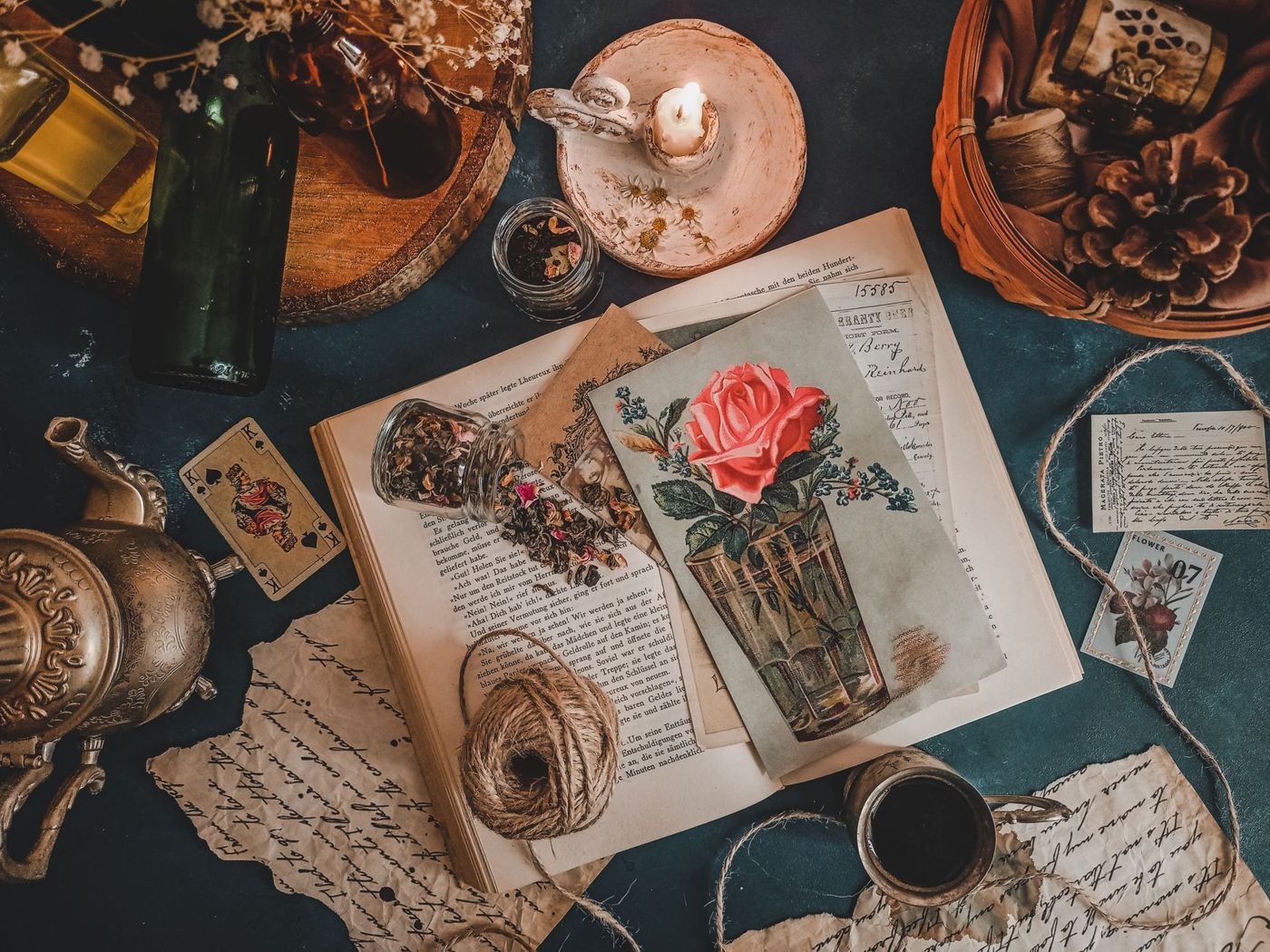
If you've ever spent an afternoon at the table with a pile of photos, a pair of scissors and a pot of glue, you know the feeling. Time flies, your phone is somewhere else, and afterwards many people feel calmer than when they started. Scrapbooking and journaling touch on a few things lots of people enjoy: doing something with your hands, looking back on what you've lived through and putting your thoughts on paper.
Below you can read what's known about crafting and wellbeing, what making a page about your memories does, and how to keep it relaxing.
What's known about crafting and wellbeing
Creative activities have long been linked with relaxation. Art therapy, in which people work with images and materials rather than only talking, is a recognised profession. Memory books with photos and objects are also sometimes used in care, for example with grief and with people living with dementia, where they can help bring memories back.
Research into creative activities often shows that people feel calmer and better for them. However, the studies vary widely in design and size, and they don't prove that scrapbooking cures any problems. So be careful with firm promises. What you can say: many scrappers find it calming, in many different countries.
Why can it be calming? A few things play a part:
- Your attention is on one thing. Measuring paper, trimming a photo, choosing a colour: it takes just enough concentration to let your thoughts rest for a while.
- Your hands are busy. Cutting, tearing and sticking are calm, repetitive movements.
- You finish something. A finished page often gives more satisfaction than an evening of scrolling.
- There's no right or wrong. You don't need to be able to draw; it's about your story.
Some scrappers call it a form of mindfulness. You don't have to put a label on it, but it does look like it: your attention is in the here and now, on the paper in front of you.
Capturing memories and looking back
A photo on your phone is quickly taken and quickly forgotten. A photo you choose, print and give a place on a page, you live through again. You think about what happened, who was there and how it felt. That remembering helps keep a memory alive.
Many scrappers notice that a page stirs up more than the picture alone. A museum ticket, a napkin from a restaurant or a leaf you picked up along the way bring back an atmosphere a photo doesn't capture. Open a book like that years later and you're suddenly back in that street or on that beach.
There's also a side to it that reaches beyond yourself. A scrapbook is a little piece of everyday life that you pass on. So feel free to write by hand: whoever reads it later will recognise your handwriting. And don't just keep the big moments. It's often the ordinary days that are the nicest to read back later.
You don't have to record only lovely things, by the way. A page about a hard time, such as an illness or a period when your child was at home a lot, can be just as valuable. Sometimes a page is less about the photo and more about the feeling you made it with.
Journaling to clear your head
Writing is one of the simplest ways to get what's going round in your head out of yourself. Many people find that once it's on paper, they can look at it instead of being stuck inside it. That gives distance, and sometimes a clearer view too.
You don't need to be a writer for this. Spelling, grammar and fine phrasing don't matter; nobody else reads it. Write the way you talk. A few minutes, a few times a week, is enough to notice whether it does something for you.
Not sure where to start? Try one of these questions:
- What am I feeling right now, and why?
- What am I grateful for today?
- What's been bothering me for a while?
- What do I really not want to forget this week?
And what if your journal suddenly fills up with sadness? That happens to lots of people, for example after a break-up or a loss. That's fine. A journal is allowed to be honest, and when you leaf back through it later, you often see how far you've come.
Would you rather not have those heavy thoughts among your lovely pages? Then write them on a separate sheet. Some people tear it into pieces afterwards, and they find that a relief. Others write just a short line, such as ‘it's over’, and keep the rest out of the book. Choose what suits you. A cheerful sticker or a strip of washi tape (decorative paper tape) on a heavy page can also help make it feel a little lighter.
Swapping screen time for paper
Your phone holds thousands of photos, but you rarely look back at them. And anything that's saved automatically soon feels less like yours. What you cut and stick with your own hands can't simply be edited or deleted. It stays as it was, and that gives it a different kind of value.
An evening of scrapping is also an evening without a screen. No notifications, no endless stream of other people's lives. Feel free to leave your phone in another room, or use it only to pick your photos before you print them.
That doesn't mean digital is off limits. Many scrappers combine the two: they sort their photos on the computer and then carry on with paper. The point is that the making itself becomes a calm moment.
Is it therapy?
No, not in the sense of treatment. Scrapbooking can help you relax, sort out your thoughts and give memories a place. For many people it's an outlet, and sometimes a way of dealing with grief. But it isn't treatment and it doesn't replace help from a GP, psychologist or therapist. If you've been struggling with low mood, anxiety or stress for a long time, seek professional help.
It can be a nice addition, though. There are supported groups, for example at hospitals or drop-in centres, where people journal or make collages together. That's where conversation and crafting come together. If you're already having treatment, talk to the person treating you about whether your journal could help.
Do you notice that making a page actually makes you restless or low, for instance because old memories stir up too much? Take that seriously. Put it aside for a while, talk about it with someone you trust, and seek help if it doesn't pass.
How to keep it relaxing
The risk with a hobby that does you good is that it turns into a chore. You see beautiful pages by others, you're months behind with your album, and suddenly it feels like homework. A few things help:
- Start small. Paper, scissors, glue and a few photos will get you a long way. More materials can come later, once you know what you like.
- Give it a set place and time. A quiet corner and, say, a regular evening each week turn it into a habit you look forward to.
- Let go of the backlog. You don't have to work in date order. Start with the photos that move you most right now.
- Don't compare. Other people's pages are inspiration, not a yardstick. You're allowed to borrow an idea and make it your own.
- Stop when it's no longer fun. A half-finished page can sit for a week.
- Try doing it together. With a friend, your child or a group of scrappers round one table, it's cosy, and you learn from each other.
And above all: it doesn't have to be pretty. A wonky photo, a smudge or a crossed-out word belong in a book made by hand. What counts is that you enjoyed it and that the memory will still be there later.
Questions about this topic
Is scrapbooking good for your mental health?
Many scrappers find it calming, and research into creative activities often points that way. However, the studies vary widely, and scrapbooking isn't a treatment.
Does journaling help clear your mind?
Many people find that writing down what's on their mind gives them distance. A few minutes, a few times a week, is enough to notice whether it does something for you. You can write heavy thoughts on a separate sheet.
Is scrapbooking a form of therapy?
No, not in the sense of treatment. It can help you relax and give memories a place, but it doesn't replace help from a GP, psychologist or therapist.
How do you keep scrapbooking relaxing?
Start small, give it a set place and time, let go of the backlog and don't compare your pages with other people's. Stop when it's no longer fun.