· 7 min read
How to use and set up a traveler's notebook
A leather cover, an elastic band and loose notebooks you choose yourself. This is how a traveler's notebook works, and how to make it yours.

A traveler's notebook looks simple: a leather cover, an elastic band along the spine and another elastic to keep it closed. Yet it's one of the most versatile books you can own. You choose which notebooks go inside, you take them out when they're full, and the cover lasts for years. Below you can read how it works and how to get started.
What is a traveler's notebook?
The name comes from a Japanese brand that has been making this kind of leather cover with loose notebooks for years. These days many people use the word for any notebook that works this way, even if it's from another brand or handmade.
The idea is always the same. On the inside of the spine, an elastic band runs from top to bottom. You slide a thin notebook under it, right in the middle. A second elastic goes around the whole book and keeps it closed. Those loose notebooks are called inserts or refills.
The leather gets more beautiful with use. It picks up little scratches, marks and a soft crease, and that's part of it. Many scrappers think that's the best bit: the cover shows you everywhere you've taken it.
What sizes are there?
There are two common sizes.
- Regular is tall and narrow; the notebooks are about 11 x 21 cm. Think of an A5 with a strip cut off the side. You have room to write and stick things in, and it still fits in a bag.
- Passport is smaller, with notebooks of about 9 x 12.5 cm, the size of a passport. It fits in a coat pocket or a small bag, which makes it nice to carry with you all the time.
There are also smaller and larger versions, and other brands make their own sizes, such as A5 or A6. Do bear in mind: inserts are made for one size. A regular notebook won't fit in a passport cover.
Not sure? Then look at how you write. If you write large or want to stick in a lot, a passport soon feels cramped. A small notebook also doesn't lie flat as easily, which makes writing harder. A regular usually stays at home or in your bag, a passport goes everywhere with you. That's why some people have both.
Choosing and combining inserts
There are notebooks with lines, squares, dots or completely blank pages, and notebooks with kraft paper, watercolour paper or thin, lightweight paper. On top of that you have weekly or monthly planners, and handy extras.
- A card folder to tuck loose bits of paper, tickets and leaflets into.
- A zip insert for receipts, stamps or a few stickers.
- An insert with plastic sleeves or pockets for cards.
What you combine depends on what you want to use it for. A few set-ups many scrappers use:
- A weekly planner plus a blank notebook as a diary.
- A monthly planner, a notebook for loose notes and a folder for bits of paper.
- A blank notebook to stick things in, with a zip insert full of stickers and tape behind it.
If you use glue, watercolours or stamps, go for slightly thicker paper. Thin paper is light and lovely to write on, but it wrinkles if you stick a lot on it or work wet.
You can also make inserts yourself. Fold a small stack of paper in half, wrap a sheet of slightly sturdier paper around it and staple it or sew it along the fold. With ten to twenty sheets, a notebook like this stays nice and thin. Shop-bought notebooks are usually a bit thicker.
What do you use it for: travel, diary, planner?
The brand is all about travel, and it's ideal for that too. On the go you tuck tickets, leaflets and receipts in the back, and in the evening you stick them in and write a few lines next to them. Back home you can add photos later.
But you don't need to travel to use one. People keep a diary in it, a reading log, a list of films they've seen, a planner or a notebook full of packaging and stickers from things they ate and drank. A day in town or a visit to a museum is a little trip too.
A handy rule: give each notebook one job. Then you don't have to search, and you know what each notebook is for when you pick it up. A planner and a diary are two different things. If you already plan, you can keep the diary very small, or only write on days when there's really something to tell.
Elastics and thickness: how much fits inside?
As standard there's one elastic in the spine, so one notebook fits. You can add more. For that you need connector bands: a short elastic with two loops that joins two notebooks together. You can also thread extra elastic through the holes in the spine, so more notebooks sit separately side by side.
Then there's thickness. Three or four ordinary notebooks usually work fine. Beyond that it gets thick and heavy, and the elastic doesn't close well. If you stick in a lot, a single notebook will grow quite a bit on its own. Keep that in mind and start with fewer notebooks.
Two tricks for a thick book:
- Put the notebook you use most at the front. Then you open it straight away and don't have to flick past the others.
- For a day out, take only what you need. You can also just carry a single notebook on its own.
Page won't lie flat while you write? Hold it down with your hand or put a clip on it. If the knot of the closing elastic gets in the way, you can move it or replace the elastic.
What do you write in a new notebook?
A new notebook can feel too nice to start. What helps is not to begin the first page with something beautiful, but with something practical.
- Your name and a phone number or email address, in case you lose it.
- The start date and what this notebook is for.
- A list: what you want to keep track of, where you're going or what you want to remember.
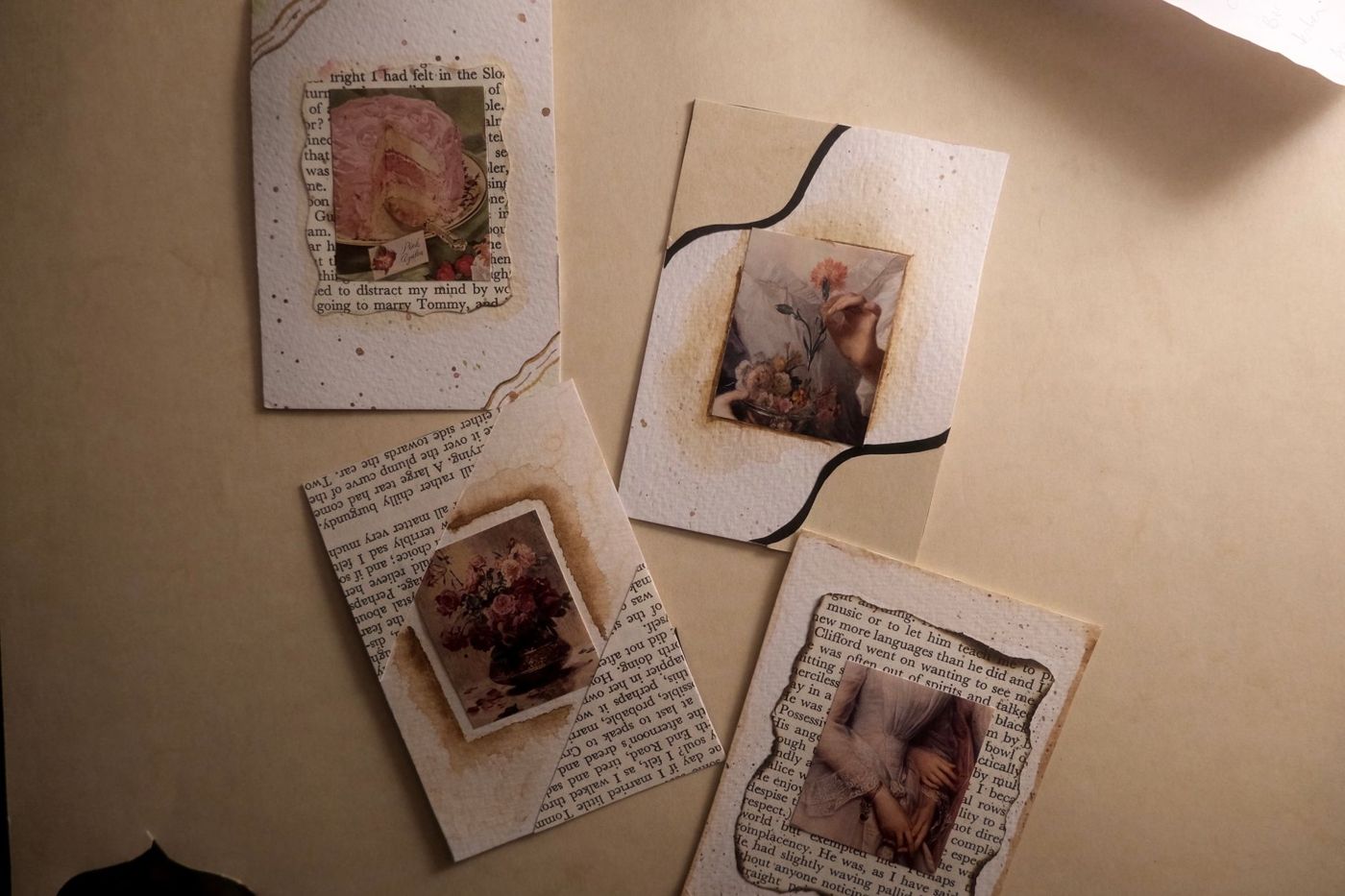
After that you can simply start with today. Write three lines about what you did, stick in a ticket or a bit of packaging, and you're done. Sticking things in is a nice way to start when you don't know what to write, and you don't need to be able to draw. Leaflets, flyers and tickets are already nicely designed; cutting out a piece and sticking it in gives you a page you recognise straight away.
Don't compare your own book with the finished pages you see online. There you see the best bits, not the days with three hurried lines. The notebook is for you later on, not for anyone else.
Keeping finished inserts
When a notebook is full, you slide it out from under the elastic and replace it with a new one. The cover stays, and the notebooks grow into a little shelf of their own.
This is how to keep them together:
- Write the start and end dates and the subject on the front or spine. Otherwise, a year from now you won't remember which notebook was which.
- Stand them upright in a box, a magazine file or a special holder. That way they sit side by side like books on a shelf.
- If they're thick from everything stuck in them, tie them shut with a ribbon or elastic so the notebook doesn't bend open.
- Choose a dry spot, out of the sun.
Some kinds of sticky tape and tape runners discolour after a few years, and you can see that in old notebooks. A glue stick or double-sided tape made for paper stays neater. For photos, choose an acid-free, photo-safe adhesive. Full notebooks are also lovely to scan, so you can leaf through them without opening the real notebook every time.
Questions about this topic
What is a traveler's notebook?
A traveler's notebook is a cover, usually leather, with an elastic band along the spine that you slide loose notebooks under. A second elastic keeps it all closed. You replace full notebooks with new ones.
What sizes do traveler's notebooks come in?
The two common sizes are regular, with notebooks of about 11 x 21 cm, and passport, with notebooks of about 9 x 12.5 cm. Inserts are made for one size, so they won't fit a cover of a different size.
How many inserts can you put in a traveler's notebook?
With extra elastics more notebooks fit, but three or four is enough for most people. Beyond that the book gets thick and heavy, and the elastic doesn't close well.
What can you use a traveler's notebook for?
You can use it for a travel journal, planner, reading log or a notebook to stick things in. A handy rule is to give each notebook one job, so you know where to write what.