· 6 min read
Scrapbook, photo book or photo album: which suits you
A scrapbook tells, a photo book shows and a photo album keeps. Here's how to choose what suits your photos, your time and your shelf, or how to combine them.
You have thousands of photos on your phone and a few boxes of prints in a drawer. Somewhere in the back of your mind you want to turn them into a book, but which kind? A scrapbook, a printed photo book and a classic photo album look alike, but each asks something different of you and each gives something different back.
The difference in one sentence
A photo album keeps photos. A photo book shows photos, neatly laid out and printed. A scrapbook tells a story, with photos as one of the ingredients.
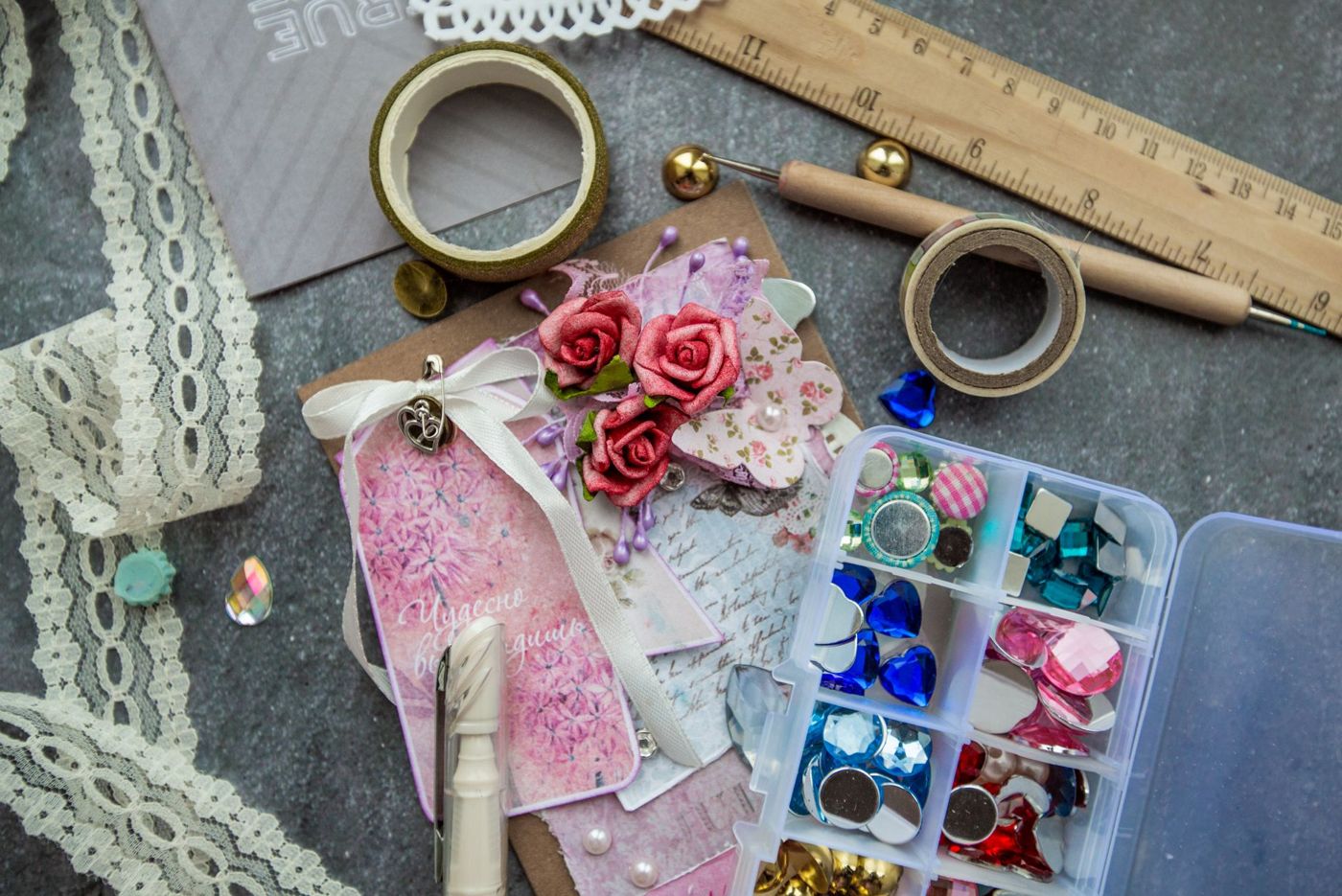
In a photo album you stick or slide in prints, sometimes with a short note. A scrapbook adds paper, writing in your own handwriting, tickets, newspaper cuttings and small embellishments. Every page becomes a kind of collage. A photo book is something you design on your computer or phone and have printed, like a real book.
The classic photo album
Albums have been around since the middle of the nineteenth century. There are roughly two kinds.
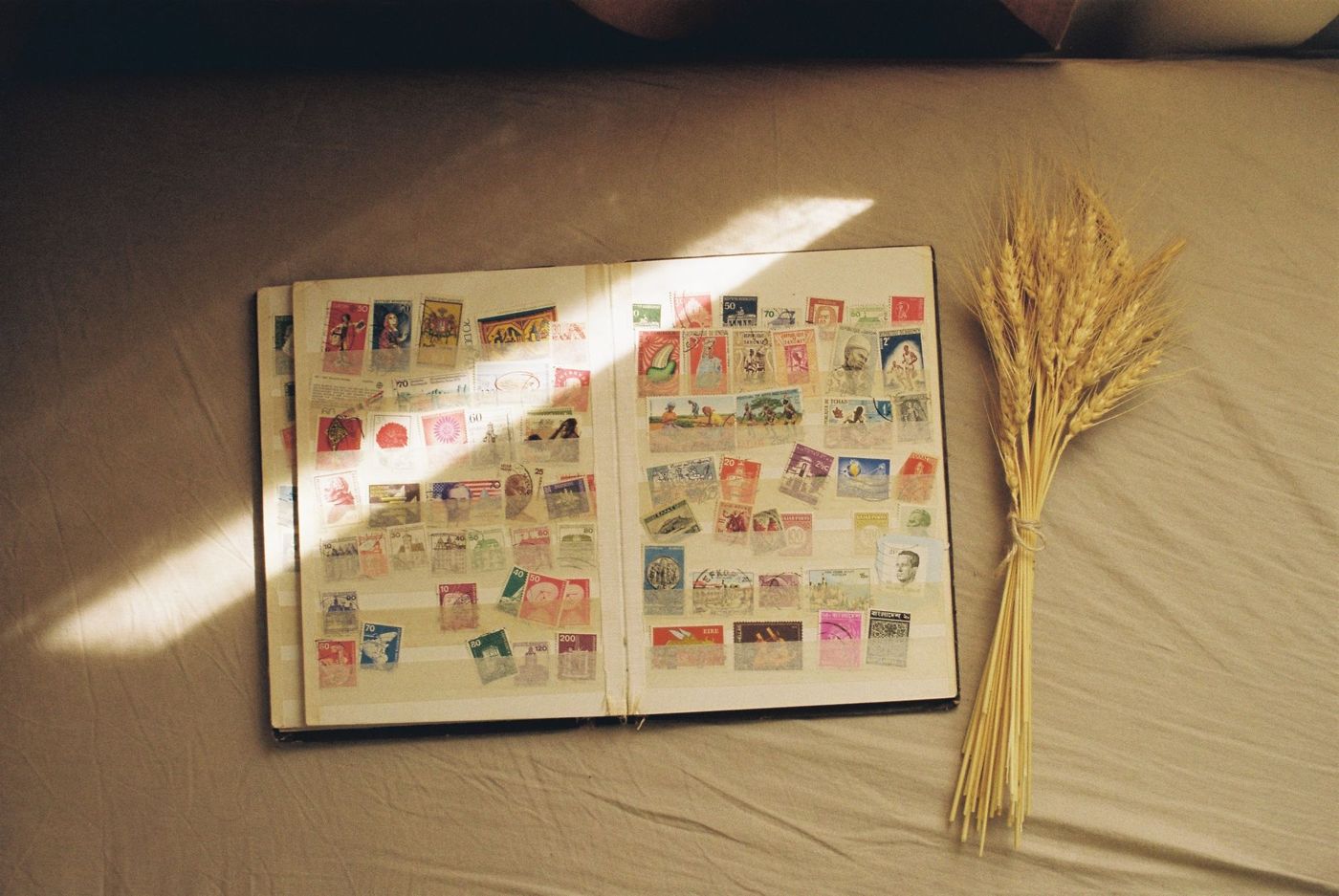
In a slip-in album you slide photos into clear pockets. It's the quickest way to put away a stack of prints: you can do a whole year in one evening. The downside is that the pockets decide the size and the position. Usually that means landscape photos of 10 x 15 cm, neatly one below the other. There's hardly any room for writing, and the plastic wears and can scratch your photos as you slide them in and out.
A traditional album has sturdy pages, often with a sheet of glassine (thin, translucent paper) between them to protect the photos. You fix the photos with photo corners or acid-free adhesive strips, so you can mix different sizes and write next to them. With photo corners you can also take a photo out again later without damaging it.
Be careful with self-adhesive albums that have a sticky layer and a clear sheet over the top. They're easy, but after some years the glue can turn yellow, or hold the photos so tightly that they won't come out any more. For photos you want to keep for a long time, photo corners or slip-in pockets made of safe plastic are a better choice.
The printed photo book
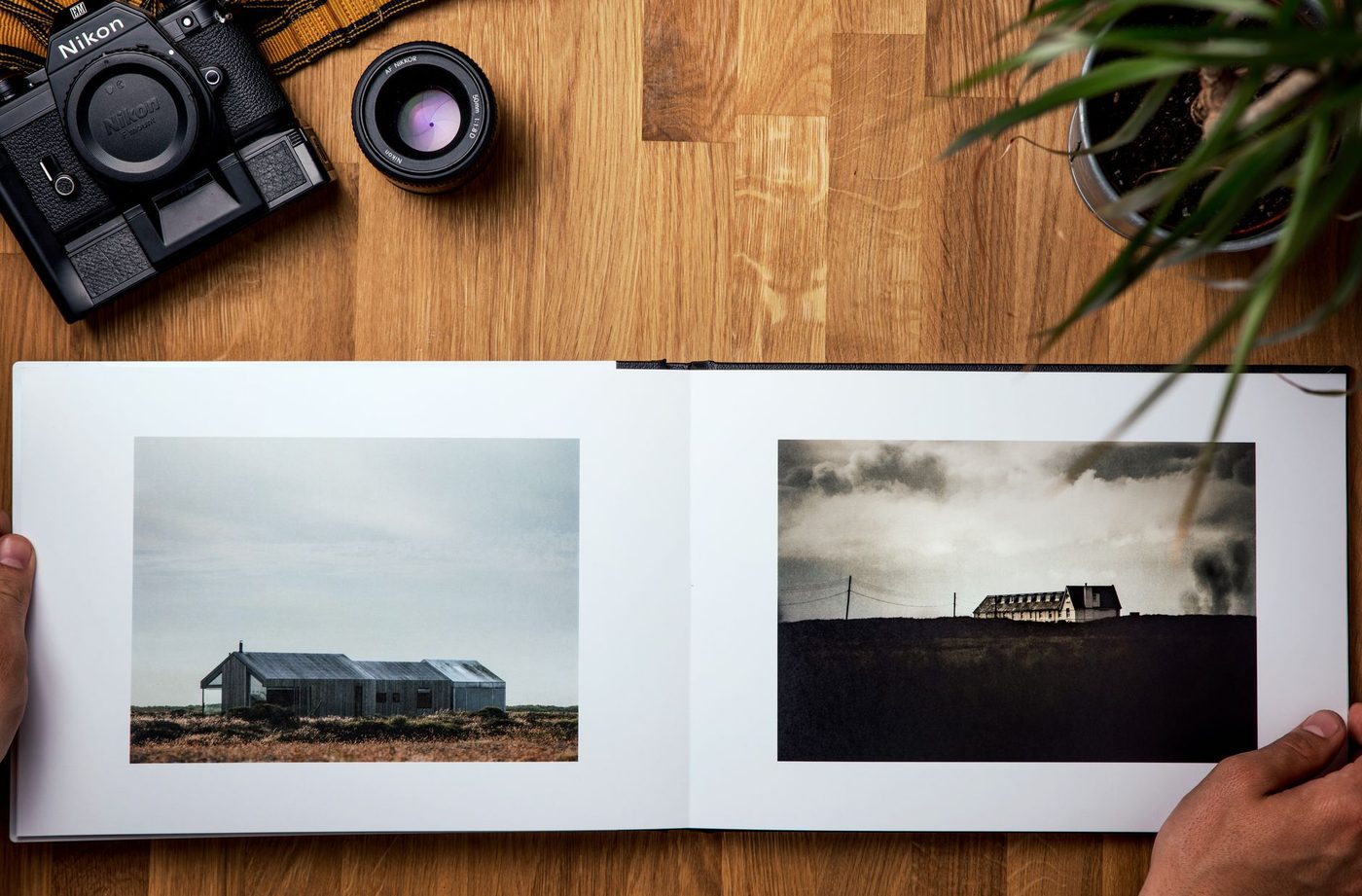
A photo book is the quickest option if your photos are mostly digital. You choose a size, drag your photos into a template and a few days later a bound book lands on your doormat. Large photos across a whole page often look better than in an album, and short captions are easy to type in.
A big advantage: you can order it as many times as you like. Everyone in the family can have the same book. That's never possible with a scrapbook.
What's missing only becomes clear when you hold the book. Everything is flat. There's no real ticket from the zoo, no note from your gran in her own handwriting, no scrap of fabric. A photo book comes from a template, so it feels less like something you made with your own hands. For some people that's exactly what they like, for others it's exactly what they miss.
One more practical lesson from scrappers: keep your own design or the separate pages as files. Services sometimes shut down, and then your past projects and designs are gone. With the pages saved as images on your own drive, you can always have them reprinted somewhere else.
The scrapbook
A scrapbook takes the most time, but it also gives the most back. For each page you choose a few photos that belong together, and you write down what you remember. Who was there, what was said, why this moment mattered.
It's that writing that makes the difference. In thirty years nobody will remember why that one photo on the beach was so funny, unless you wrote it down. And the tickets, receipts and little drawings you stick in can sometimes mean more than the photo itself.
A scrapbook is one of a kind. If you want to share it with others, you can scan the pages; that's exactly what Scrappd is for.
Time, cost and durability side by side
Time:
- A slip-in album is the quickest to fill, once you have the prints.
- A photo book mostly takes time for choosing photos. The design itself goes quickly if you stick to one template.
- A traditional album takes more time, a scrapbook the most. Think more in terms of an evening per page than an evening per album.
Cost:
- You pay for a photo book in one go, and the price depends mainly on the number of pages, the size and the type of paper.
- With an album you pay for the album and the prints.
- A scrapbook can be cheap or expensive, depending on how much paper and how many embellishments you buy. With a small budget and what you already have at home, you can get a long way.
Durability:
- A good traditional album with acid-free card and glassine lasts a very long time, as long as it's kept dry and out of the sun.
- Photo books are sturdily bound and stand up well to being leafed through often. How the print will look after decades depends on the paper and the printing method.
- With a scrapbook it's up to you: with acid-free paper and glue, photos stay looking good the longest. Clear page protectors keep the pages safe from bending and fingers.
- A single photo on your phone is the most vulnerable. If your phone breaks and you have no backup, you lose everything at once.
Combining them: a photo book for everything, a scrapbook for the stories
You don't have to choose. Lots of scrappers do both, and it works surprisingly well.
For example, make one photo book every year with the best photos of the whole family. Keep it in the living room, where the children can take it off the shelf themselves. Alongside it, keep a scrapbook for the moments with a story: the first day at school, the house move, the holiday when everything went wrong.
The photo book then takes the pressure off. Not every photo has to go in your scrapbook, because it's already somewhere. That way you can choose what you really want to tell in your scrapbook, without falling behind.
You can also turn it around. Make digital scrapbook pages and have them printed as a photo book. Or have prints made of your best photos and put them in an album with fixed pockets, with a card for writing here and there.
What suits a minimalist
If you like having few things and a calm home, one thing a year is often enough. A yearbook measuring 20 x 20 or 21 x 21 cm takes up little space and looks lovely on a shelf if you always choose the same size.
Be strict when you choose. Pick the real highlights and leave out blurry photos, duplicates and ten versions of the same moment. Fewer photos make every photo stronger.
If you'd still like to make something with your hands, choose a small album with fixed pockets for photos and cards. That gives you a set format, so you don't have to think about embellishments. A card with two sentences is enough to keep the story.
In the end, the right book for you is the one you actually finish. Start with the format that holds you back the least, and after a year see whether you want more.
Questions about this topic
What is the difference between a scrapbook and a photo album?
A photo album mainly keeps photos, sometimes with a short note. A scrapbook tells a story with paper, writing, tickets and embellishments, with photos as one of the ingredients.
Is a slip-in album or a traditional stick-in album better?
A slip-in album is the quickest to fill, but the pockets decide the size and there's little room for writing. In a traditional album you can mix sizes and write next to your photos, and with photo corners you can take a photo out later without damage.
Can you combine a scrapbook and a photo book?
Yes, lots of scrappers make a photo book with their best photos and keep a scrapbook for the moments with a story. The photo book then takes away the pressure to stick every photo in your scrapbook.
What kind of photo album suits a minimalist?
Usually a yearbook in a fixed size, or a small album with fixed pockets. Choose only the real highlights and leave out duplicate or blurry photos.