 · 7 min read
Scrapbooking through grief and loss
Making a memory album for someone you miss, at your own pace. On gathering photos, keeping sympathy cards and writing when the words won't come.
Missing someone isn't something you fix. But there is something you can do with your hands, with the photos in the shoebox and the cards on the windowsill. For many scrappers, making a memory album is a way of staying close. Not to make the grief go away, but to give it a place.
Why an album can help
When you're grieving, you often look for something to do. Making a book with someone's personal things can be that kind of ritual. Many people like to do it themselves, and it helps especially if you struggle to find words for what you feel. Children can get something out of it too: they can stick things in and choose, even when talking is still too hard.
Many scrappers say the grief changes while they're making it. You look at a photo and the stories come back, like little films in your head. Sometimes it feels more like a visit than a goodbye. That doesn't happen on the first day, and it doesn't happen for everyone.
There's no right moment to start. Some people make a little book for the family within a few weeks; others only take the photos out of the drawer after a year or more. Start when you notice you're longing to, not because you feel you should. And feel free to stop for the afternoon if it gets too much. The album will wait.
Gather first, stick later
It doesn't start with paper, but with a table full of things. Bring together everything you can find: prints, slides, photos on phones, letters, a card with their handwriting, a receipt from one last day out. You don't have to choose anything yet.
If you can, do this together with family. A brother still remembers how that one holiday went; an aunt has old photos you've never seen. When you look at photos together, you fill in each other's stories. Write those stories down straight away, even if it's on the back of an envelope. Details fade faster than you think.
A few things that help with sorting:
- Put the photos in piles by period or by theme, such as the early years, the house, the garden, holidays, the grandchildren.
- Ask family members to put digital photos and scans in one folder, so nothing gets lost.
- Have old slides, videos or cassette tapes digitised. Hearing a voice or a laugh again can mean a lot, and this way everyone can have a copy.
- Work with copies of photos that only exist as a single print. Then you can cut without feeling guilty, and the original stays safe.
Once the piles are there, you'll often see for yourself which story you want to tell. A timeline of a whole life, or a little book about the things someone loved, like the sea, the vegetable patch or cycling. Having a clear idea before you start stops you getting lost among hundreds of photos.
Blurry, duplicate and failed photos
For an ordinary album the rule is simple: leave out blurry and duplicate photos and pick the best ones. A memorial album is different. A blurry photo might be the only one where someone is laughing the way they always laughed. You don't throw that away.
A few questions to help you decide:
- Is this the only photo of this moment or of this person? Then keep it, however crooked or blurry.
- Do five photos look very alike? Choose the sharpest for the page and keep the rest in a box or folder.
- Does a photo mostly show a back, a shoulder or part of a table? It can still find a place as a small print or as a background.
A blurry photo stands out less if you print it smaller. You can also tuck it into a little envelope or behind a flap, as something you only find if you look. What doesn't go in the album isn't gone. It's just kept somewhere else.
Sympathy cards, letters and other keepsakes
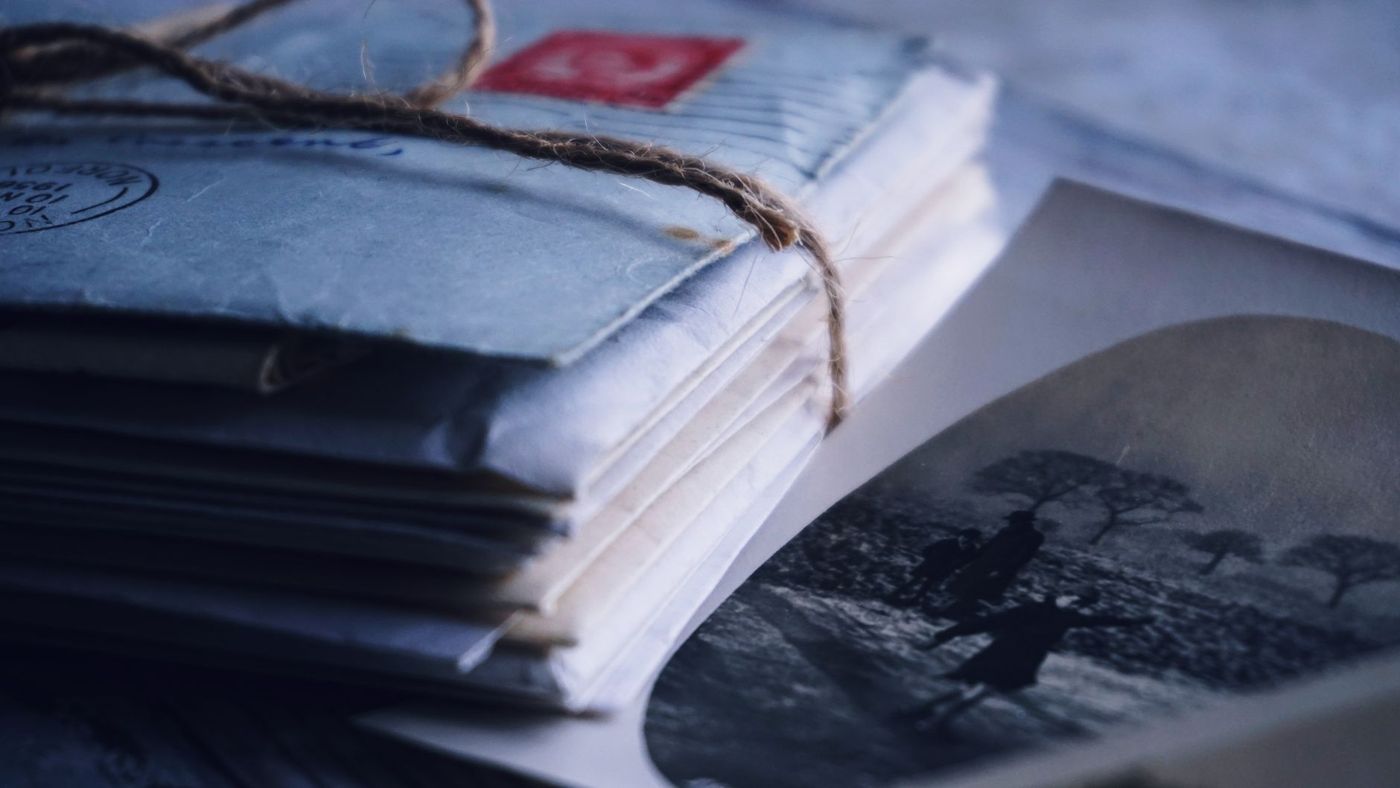
After someone dies, there are cards, letters, a funeral notice, an order of service or memorial card, and perhaps a ribbon from a floral tribute. Things from the person themselves can go in too: a shopping list in their handwriting, a recipe, a card they once sent you.
It's best not to glue these down. Use little envelopes, slip-in sleeves or photo corners, so you can still open a card and read it later. An album with flaps, pockets and fold-out pages gives you plenty of room for this. Bulky items belong in a pocket; don't force the album shut.
Be careful with receipts and tickets on thermal paper: the text fades over time. Take a photo or scan while it's still readable. The same goes for anything fragile, like a dried flower from the funeral. You can then use a copy on the page and keep the original separately.
There are often more cards than you have room for. Choose a few that touched you and keep the rest bundled in a box. A single sentence from a card can also go on the page, copied out in your own handwriting.
Writing when it's hard
For many people, the writing is the hardest part. The photos are manageable, but what do you put next to them? Start small. A name, a year and a place are already enough to place a photo later on.
If you want to say more but can't manage it in beautiful sentences, try one of these forms:
- A list. What he always used to say, what was in his coat pocket, what made her laugh the most.
- A memory in three sentences: where it was, what happened, what you felt.
- A page with only words, no photo. Those are often the pages that become the most beautiful later on.
- A letter to the person who is no longer here.
- A short piece in the other person's voice: what would he say if he saw this photo? Some scrappers do this for a pet that has died, and find it comforting.
If something is too personal for everyone to see, write it on a card that disappears into an envelope or behind a flap. It's in the book, but not lying open on the table. And feel free to write by hand, even if you don't like your handwriting. That handwriting is exactly what becomes special later.
An album the family can keep
A memory album is often picked up, leafed through and passed on. Keep that in mind. A calm, sturdy cover lasts longer than one covered in loose decoration. Inside you can show more, but make sure nothing breaks off easily or catches.
Use materials made for photos: acid-free paper and photo-safe glue or corners. That way photos and cards discolour less. Page protectors keep the pages safe from fingers and spills.
Do several people want an album? Then not everyone needs their own unique handmade book. A few options:
- Make one paper album and also have a photo book printed from the scans, for brothers, sisters and grandchildren.
- Make a small booklet or a little tin with a handful of photos for each person, and keep the big album yourself.
- Put the digital photos, scans and recordings somewhere the whole family can get to them.
You can also keep a scanned album private with Scrappd and share it with whoever you like, so family far away can leaf through it.
Take your time
A memorial album doesn't have to be finished in a month. Many scrappers work on it on and off, sometimes for years. Leave empty pages for photos that turn up later, or for stories you only hear at a birthday.
And if you don't want to do it alone, invite someone to join you. Sitting at the table together, with a cup of coffee and a pile of photos, the stories come by themselves.
Questions about this topic
How do you make a memory album for someone who has died?
First gather photos, cards and stories, ideally together with family, and sort them by period or theme. Only start sticking once you know which story you want to tell, and take your time.
What should I do with blurry photos in a memorial album?
A blurry photo might be the only one where someone is laughing the way they always laughed. If it's the only photo of that moment, keep it, perhaps printed smaller or tucked into a little envelope.
How do you keep sympathy cards in an album?
It's best not to glue them down; use little envelopes, slip-in sleeves or photo corners instead. That way you can still open a card and read it later.
What do you write in a memorial album when you can't find the words?
Start with a name, a year and a place. If you can't manage more, write a list, a memory in three sentences or a letter to the person who is no longer here.