 · 7 min read
How to keep a travel journal on the road, even when you're tired
A small notebook, a few pens and a glue stick. That's how you keep a travel journal on the road that actually gets finished, even on days when you don't much feel like it.
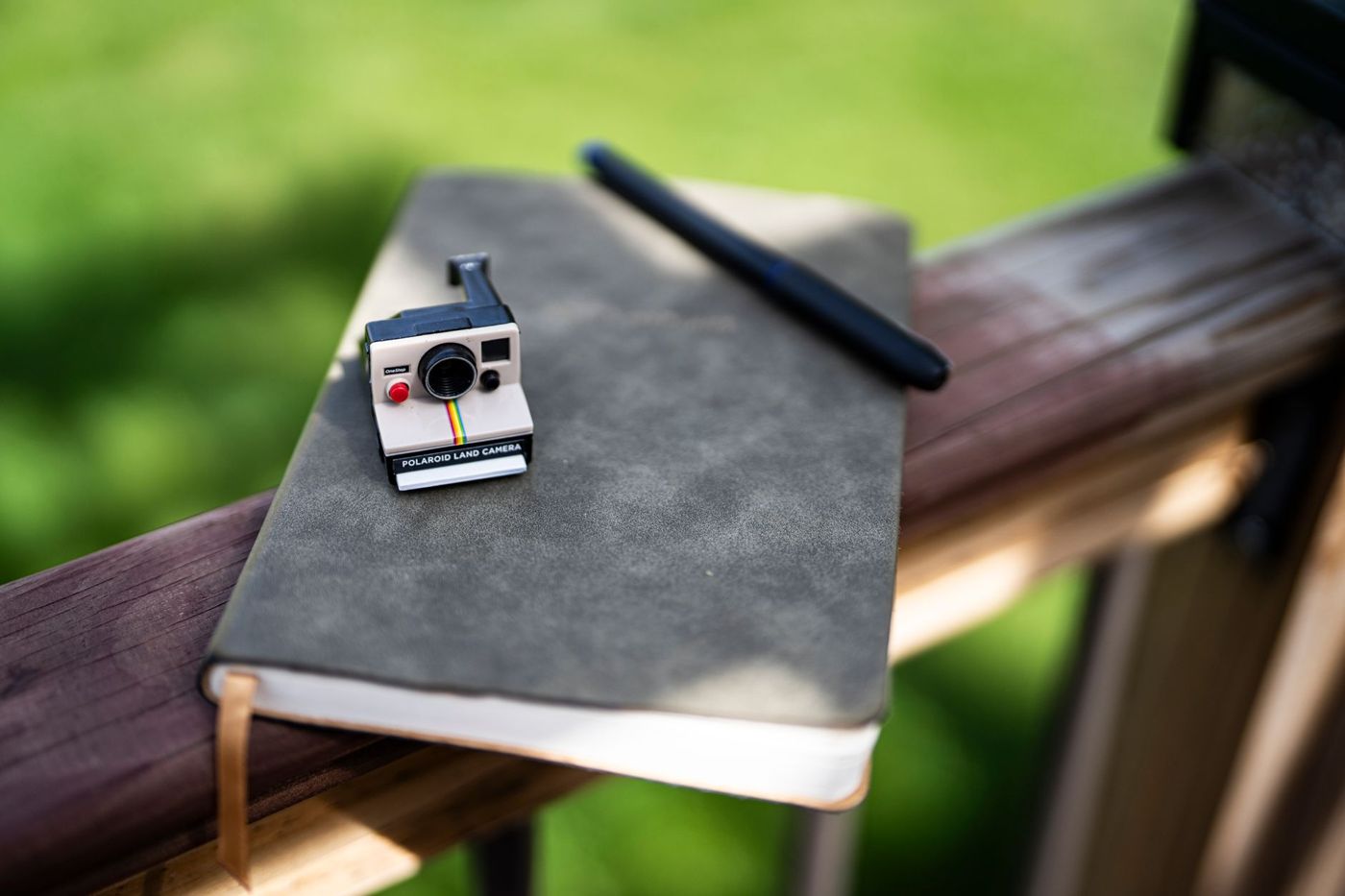
A travel journal usually starts full of good intentions and often ends on day four, with a pile of blank pages and an envelope full of receipts. That's rarely your fault. It comes down to a notebook that's too big, supplies you left at home and the idea that every page has to be beautiful. Make a few choices before you go and you'll keep it up.
Which notebook to take
Choose a notebook you'll actually carry with you. A5 or smaller fits in a day bag, while a large one soon stays behind in your suitcase or hotel room. If you'd rather do lots of sticking in the evenings and don't need it much during the day, a bigger book can work.
Look out for three things:
- Paper: sturdy enough to stick tickets on without it cockling, and thick enough that ink doesn't bleed through. If you'll be using watercolours or markers, choose paper that can handle them.
- Cover: a hard cover survives rucksacks, bags and a downpour better than a soft one.
- Layout: blank, lined or squared is a matter of taste. There are also travel journals with prompts. They help if you don't know what to write, but leave less free space.
The brand hardly matters. A simple lined exercise book with a cover you've decorated yourself works just as well as an expensive leather notebook. What counts is how much care you put into it. Lots of scrapbookers choose one notebook per trip. That way it's finished when the trip is, and later it sits on the shelf as a book of its own.
What else to take
Keep it light. Everything should fit together in a pencil case or a plastic zip bag, so you can grab it anywhere.
- Two or three pens, one of them waterproof. A fineliner or gel pen in black and one colour for accents is enough.
- A glue stick or glue dots.
- One or two rolls of washi tape, the paper tape that's easy to tear and reposition. Wrap a bit around an old card, then you don't need to bring whole rolls.
- A small craft knife or small scissors. Scissors aren't always allowed in hand luggage, so check beforehand what's permitted.
- A few stickers or a small stamp, if you like.
You don't need to bring a photo printer. Draw a rectangle in pencil where a photo will go later and write in the middle which photo it is, for example 'beach at sunset'. Put the photos you want to print straight into a separate album on your phone. At home you print them all in one go and stick them in place.
Writing on the road or afterwards
Either works, but if you write as you go, you remember more. Memories fade faster than you think, especially on a tour with a new place every day. What you write down that same evening is still accurate: how the soup tasted, what the man at the ticket office said, what time the bus finally came.
Writing during the trip also changes the trip itself. You look more closely, because you know you'll want to record it later. Fifteen minutes in a café or on a park bench is often enough.
For many people a middle way works best. Write short and fast on the road, messily if need be, and finish the pages at home with photos and decoration. Then you have the words of the moment and the calm of home.
Tickets, receipts and souvenirs
The flat paper of a trip is worth its weight in gold: train tickets, entry tickets, maps, a receipt from the bakery, a sugar sachet, a bottle label, a restaurant's business card, a pressed leaf from the park. They often say more than a photo.
The most important tip: stick them in straight away. Whatever you keep to sort out later gets lost, crumpled or stays in an envelope for years. A strip of washi tape or a dab of glue stick and it's on that day's page, even if it's a bit crooked.
A few handy tricks:
- Stick a small paper envelope or a folded pocket in the back of your notebook for things you can't stick in yet.
- Tickets with information on both sides can be fixed along the top edge with a single strip of washi tape, so you can flip them over.
- A city map can be folded small and stuck in as a flap. Colour in your route on it.
- Receipts on thermal paper fade over time. Write the key details next to them or take a photo.
- Only take what's meant to be taken. A leaflet or a ticket, yes; a flower from a protected park, no.
What to write when you're tired
After a long day on your feet, a blank page feels heavy. So lower the bar. A few words are better than nothing, and tomorrow you'll already have forgotten the details.
This works on evenings when you're tired:
- Three lines: where you were, what you ate, what stayed with you most.
- A list instead of sentences: what you saw, what you heard, what you tasted.
- Set questions you answer every day: who you met, what the weather was like, the best moment of the day, something that surprised you.
- One little drawing of a cup, a door or a plate of food, from a photo on your phone. It doesn't have to be pretty; it's for you.
- Sticking in that day's ticket with the date next to it. That's a page too.
If you're truly worn out, skip the day without feeling guilty. Holidays are for resting too. Just leave a space with the date, so you know later where it belongs.
Why travel journals often stay unfinished
Almost always for the same reasons. The book is too big or too beautiful, so you're afraid of ruining it. You want every page finished before you move on, and that takes time you don't have on the road. You save everything for later, and later never comes. Or you miss one day, and then it feels as if the book has failed.
Here's how to avoid that:
- Choose a small notebook without too many pages. A full small one is lovelier than a half-empty big one.
- Write first, decorate later. You can't get the words back afterwards, but you can always add washi tape.
- Accept that it won't be perfect on the road. A smudge, a wonky line or a crossed-out word is part of a trip. Cover up a mistake with a ticket or a sticker.
- If a page isn't working, fill it with a photo, a map or a scrap of paper. Not every day needs words.
- Set aside one afternoon at home to finish the notebook, ideally within a week. After that, the motivation fades quickly.
Reflection questions for the end of the trip
Save the last pages for looking back. Write them on the last evening, or on the train or plane home. You don't have to answer every question; pick a few that suit this trip.
- What was the best moment?
- What was disappointing, or actually overrated?
- What surprised you?
- Which encounter do you never want to forget?
- What was your favourite place to eat or have coffee?
- What did you learn about this place, and about yourself?
- What will you miss, and what are you looking forward to at home?
- What would you do or pack differently next time?
That last question is more practical than it seems. Note down what you didn't wear and what you missed, and your next packing list writes itself.
Once your travel journal is finished, scan it. Then you'll still have it, even if the notebook gets wet or goes missing one day. Put the notebook itself next to the one from your last trip, and after a few years there'll be a whole row.
Questions about this topic
What's the best notebook for a travel journal?
Choose a small, sturdy notebook, A5 or smaller, with paper that ink doesn't bleed through and that can hold tickets without cockling. A hard cover survives rucksacks and rain better.
What should I write in a travel journal when I'm tired?
Three lines are enough: where you were, what you ate and what stayed with you most. A list, a little drawing or a stuck-in ticket counts too.
How do you stick tickets and receipts in a travel journal?
Stick them in straight away with washi tape or a glue stick. For things you can't stick in yet, put a small envelope in the back of the notebook. Receipts on thermal paper fade, so write the key details next to them or take a photo.
How do you add photos to a travel journal without a photo printer?
Draw a rectangle in pencil where a photo will go later and write next to it which photo it is. At home you print all the photos in one go and stick them in place.