· 7 min read
Which pen to use in your scrapbook and journal
A pen that won't fade, won't smudge and is safe next to your photos: what to look for, which types there are, and how to write on photos, tape and dark paper.
You've made a lovely page, with photos, paper and a few embellishments. Then comes the writing, and that's where things go wrong more often than you'd think. Ink that turns brown after a few years, a smudge under your hand, letters showing through on the back. The right pen prevents all that. Below you'll read what to look for and which pen to use for what.
What makes a good pen
What you write needs to still be readable in thirty years. That's why you look for a few properties. You'll usually find them on the pen or the packaging.
- Pigment ink. Pigment is made of tiny particles of colour that stay on and in the paper. It fades much more slowly than dye ink, which soaks into the paper and can fade in the light.
- Lightfast or fade resistant. The colour stays, even if the page is often left open.
- Water resistant or waterproof. A drop of tea or a damp finger won't make the writing run.
- Acid free, sometimes also called archival or photo safe. The ink won't damage the paper or your photos.
- Quick drying. That way you're less likely to smudge something.
Black is the safest choice for writing that needs to last. Colour is nice for accents, but coloured ink in particular is often less lightfast.
Fineliners: the safe basics
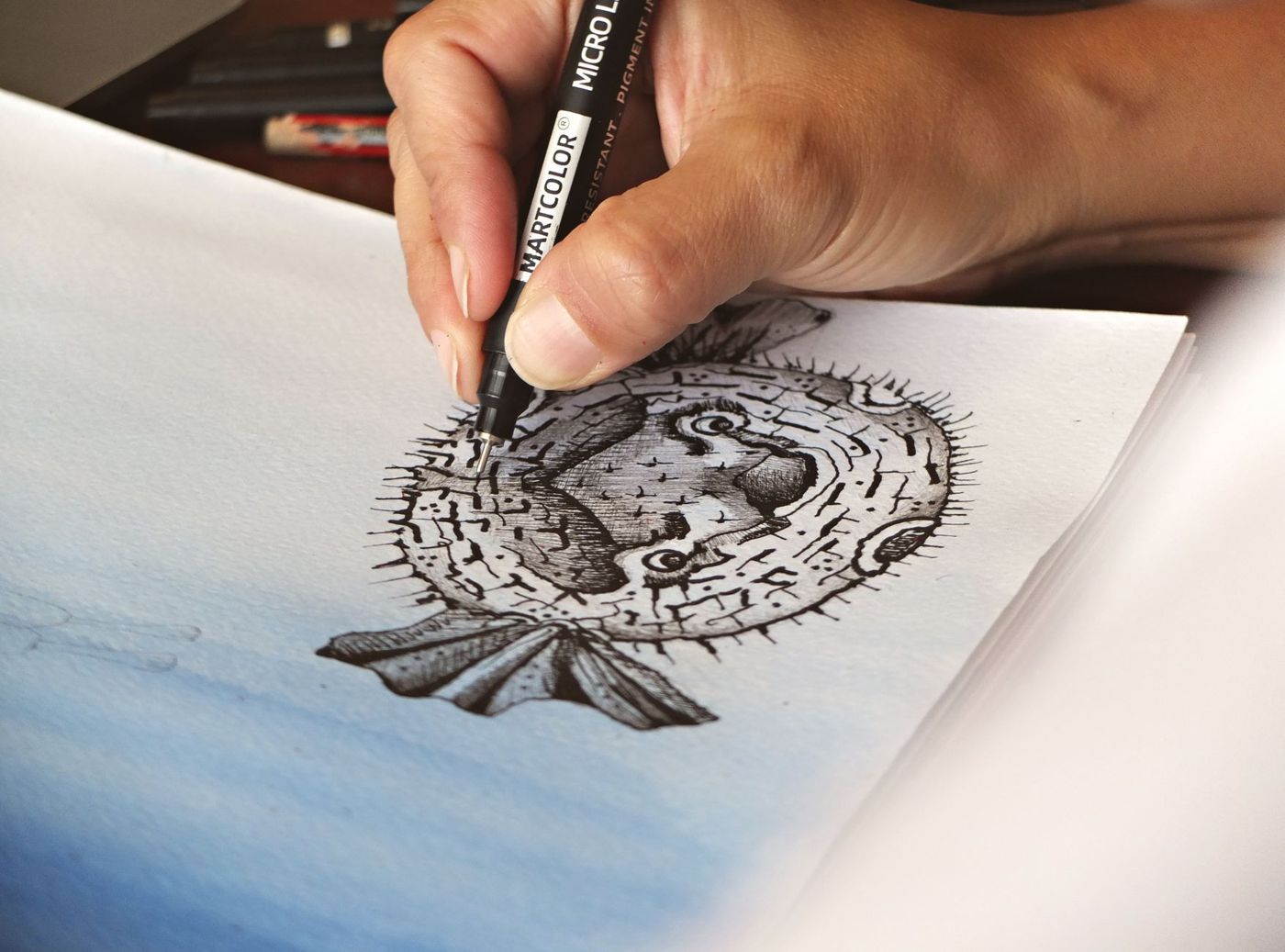
A fineliner is a pen with a fine felt tip. For journaling, the writing in your scrapbook, a fineliner with pigment ink is the workhorse. You'll find them in tip sizes from about 0.05 to 0.8 mm. For everyday writing, 0.3 to 0.5 mm is comfortable, with a finer one for details and a thicker one for a title.
Don't press too hard. A felt tip wears down and gets wider if you lean on it, and then it releases ink more easily. Always put the cap straight back on, because a fineliner dries out quickly.
A waterproof fineliner is handy for drawing too. If you want to colour with watercolour or ink first and add lines afterwards, or the other way round, a waterproof line won't run.
Gel pens
A gel pen writes smoothly and often a bit bolder than a fineliner. There are gel pens with pigment ink that are perfectly suited to your album. So do check whether it says pigment, archival or acid free.
The ink of a gel pen sits more on top of the paper. That means it takes longer to dry. On smooth paper it can easily take a minute. That's exactly when your hand sweeps through your writing. So take a moment before you carry on.
The real strength of gel pens is in the accents:
- A white gel pen for highlights in eyes, stars in a night sky or dots on the cheeks of a stamped figure.
- A white or silver gel pen for faux stitching: short dashes along the edge of a shape, as if it's been sewn on.
- Metallic gel pens in gold and silver for borders and small details.
Brush pens
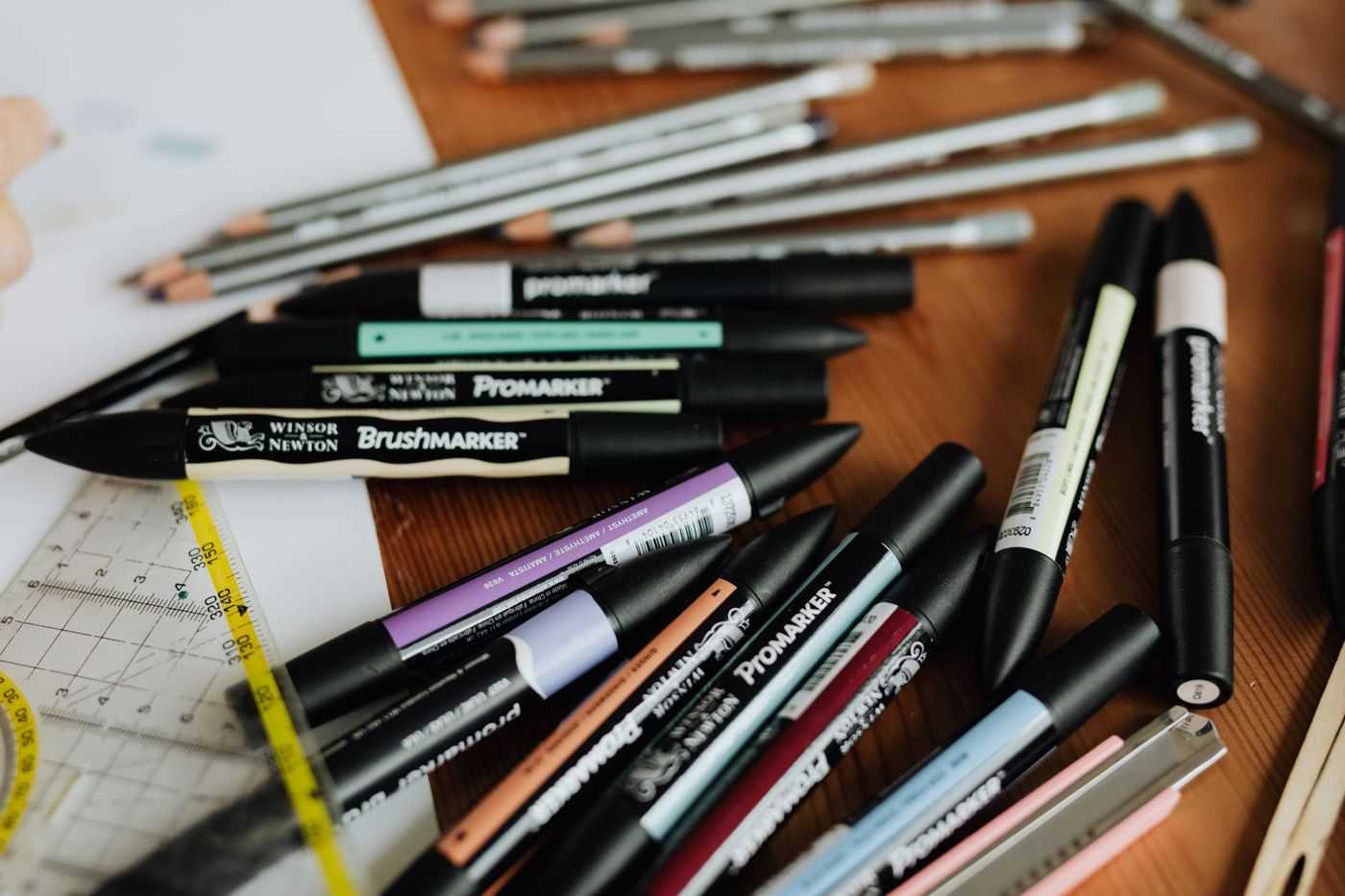
A brush pen has a flexible tip that looks like a paintbrush. Pressing hard gives a thick line, pressing lightly a thin one. You use it for hand-lettered titles and words.
Bear in mind: many brush pens use water-based dye ink. They're lovely for blending, but less lightfast. It's better to use them for titles and decoration than for the writing you really want to keep. There are also brush pens with pigment ink. If you're looking for a brush pen for something that needs to last, choose one of those.
White and metallic pens for dark paper
On black, navy or kraft paper you can barely see ordinary ink. For that you need an opaque pen.
- A white gel pen is nicest for small writing and details. It's opaque enough for most dark colours.
- An opaque paint pen, a marker with acrylic paint or another opaque paint, is better for larger letters and for surfaces where the white gel pen stays too thin.
- Metallic gel pens and paint pens look beautiful on black.
A few things worth knowing. Opaque ink is thick and really needs time to dry. On thin paper it can bleed through. Go over a line twice if the white isn't bright enough, but wait until the first layer is dry. And shake a paint pen well and press the tip down a few times on a scrap first, before you start on your page.
A white pen can also come to the rescue. If a bit of embossing (melted powder in relief) hasn't quite worked, you can still neaten up the lines with a white gel pen.
Writing on washi tape and glossy paper
Washi tape (thin, slightly see-through paper tape) and glossy paper don't absorb ink well. An ordinary fineliner often beads or smudges on smooth tape; on matte tape a fineliner with pigment ink usually works.
- Choose a gel pen, a quick-drying permanent marker or an opaque paint pen. These stay on the surface.
- Let it dry for a long time. On tape that can take as long as ten minutes. After that it usually stays put.
- For writing on tape, choose a calm pattern or a plain colour. On a busy pattern your writing is hard to read.
- A light pen on dark tape works well, as long as it's opaque.
On plastic, such as a photo sleeve or a clear pocket, a lot of ink never dries at all. It's better to write on a label or card that you stick on.
A handy trick: stick a strip of tape on your page, or stamp a few stripes, and write on it with a white gel pen. That gives you a neat strip for a short sentence.
Writing on the back of photos
Writing on the back of a photo who's in it, where and when, is worth its weight in gold later on. But it can also damage your photo.
Modern prints from a photo service usually have a plastic coating on the back. Ordinary ink dries poorly on it and can transfer onto the photo underneath. So use a pen that's sold as photo safe, with ink that dries on that smooth surface.
- Write lightly, without pressing. A hard ballpoint leaves an impression you can see from the front.
- Write along the edge, not in the middle behind a face.
- Put the photo on a hard, flat surface.
- Let the ink dry properly before you stack photos.
For older photos on matte paper you can also use a soft pencil, very lightly. On glossy plastic-coated photos pencil often won't take. If you're unsure about a precious old photo, don't write on the photo itself but on a card or on the page next to it.
Preventing smudges and bleeding
Most smudges come from rushing. A few habits help:
- Test every new pen on an offcut of the same paper. Write a few words, wait a moment and run a finger over it. That way you know how long it needs to dry.
- Put a sheet of paper under your hand while you write. Left-handed? Then a quick-drying pen is especially nice.
- Put a scrap sheet behind your page when you work with wet or thick ink. Alcohol markers and paint pens often bleed through.
- Write before you stick everything down, if you can. You can redo a loose card if it goes wrong.
- Don't use an ordinary permanent marker on paper for writing that needs to last. It often bleeds through the paper and isn't always lightfast.
- Don't go over ink that's still wet with a brush pen or paint pen.
Worried your handwriting is ugly? Write a little more slowly, or in capitals. Your own hand is part of it. One day someone will recognise your handwriting, and that's exactly what makes a page personal.
A small pencil case to get started
You don't need much. This covers almost everything:
- two black fineliners with pigment ink, one fine and one a little thicker
- a white gel pen
- a gold or silver gel pen
- optionally a photo-safe pen for the back of photos
With these you can write on white and dark paper, on tape and on your photos. Only add more once you notice something's missing.
Questions about this topic
What is the best pen for journaling in a scrapbook?
A black fineliner with pigment ink is the safest basic. Pigment ink is lightfast, waterproof and acid free, and stays readable for years. A tip size of 0.3 to 0.5 mm is comfortable for everyday writing.
What is the difference between pigment ink and dye ink?
Pigment is made of tiny particles of colour that stay on and in the paper, and it fades much more slowly. Dye ink soaks into the paper and can fade in the light.
How do you write on dark paper?
Use a white gel pen for small writing and details, an opaque paint pen for larger letters, or a metallic gel pen. Let the ink dry properly, because opaque ink is thick.
How do you write on the back of photos?
Use a pen that's sold as photo safe, write lightly and along the edge, and let the ink dry properly. For a precious old photo, it's better to write on a card or on the page next to it.