· 7 min read
How to use washi tape: ten ideas for your scrapbook and journal
You can tear washi tape with your fingers and move it around. What it actually is, what it sticks to, and ten ways to use it on your pages.
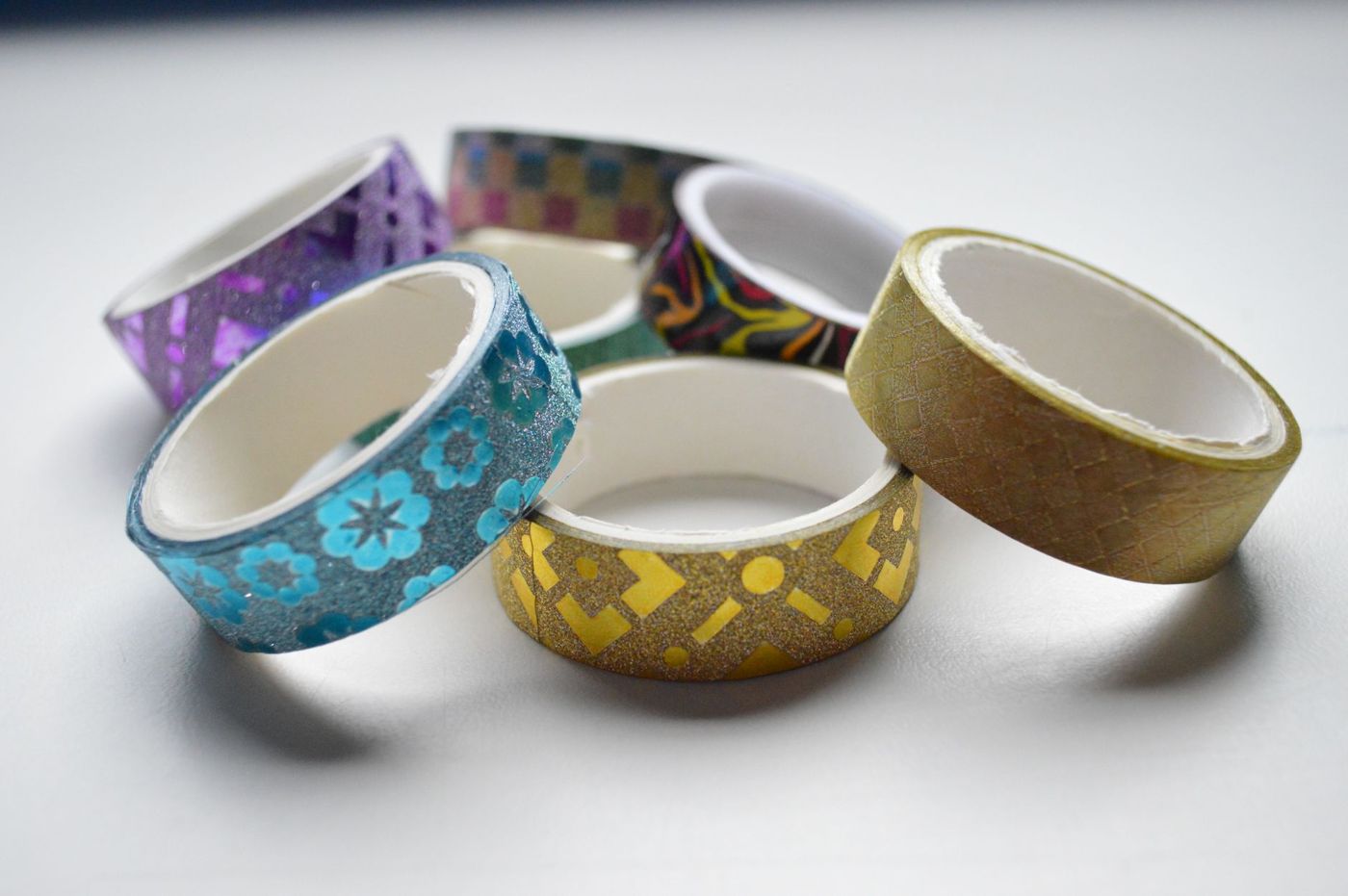
Washi tape is often the first thing a scrapper buys, and it's hard to get tired of. A roll doesn't cost much, you tear it off with your fingers, and you can peel it off again if you change your mind. Here you'll find out what it actually is, what it sticks to well and what it doesn't, and ten ways to use it in your book.
What washi tape is
Washi means Japanese paper: wa stands for Japanese, shi for paper. Washi tape is a thin paper tape that originally comes from Japan. You'll find it in plain colours and with stripes, dots or flowers, but also with whole illustrations that run along the roll.
Two qualities make it so handy. The adhesive is light, so you can usually lift a strip without leaving residue and stick it down again. And the paper is thin and slightly see-through, so it tears straight and neatly by hand. There are narrow rolls of just a few millimetres and wide rolls of several centimetres.
Washi tape or masking tape
This is where it often gets confusing. In Japan, washi tape is often simply called masking tape, so in videos and blogs from abroad, masking tape often means washi. In the Netherlands, masking tape makes people think of the decorator's tape you buy at a DIY shop.
Both are made of paper with a light adhesive, but they differ in a few ways:
- Decorator's masking tape is made of crêpe paper, thicker and stiffer, usually beige or white and not see-through.
- Washi tape is thinner and smoother, slightly see-through and printed, and tears more neatly.
- Decorator's tape is made to come off again after a job, not to stay in a book for years.
So feel free to use decorator's tape as a helper, for example to hold something in place while you move things around. For anything that stays on the page, choose washi.
Ten ways to use it
- Borders. Stick a strip along the top of your page or along all four sides. A horizontal strip feels calm, vertical strips add rhythm.
- Boxes and dividers. Split a page into sections with narrow strips. In a journal, that's a quick way to mark out a weekly overview or a list.
- Labels and dates. Stick a short piece of plain tape on the page and write a date, a place or a few names on it. A label like this also works as a title if you don't have letter stickers to hand.
- Frames around photos. Stick four strips around a photo. Let them overlap at the corners, or cut the ends at an angle for a crisper corner.
- Holding photos in place. Stick a diagonal piece of tape over each corner of the photo, like a photo corner. Or just stick a strip along the top: then you can lift the photo and write underneath. With a heavier photo, add a dot of glue underneath to be safe. Do this with prints, not with precious originals.
- Tickets and receipts. A museum ticket or a receipt from a café terrace can be held in place with two strips. It looks light and airy, and you can still turn it over later.
- Backgrounds. Stick strips side by side, or slightly overlapping, until a whole area is filled. Choose tapes from one colour family, and it will look calm rather than busy.
- Tabs. Fold a piece of tape over the edge of a page and stick the part that sticks out sticky side to sticky side. Write a word on it and you can quickly open your book at that page.
- Shapes and stickers. Cut little triangles, circles or flags out of tape. A row of triangles along a drawn line makes bunting. You can also use tape instead of stickers: cut a little flower or figure out of a roll with an illustration.
- Torn collage. Tear small pieces and build up a landscape with them: hills, waves, a row of trees. Tape with a continuous landscape fills a long strip in one go.
If you're not sure what works, start with floral or plain tape and simple geometric shapes. You rarely go wrong with those. Choose one main subject on your page and let the tape support it. And leave some white space, because not every area needs filling.
Which paper it sticks to
Washi tape sticks best to smooth, uncoated paper, such as printer paper, most notebooks, patterned paper and smooth cardstock (sturdy, coloured card). On paper like this, the whole adhesive layer makes contact.
It comes loose more easily on:
- rough or textured paper, such as watercolour paper, coarse kraft paper or linen-textured paper
- glossy photos and plastic page protectors, especially at the edges
- a fold or an edge that bends a lot
- a surface with dust or greasy fingerprints on it
- a spot in the sun or in the warmth
If you want the tape to stay put, rub it down firmly with a bone folder or your fingernail. Touch the sticky side as little as possible; with tweezers, less skin oil ends up on it. For anything that really mustn't come loose, add a dot of glue underneath.
It's best not to stick tape directly onto old or precious photos. Washi tape isn't made for archiving, and when you pull it off, it can take a layer of fragile paper with it. In that case, stick the tape to the mat around the photo or use photo corners.
Another thing many people run into: because washi is see-through, light tape almost disappears on dark paper. Stick the tape onto white paper or a sheet of label paper first, then cut it out. That way it does show up.
Which pen to write on it with
A gel pen sits on top of the smooth surface and smudges if your hand brushes over it too soon, so let the ink dry properly. A quick-drying permanent marker often works better. On matte tape, a fineliner with pigment ink or a pencil usually works fine too.
On glossy tape and foil tape, often only a permanent marker or an opaque paint pen will hold. For dark tape, you could try a white paint pen. Always test a new pen on a spare piece first, and preferably write once the tape is already stuck down, because it's easier on a firm surface.
Cutting neatly and cutting out shapes
If you tear by hand, you get a slightly frayed edge, and that's often exactly what looks nice. For a straight edge, use scissors or a craft knife. Non-stick scissors stay clean the longest. If you do get sticky residue on the blades, a little alcohol on a cloth helps. A blade on a cutting mat gives the cleanest cut, especially for very thin strips along a ruler.
For shapes, stick the tape onto baking paper first. It peels off easily again later. Cut out the shape and peel it off the paper. If light tape is hard to see on white baking paper, use brown baking paper. Don't cut right up against the edge of an illustration; leave a very thin border so it doesn't fray.
This is also how you make your own stickers. Stick a few strips side by side on baking paper, stamp or draw on them, let the ink dry properly and cut out the figures. Then you have a little stash to dip into for your journal when you're out and about.
A small habit that saves a lot of fiddling: fold the end of your roll over by a few millimetres. Then you can find the start straight away.
How long washi tape keeps
Washi tape has no use-by date, but the adhesive does age. A roll that sits in a warm room or in the sun for years can dry out and stick less well. Printed tape can also fade in the sun.
So keep your rolls in a closed box in a cool, dark place. If you pick up an old roll, test a piece first. If it doesn't stick well, use it for things that don't need to stay put, or add a dot of glue under the tape.
On the page, too, tape can start to curl at the corners after a few years, especially on rough paper. Leaf through an older book now and then. A loose corner can be stuck back down with a dot of glue, and your page stays just as you made it.
Questions about this topic
What is washi tape?
Washi tape is a thin, slightly see-through paper tape that originally comes from Japan. The adhesive is light, so you can usually lift a strip without leaving residue and stick it down again.
What is the difference between washi tape and masking tape?
Decorator's masking tape from a DIY shop is made of thicker, stiffer crêpe paper and isn't see-through. Washi tape is thinner, smoother and printed, and tears more neatly. In Japan, washi tape itself is often called masking tape.
What does washi tape stick to best?
Smooth, uncoated paper such as printer paper, most notebooks and smooth cardstock. On rough paper, glossy photos, plastic and over a fold, the tape comes loose more easily.
What pen can you write on washi tape with?
Use a quick-drying permanent marker or a gel pen, and let the ink dry properly. On matte tape, a fineliner with pigment ink works too. Always test a new pen on a spare piece first.